Emotion color matching
3–4 jaarEmotional WellbeingMaterialen: Crayons or markers
Paper
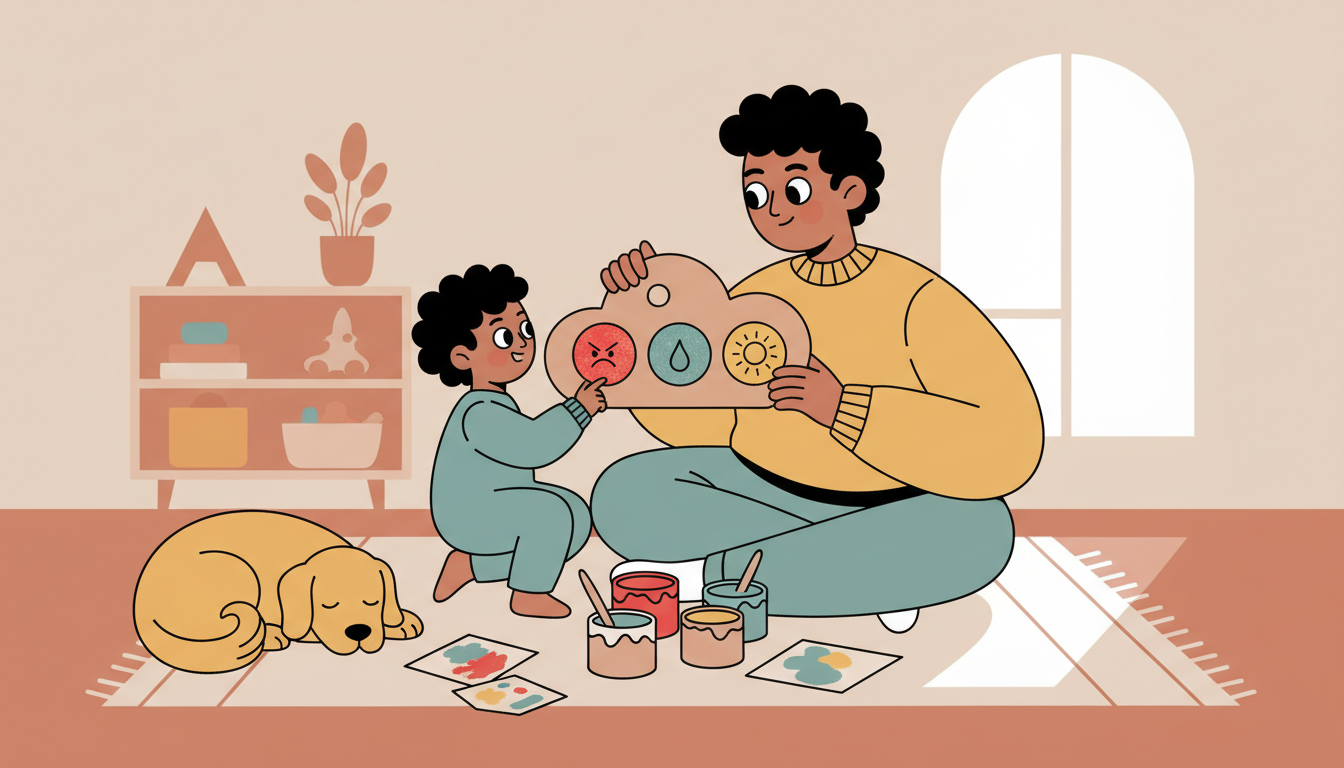
Assign colors to different emotions together. Maybe red for angry, blue for sad, yellow for happy. Throughout your time together, check in by asking what color they feel. You share your color too. Draw or paint with emotion colors. This gives your child concrete language for abstract feelings.
Onderdeel van de Steadily ontwikkelingsreis — gepersonaliseerd voor jouw kind.
Hoe doe je deze activiteit
Assign colors to different emotions together. Maybe red for angry, blue for sad, yellow for happy. Throughout your time together, check in by asking what color they feel. You share your color too. Draw or paint with emotion colors. This gives your child concrete language for abstract feelings.
Waarom het werkt
Concrete representations help young children understand abstract emotional concepts during the age when emotional vocabulary naturally expands. Emotional intelligence development in early childhood leads to better emotional recognition, expression, and regulation skills in adulthood (Goleman, 1995). Color coding makes emotions tangible during this critical period.
Tips voor ouders
Let your child choose which colors match which feelings.
Keep it simple with three or four emotions at first.
Model sharing your own emotion colors honestly throughout the day.
Benodigde materialen
Crayons or markers
Paper
Leermethoden
Narrative and Literacy-Rich ExperiencesCollaborative and Cooperative PlayInquiry-Based Learning

Vond je deze activiteit leuk? Laat ons de planning voor je doen.
Steadily personaliseert elke activiteit voor jouw kind — hun interesses, hun fase, de eigenschappen die ze ontwikkelen — zodat speeltijd leuker is en elk moment telt.
Ontdek hoe Steadily werkt →