Validation practice
2–3 jaarEmotional WellbeingGeen materialen nodig
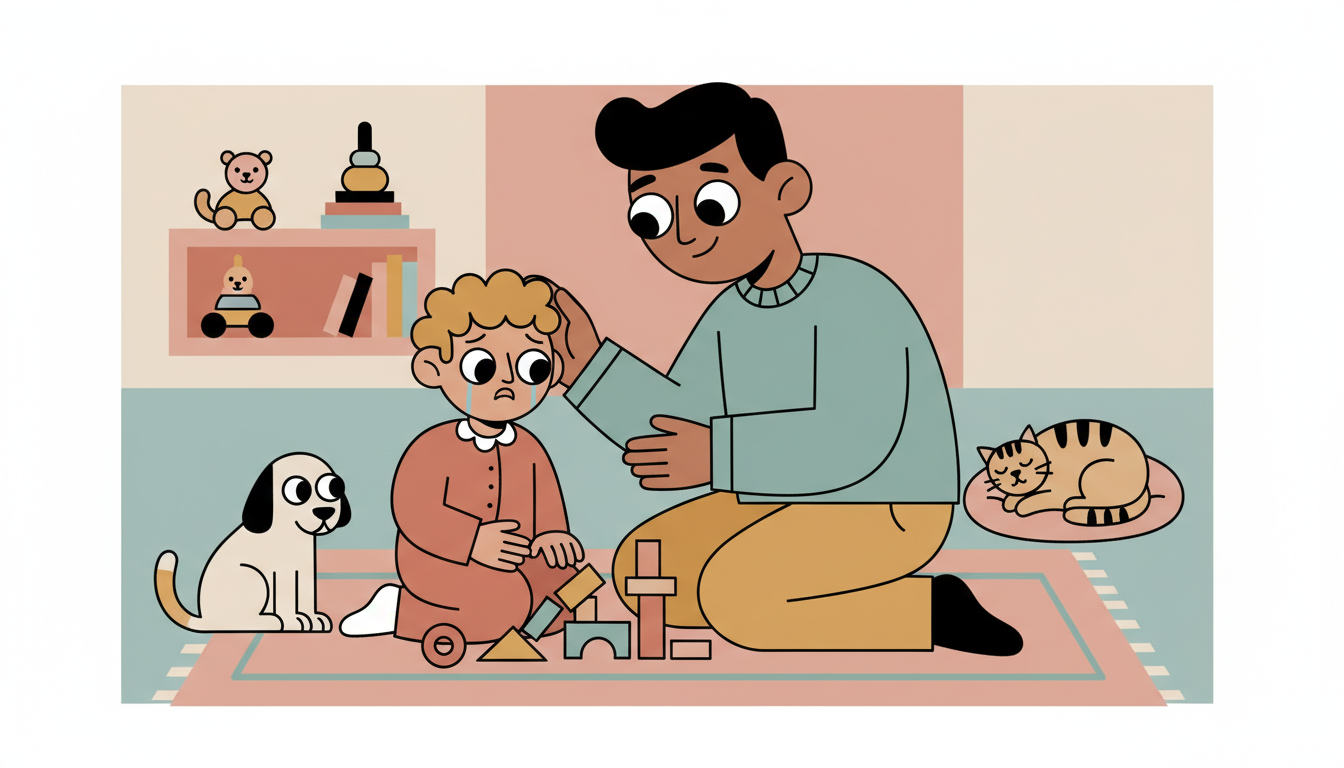
When your child shows any emotion, name it and acknowledge it before trying to solve the problem. You might say, 'You seem really frustrated that the tower fell down. That is frustrating.'
Onderdeel van de Steadily ontwikkelingsreis — gepersonaliseerd voor jouw kind.
Hoe doe je deze activiteit
When your child shows any emotion, name it and acknowledge it before trying to solve the problem. You might say, 'You seem really frustrated that the tower fell down. That is frustrating.'
This simple practice validates your child's emotional experience. It teaches them that all feelings are okay, even uncomfortable ones. Over time, this builds emotional awareness and trust.
Waarom het werkt
Emotion coaching is the most evidence-based approach for developing emotional intelligence. Research shows that children whose emotions were acknowledged and labeled by parents at age 2-3 showed significantly better emotional regulation at age 4-5, and this early emotion coaching predicted fewer behavior problems in elementary school (Goleman, 1995). A strong positive link exists between emotional intelligence and better mental health outcomes (Mayer et al., 1999).
Tips voor ouders
Validate the feeling while still setting limits on behavior. You can say, 'You're angry, and hitting is not okay.'
You don't have to fix the feeling or make it go away. Just naming it is enough.
Benodigde materialen
None
Leermethoden
Symbolic and Pretend PlaySongs, Stories, and RhymesSocial Learning Through Peers

Vond je deze activiteit leuk? Laat ons de planning voor je doen.
Steadily personaliseert elke activiteit voor jouw kind — hun interesses, hun fase, de eigenschappen die ze ontwikkelen — zodat speeltijd leuker is en elk moment telt.
Ontdek hoe Steadily werkt →