Two-choice problem solving
1–2 jaarFamily ConnectionGeen materialen nodig
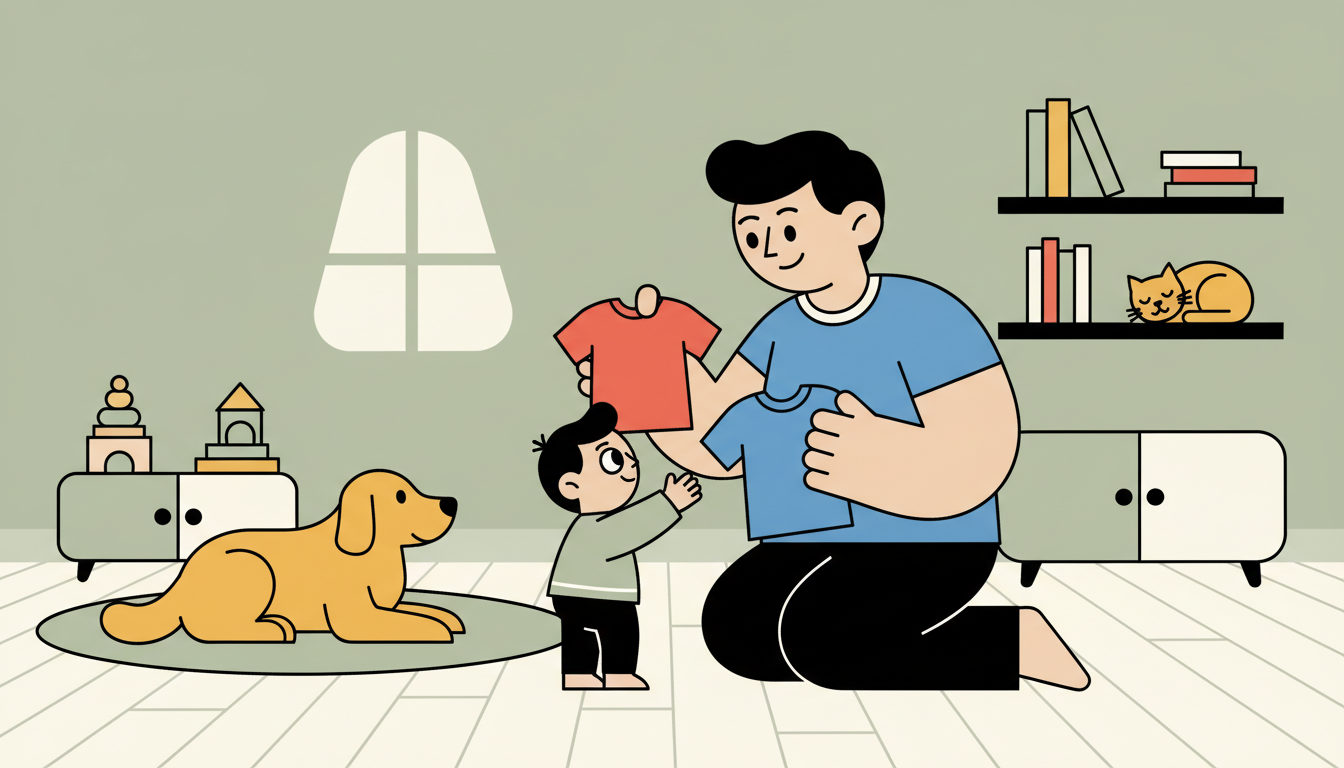
When a conflict arises, offer your child two simple choices to resolve it. For example, if they don't want to get dressed, say 'Red shirt or blue shirt?' This gives them a sense of control while still moving forward. Keep choices simple and show both options. This teaches early problem-solving and compromise.
Onderdeel van de Steadily ontwikkelingsreis — gepersonaliseerd voor jouw kind.
Hoe doe je deze activiteit
When a conflict arises, offer your child two simple choices to resolve it. For example, if they don't want to get dressed, say 'Red shirt or blue shirt?' This gives them a sense of control while still moving forward. Keep choices simple and show both options. This teaches early problem-solving and compromise.
Waarom het werkt
At 12-24 months, children are developing basic problem-solving abilities through trial and error. Offering two choices respects their growing autonomy while teaching that conflicts can have multiple solutions. This approach reduces power struggles and models collaborative problem-solving. Children who learn these collaborative problem-solving approaches maintain stronger family bonds across developmental transitions (Robin & Foster, 1989). Early exposure to problem-solving skills leads to significantly better peer relationships and 25% fewer behavioral problems (Webster-Stratton & Reid, 2004).
Tips voor ouders
Hold up both choices or point to them so your child can see what you mean. Visual support helps at this age.
Stay calm and patient while they choose. It may take a minute for them to decide, and that's okay.
Benodigde materialen
None
Leermethoden
Language-Rich EnvironmentImitation and Modeling

Vond je deze activiteit leuk? Laat ons de planning voor je doen.
Steadily personaliseert elke activiteit voor jouw kind — hun interesses, hun fase, de eigenschappen die ze ontwikkelen — zodat speeltijd leuker is en elk moment telt.
Ontdek hoe Steadily werkt →