Teddy needs care
2–3 jaarFamily ConnectionMaterialen: Stuffed animals or dolls
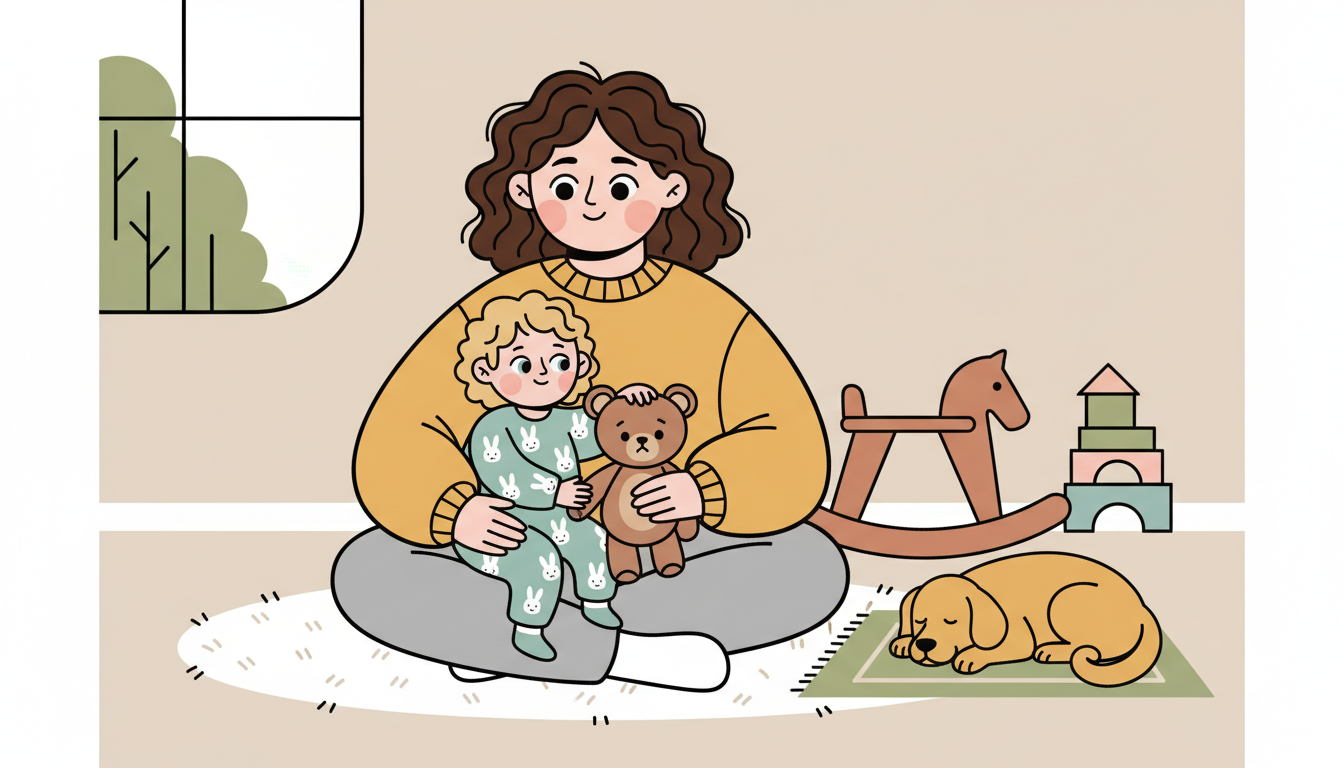
Give your child a stuffed animal or doll and suggest it might be tired, hungry, or sad. Encourage your child to care for it. You might say 'Bunny looks sad. What can we do?' Model gentle touches and soothing words. Let your child practice being kind and caring.
Onderdeel van de Steadily ontwikkelingsreis — gepersonaliseerd voor jouw kind.
Hoe doe je deze activiteit
Give your child a stuffed animal or doll and suggest it might be tired, hungry, or sad. Encourage your child to care for it. You might say 'Bunny looks sad. What can we do?' Model gentle touches and soothing words. Let your child practice being kind and caring.
Waarom het werkt
Pretend play caring for dolls teaches children to respond compassionately to others' emotions, a key childhood behavior that predicts stronger adult empathy (Eisenberg, N., Spinrad, T. L., & Knafo-Noam, A., 2015). When parents show empathy and model caring responses, children learn to create safe spaces for emotional expression (Bhansali, B., 2023). Symbolic and pretend play is critical for emotional development at this age.
Tips voor ouders
Keep it simple. Your child may just hug the toy, and that is enough.
Praise caring behaviors warmly. Say 'You are being so gentle. Bunny feels better now.'
Benodigde materialen
Stuffed animals or dolls
Leermethoden
Symbolic and Pretend PlaySongs, Stories, and RhymesSocial Learning Through Peers

Vond je deze activiteit leuk? Laat ons de planning voor je doen.
Steadily personaliseert elke activiteit voor jouw kind — hun interesses, hun fase, de eigenschappen die ze ontwikkelen — zodat speeltijd leuker is en elk moment telt.
Ontdek hoe Steadily werkt →