Simple puzzle practice
2–3 jaarEmotional WellbeingMaterialen: Simple wooden or chunky cardboard puzzles with three to five pieces
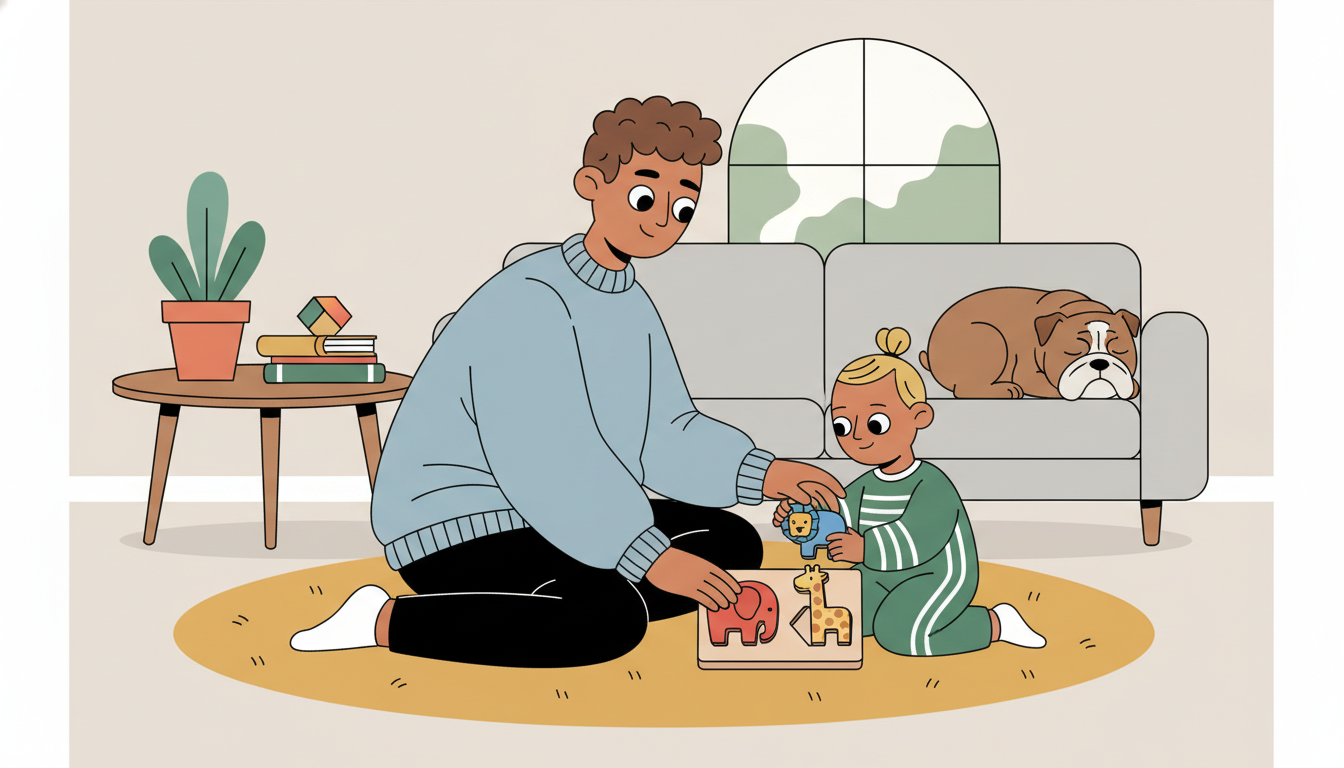
Work on a simple three to five piece puzzle with your child. Choose puzzles with large, chunky pieces that fit their developing fine motor skills. When a piece doesn't fit, resist the urge to immediately fix it. Instead, say, 'That one doesn't fit yet. Let's try turning it.' This teaches your child that persistence pays off and that struggle is part of learning. The satisfaction of finally placing a piece builds confidence in their ability to solve problems.
Onderdeel van de Steadily ontwikkelingsreis — gepersonaliseerd voor jouw kind.
Hoe doe je deze activiteit
Work on a simple three to five piece puzzle with your child. Choose puzzles with large, chunky pieces that fit their developing fine motor skills. When a piece doesn't fit, resist the urge to immediately fix it. Instead, say, 'That one doesn't fit yet. Let's try turning it.' This teaches your child that persistence pays off and that struggle is part of learning. The satisfaction of finally placing a piece builds confidence in their ability to solve problems.
Waarom het werkt
Puzzle solving provides the ideal balance of challenge and achievability that builds resilience. Adults with high resilience developed in childhood show a 65% lower risk of anxiety disorders and depression (Masten & Motti-Stefanidi, 2020). By supporting your child through puzzle frustration rather than solving it for them, you help them develop problem-solving skills and emotional regulation that predict better resilience and coping strategies in later childhood.
Tips voor ouders
Start with easier puzzles and gradually increase difficulty as your child succeeds. This builds confidence before adding challenge.
When your child struggles, offer hints rather than solutions. Point to the right area or suggest, 'Maybe try a different spot.'
Take breaks if frustration builds. Come back to the puzzle later, showing that it's okay to step away and try again.
Benodigde materialen
Simple wooden or chunky cardboard puzzles with three to five pieces
Leermethoden
Interactive Play-Based LearningSymbolic and Pretend PlaySocial Learning Through Peers

Vond je deze activiteit leuk? Laat ons de planning voor je doen.
Steadily personaliseert elke activiteit voor jouw kind — hun interesses, hun fase, de eigenschappen die ze ontwikkelen — zodat speeltijd leuker is en elk moment telt.
Ontdek hoe Steadily werkt →