Feelings in picture books
1–2 jaarEmotional WellbeingMaterialen: Picture books with expressive characters
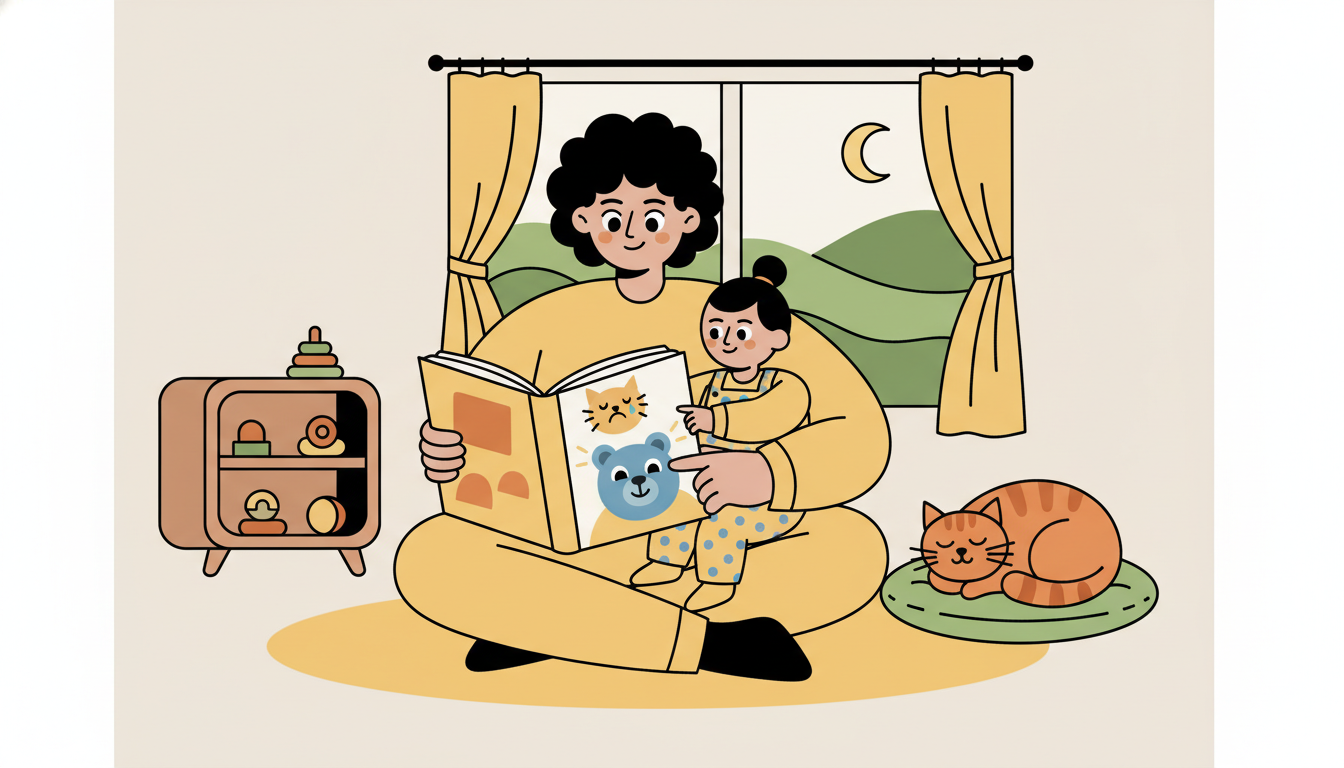
During reading time, point to characters' faces and name their emotions. Ask simple questions like 'Is the bear happy or sad?' Let your child point to the faces. You can use the same book many times, focusing on different emotions each time. This builds emotional vocabulary naturally during a routine you already do.
Onderdeel van de Steadily ontwikkelingsreis — gepersonaliseerd voor jouw kind.
Hoe doe je deze activiteit
During reading time, point to characters' faces and name their emotions. Ask simple questions like 'Is the bear happy or sad?' Let your child point to the faces. You can use the same book many times, focusing on different emotions each time. This builds emotional vocabulary naturally during a routine you already do.
Waarom het werkt
Reading about feelings in a language-rich environment supports the vocabulary explosion happening at this age. Research shows that emotional intelligence development in early childhood leads to better emotional recognition and expression skills in adulthood, with improved concentration and study habits (Goleman, 1995). Books provide safe scenarios to explore emotions.
Tips voor ouders
Choose books with clear, expressive illustrations of faces.
Pause to let your child look at and process the pictures.
Connect the character's emotions to your child's experiences, like 'The rabbit is sad, just like when you dropped your toy.'
Benodigde materialen
Picture books with expressive characters
Leermethoden
Language-Rich EnvironmentImitation and ModelingBeginning Symbolic Play

Vond je deze activiteit leuk? Laat ons de planning voor je doen.
Steadily personaliseert elke activiteit voor jouw kind — hun interesses, hun fase, de eigenschappen die ze ontwikkelen — zodat speeltijd leuker is en elk moment telt.
Ontdek hoe Steadily werkt →