Face feelings match
2–3 jaarFamily ConnectionMaterialen: None, or a mirror if available
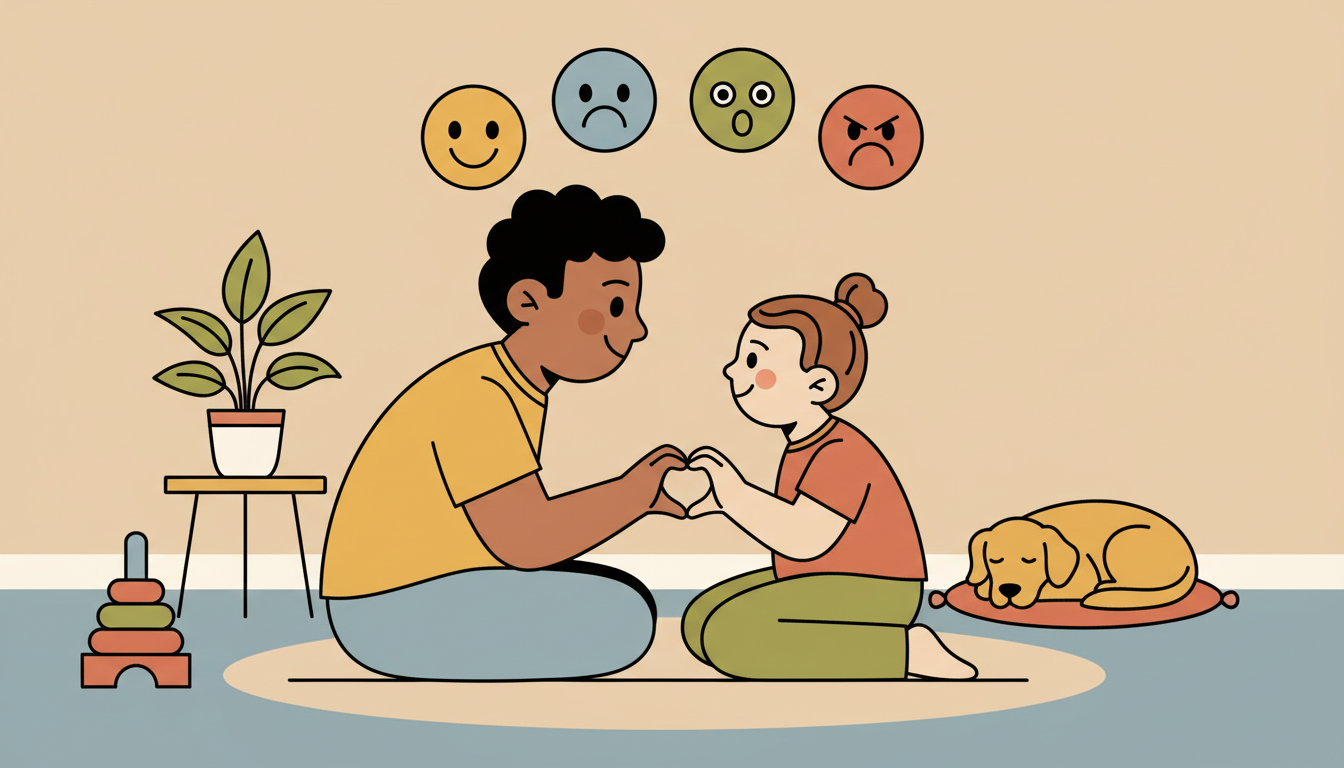
Make simple faces showing different emotions. Say 'I am making a happy face. Can you make one too?' Try sad, surprised, and mad faces. When your child copies you, name what you see: 'You made a sad face. Your mouth goes down when you are sad.' Take turns making faces.
Onderdeel van de Steadily ontwikkelingsreis — gepersonaliseerd voor jouw kind.
Hoe doe je deze activiteit
Make simple faces showing different emotions. Say 'I am making a happy face. Can you make one too?' Try sad, surprised, and mad faces. When your child copies you, name what you see: 'You made a sad face. Your mouth goes down when you are sad.' Take turns making faces.
Waarom het werkt
Recognizing emotions in self and others is a key developmental indicator of emerging empathy. This activity helps children practice the foundational skill of distinguishing different emotional states. Parental empathy and modeling create the positive family climate that fosters children's empathy abilities and social behavior (Sánchez-Pérez, N., Fuentes, L. J., Jolliffe, D., & González-Salinas, C., 2018). Imitation and social learning are powerful at this age.
Tips voor ouders
Start with happy and sad. These are easiest for young children to recognize and copy.
Use a mirror if you have one handy. Seeing their own expressions helps children understand emotions better.
Benodigde materialen
None, or a mirror if available
Leermethoden
Symbolic and Pretend PlaySongs, Stories, and RhymesSocial Learning Through Peers

Vond je deze activiteit leuk? Laat ons de planning voor je doen.
Steadily personaliseert elke activiteit voor jouw kind — hun interesses, hun fase, de eigenschappen die ze ontwikkelen — zodat speeltijd leuker is en elk moment telt.
Ontdek hoe Steadily werkt →