Emotional storytelling with toys
1–2 jaarEmotional WellbeingMaterialen: Stuffed animals or dolls your child already has
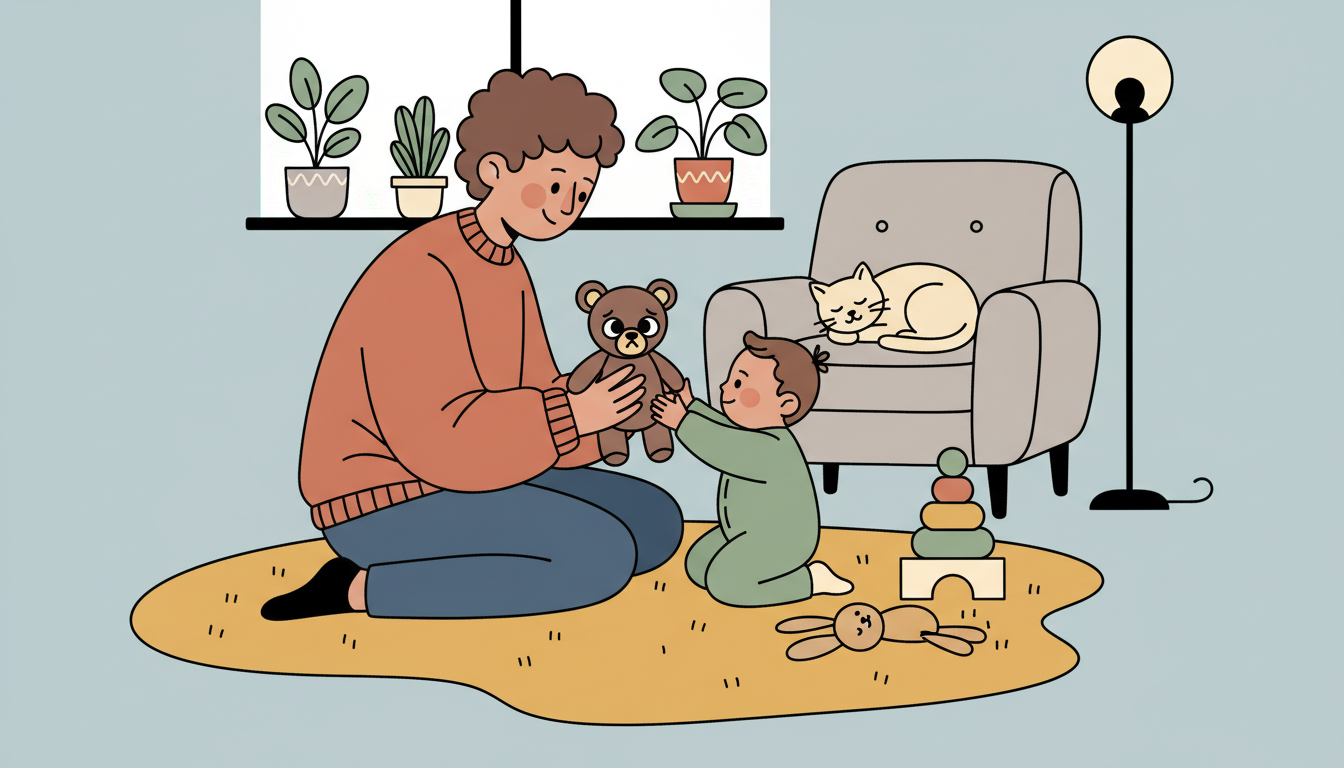
During play time, use your child's toys to act out simple emotional scenarios. Make a stuffed bear sad because it lost its toy, then help it feel better. Use simple language like 'Bear is sad. Bear needs a hug.' Invite your child to help comfort the toy. This uses symbolic play to explore feelings safely.
Onderdeel van de Steadily ontwikkelingsreis — gepersonaliseerd voor jouw kind.
Hoe doe je deze activiteit
During play time, use your child's toys to act out simple emotional scenarios. Make a stuffed bear sad because it lost its toy, then help it feel better. Use simple language like 'Bear is sad. Bear needs a hug.' Invite your child to help comfort the toy. This uses symbolic play to explore feelings safely.
Waarom het werkt
Beginning symbolic play at this age allows children to explore emotional scenarios safely. This builds both emotional understanding and empathy as children practice helping others feel better. Children with higher emotional intelligence show significantly better relationship satisfaction and job performance in adulthood (Bar-On, 2006). Pretend play supports emotional skill development.
Tips voor ouders
Keep scenarios very simple with clear emotions and resolutions.
Let your child lead sometimes and respond to their play ideas.
End scenarios positively to show that emotions pass and problems can be solved.
Benodigde materialen
Stuffed animals or dolls your child already has
Leermethoden
Language-Rich EnvironmentImitation and ModelingBeginning Symbolic Play

Vond je deze activiteit leuk? Laat ons de planning voor je doen.
Steadily personaliseert elke activiteit voor jouw kind — hun interesses, hun fase, de eigenschappen die ze ontwikkelen — zodat speeltijd leuker is en elk moment telt.
Ontdek hoe Steadily werkt →