Emotion story time
2–3 jaarEmotional WellbeingMaterialen: Picture books
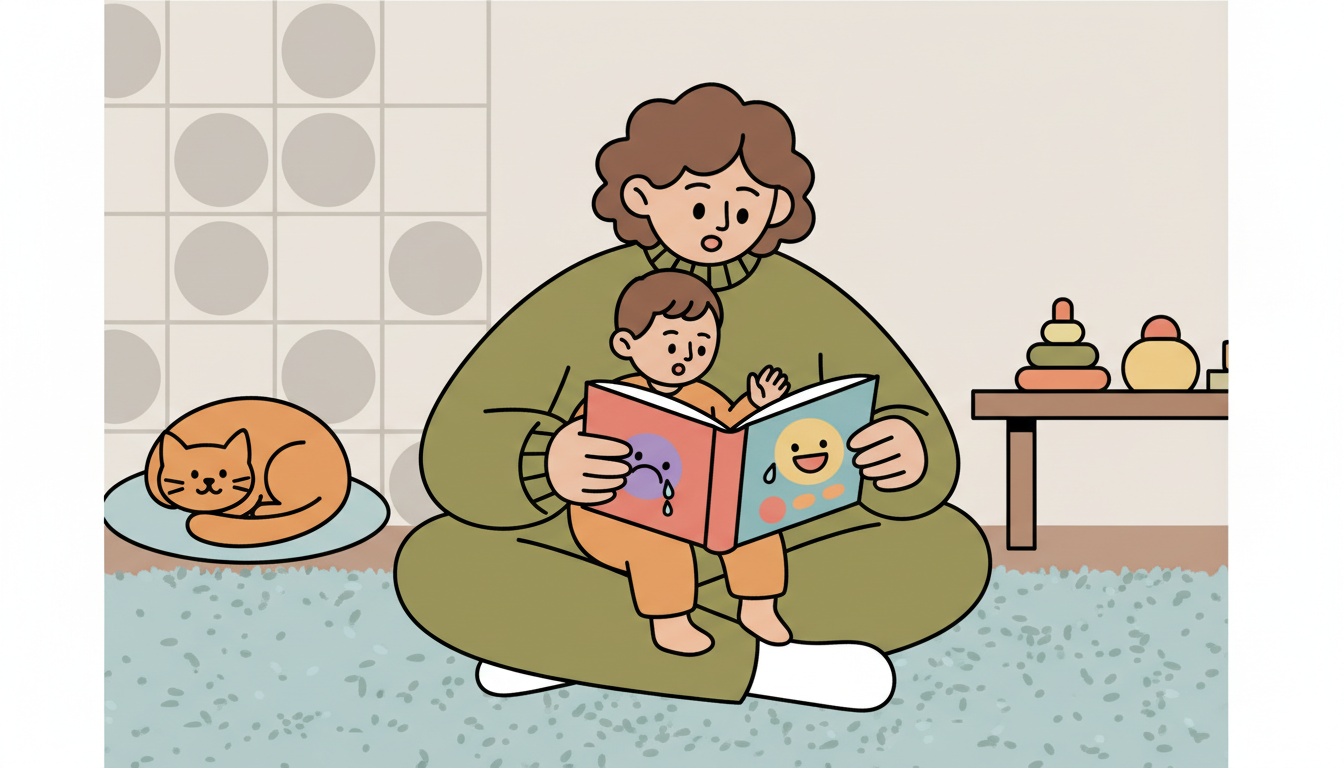
Read a picture book together and pause to talk about how characters might be feeling. Point to facial expressions and ask simple questions like, 'Is he happy or sad?' Name the emotions you see.
Onderdeel van de Steadily ontwikkelingsreis — gepersonaliseerd voor jouw kind.
Hoe doe je deze activiteit
Read a picture book together and pause to talk about how characters might be feeling. Point to facial expressions and ask simple questions like, 'Is he happy or sad?' Name the emotions you see.
This turns regular reading time into emotional learning. Stories provide a safe way to explore different feelings and build empathy.
Waarom het werkt
The language explosion at 24-36 months makes this the optimal time for emotional vocabulary development. Early emotional coaching through stories significantly improves children's emotional intelligence (Goleman, 1995). Children with higher emotional intelligence experience better relationship satisfaction and mental health in adulthood (Bar-On, 2006). Stories help children recognize emotions in others, building the empathy component of EQ.
Tips voor ouders
Use simple feeling words at first like happy, sad, mad, and scared. You can add more complex emotions as your child grows.
Connect the story to your child's experiences. Try saying, 'Remember when you felt sad like that?'
Benodigde materialen
Picture books
Leermethoden
Symbolic and Pretend PlaySongs, Stories, and RhymesSocial Learning Through Peers

Vond je deze activiteit leuk? Laat ons de planning voor je doen.
Steadily personaliseert elke activiteit voor jouw kind — hun interesses, hun fase, de eigenschappen die ze ontwikkelen — zodat speeltijd leuker is en elk moment telt.
Ontdek hoe Steadily werkt →