Happy words practice
3~4세Emotional Wellbeing필요한 준비물 없음
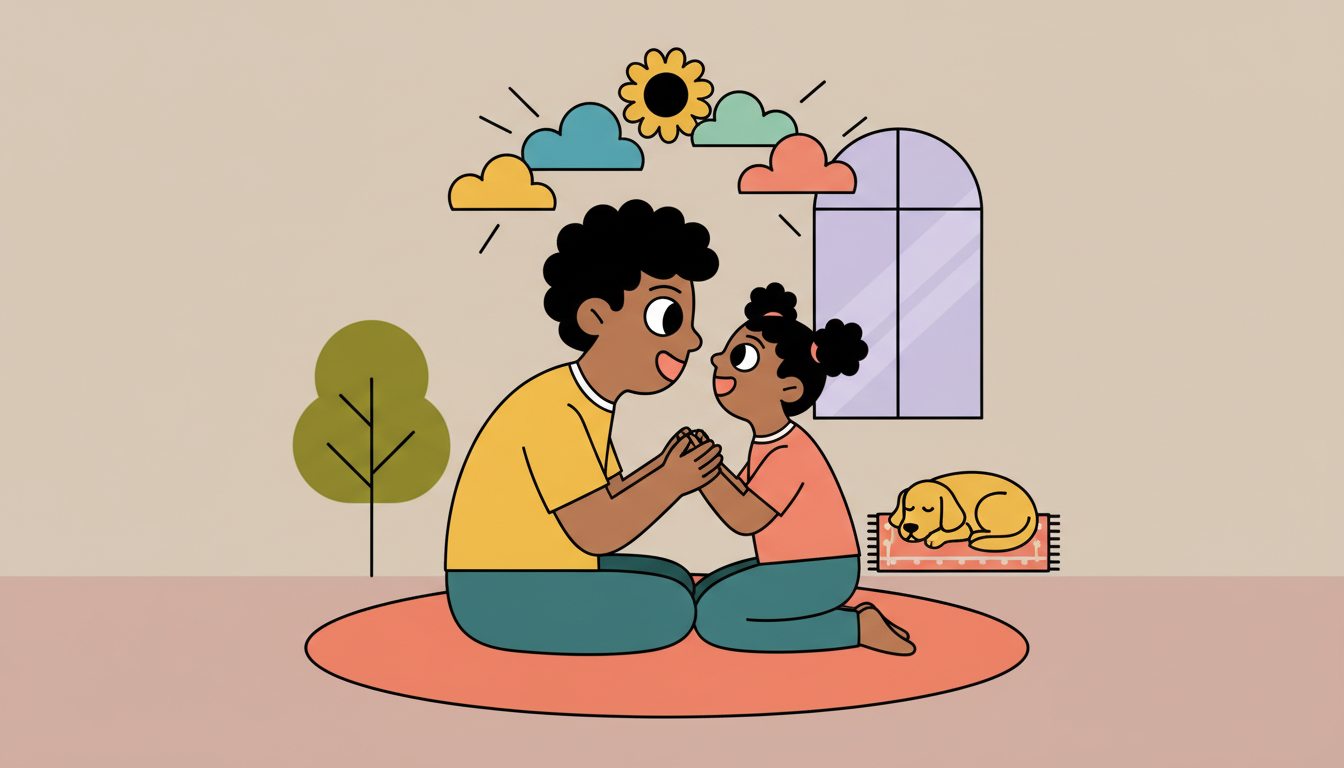
Throughout your time together, use optimistic language to describe everyday moments. When something small goes wrong, model hopeful responses like, we can try again, or that's okay, we'll figure it out. When talking about upcoming events, use positive phrases like, this will be fun, or I think you'll enjoy this. Your child will begin to mirror this language and internalize an optimistic way of thinking about experiences.
우리 아이에게 맞춤 설계된 Steadily 발달 여정의 일부예요.
활동 방법
Throughout your time together, use optimistic language to describe everyday moments. When something small goes wrong, model hopeful responses like, we can try again, or that's okay, we'll figure it out. When talking about upcoming events, use positive phrases like, this will be fun, or I think you'll enjoy this. Your child will begin to mirror this language and internalize an optimistic way of thinking about experiences.
효과가 있는 이유
Children at this age absorb explanatory styles from the adults around them, and modeling optimistic language shapes their expectations about outcomes. Research shows that optimistic explanatory style predicts better outcomes and can be taught through environmental influences (Seligman et al., 2009; Carver et al., 2010). Consistent exposure to hopeful, solution-focused language helps children develop the internal dialogue that supports lasting optimism.
부모를 위한 팁
Pay attention to your own explanatory style and consciously frame setbacks as temporary and solvable. Avoid catastrophizing small problems or using language that suggests things won't improve. Children learn optimism primarily through the models around them.
필요한 준비물
None
학습 방식
Narrative and Literacy-Rich ExperiencesInquiry-Based LearningCollaborative and Cooperative Play

이번 활동이 마음에 들었어? 계획은 우리가 대신 세워줄게.
Steadily는 아이의 관심사, 발달 단계, 그리고 기르고 있는 특성에 맞춰 모든 활동을 개인화해줘. 덕분에 놀이 시간이 더 즐거워지고 모든 순간이 더욱 가치 있어지지.
Steadily 작동 방식 알아보기 →