Feelings picture walk
3~4세Family Connection준비물: Family photos or photo album
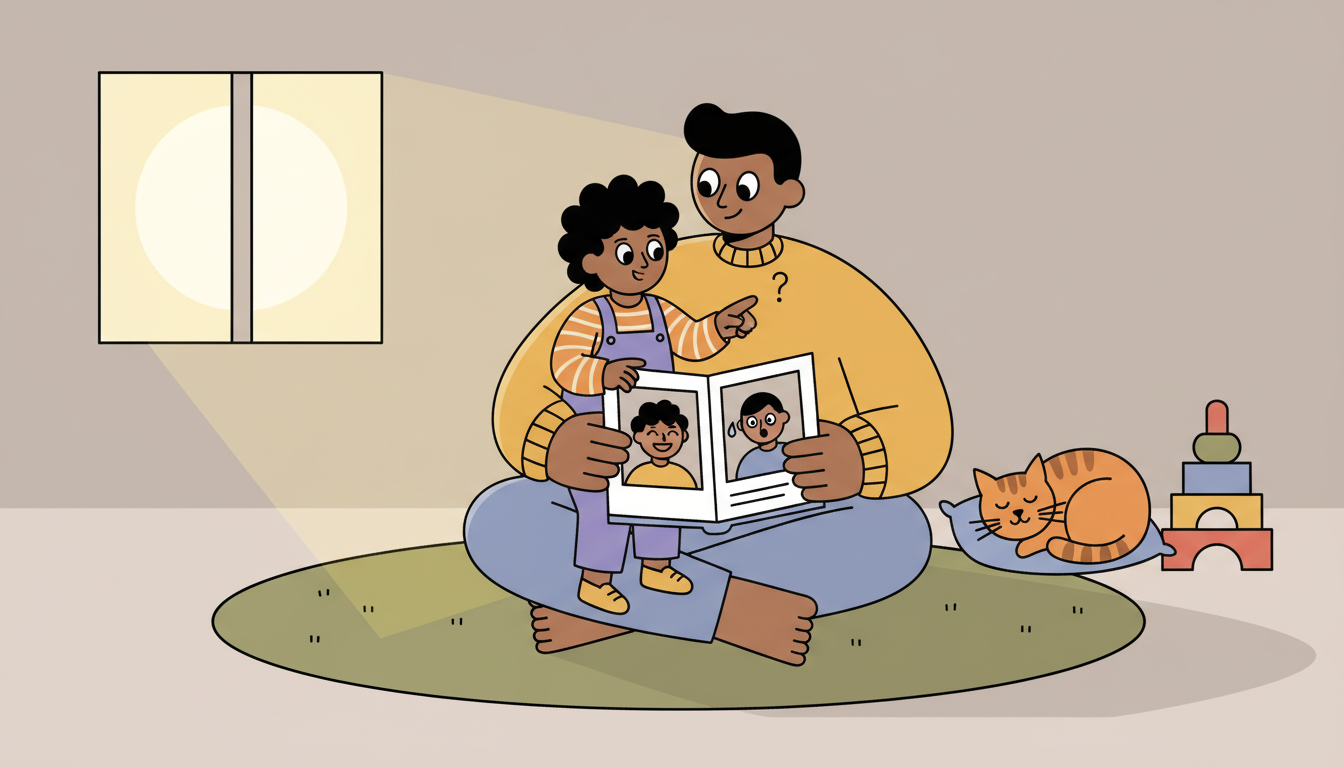
During your activity time, look at family photos together and talk about how people felt when each picture was taken. Ask your child to point out happy faces, sad faces, or surprised faces. Take turns guessing what made each person feel that way. You can say things like, 'Look at grandma's smile. How do you think she felt that day? What made her so happy?' This simple practice helps your child learn to read emotions in others.
우리 아이에게 맞춤 설계된 Steadily 발달 여정의 일부예요.
활동 방법
During your activity time, look at family photos together and talk about how people felt when each picture was taken. Ask your child to point out happy faces, sad faces, or surprised faces. Take turns guessing what made each person feel that way. You can say things like, 'Look at grandma's smile. How do you think she felt that day? What made her so happy?' This simple practice helps your child learn to read emotions in others.
효과가 있는 이유
Recognizing and responding sensitively to others' emotions is a key childhood behavior that predicts stronger adult empathy and relationship quality (Eisenberg et al., 2015). At 36-48 months, children develop theory of mind, which allows them to understand that others have different thoughts and feelings. Looking at photos provides a safe, concrete way to practice identifying emotions in faces and body language. This skill forms the foundation for empathetic responses later.
부모를 위한 팁
Start with obvious emotions like big smiles or tears before moving to subtle expressions.
If your child struggles, give them two choices like 'Does she look happy or sad?'
Share your own feelings from the photos to model emotional awareness.
필요한 준비물
Family photos or photo album
학습 방식
Narrative and Literacy-Rich ExperiencesCollaborative and Cooperative PlayInquiry-Based Learning

이번 활동이 마음에 들었어? 계획은 우리가 대신 세워줄게.
Steadily는 아이의 관심사, 발달 단계, 그리고 기르고 있는 특성에 맞춰 모든 활동을 개인화해줘. 덕분에 놀이 시간이 더 즐거워지고 모든 순간이 더욱 가치 있어지지.
Steadily 작동 방식 알아보기 →