Feelings in our story
2~3세Family Connection준비물: Picture books with clear facial expressions
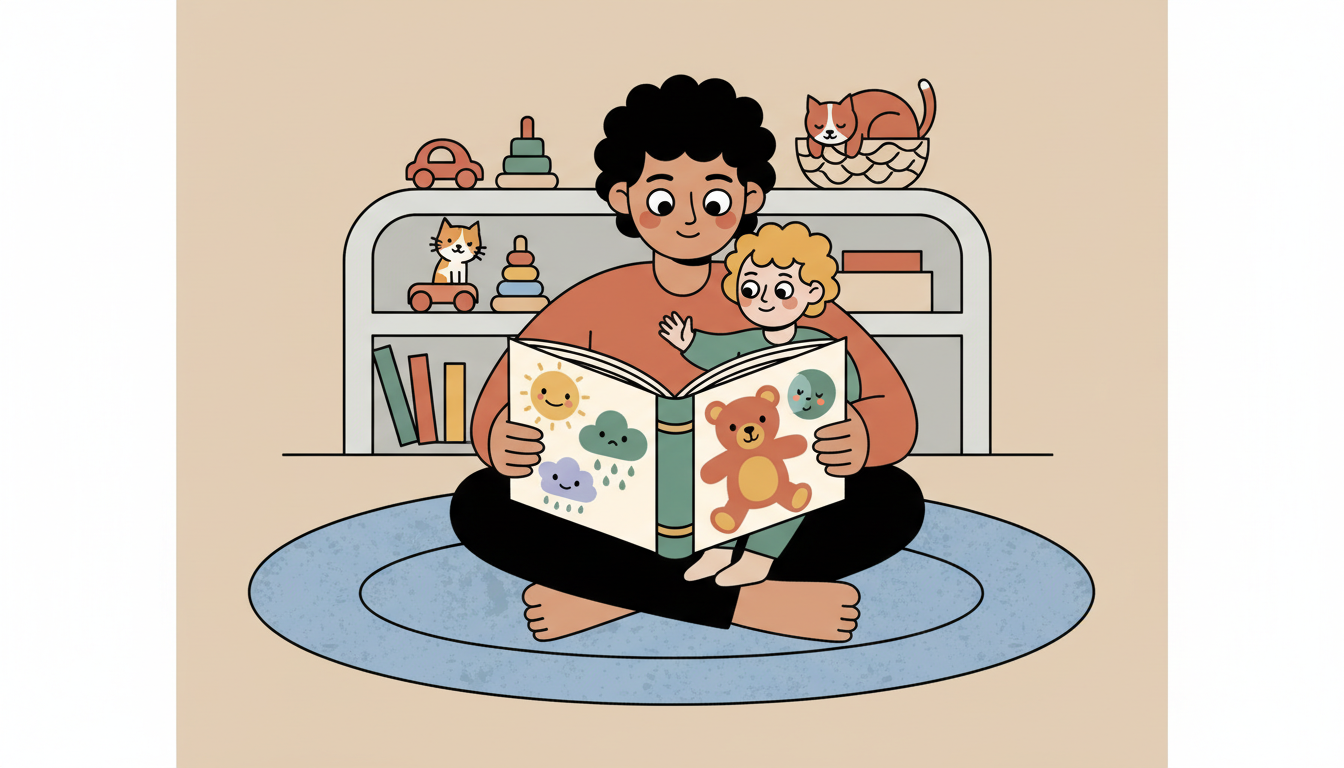
During story time, pause to point out characters' emotions. Ask simple questions like 'Is teddy happy or sad?' Help your child notice facial expressions in the pictures. Name the emotions you see together. This turns reading time into an empathy learning moment.
우리 아이에게 맞춤 설계된 Steadily 발달 여정의 일부예요.
활동 방법
During story time, pause to point out characters' emotions. Ask simple questions like 'Is teddy happy or sad?' Help your child notice facial expressions in the pictures. Name the emotions you see together. This turns reading time into an empathy learning moment.
효과가 있는 이유
Reading books about feelings and discussing characters' emotions helps children begin distinguishing self from others and recognizing that others have feelings. This activity leverages the critical developmental window when basic empathetic awareness becomes possible for the first time (Hoffman, M. L., 2000). Songs, stories, and rhymes enhance learning during this age, making books an ideal tool for empathy development.
부모를 위한 팁
Start with basic emotions like happy, sad, and mad. Use the same emotion words consistently.
Point to your own face to show the emotion, then point to the character. Your child learns by watching you model empathy.
필요한 준비물
Picture books with clear facial expressions
학습 방식
Symbolic and Pretend PlaySongs, Stories, and RhymesSocial Learning Through Peers

이번 활동이 마음에 들었어? 계획은 우리가 대신 세워줄게.
Steadily는 아이의 관심사, 발달 단계, 그리고 기르고 있는 특성에 맞춰 모든 활동을 개인화해줘. 덕분에 놀이 시간이 더 즐거워지고 모든 순간이 더욱 가치 있어지지.
Steadily 작동 방식 알아보기 →