Feelings guessing game
4~5세Family Connection필요한 준비물 없음
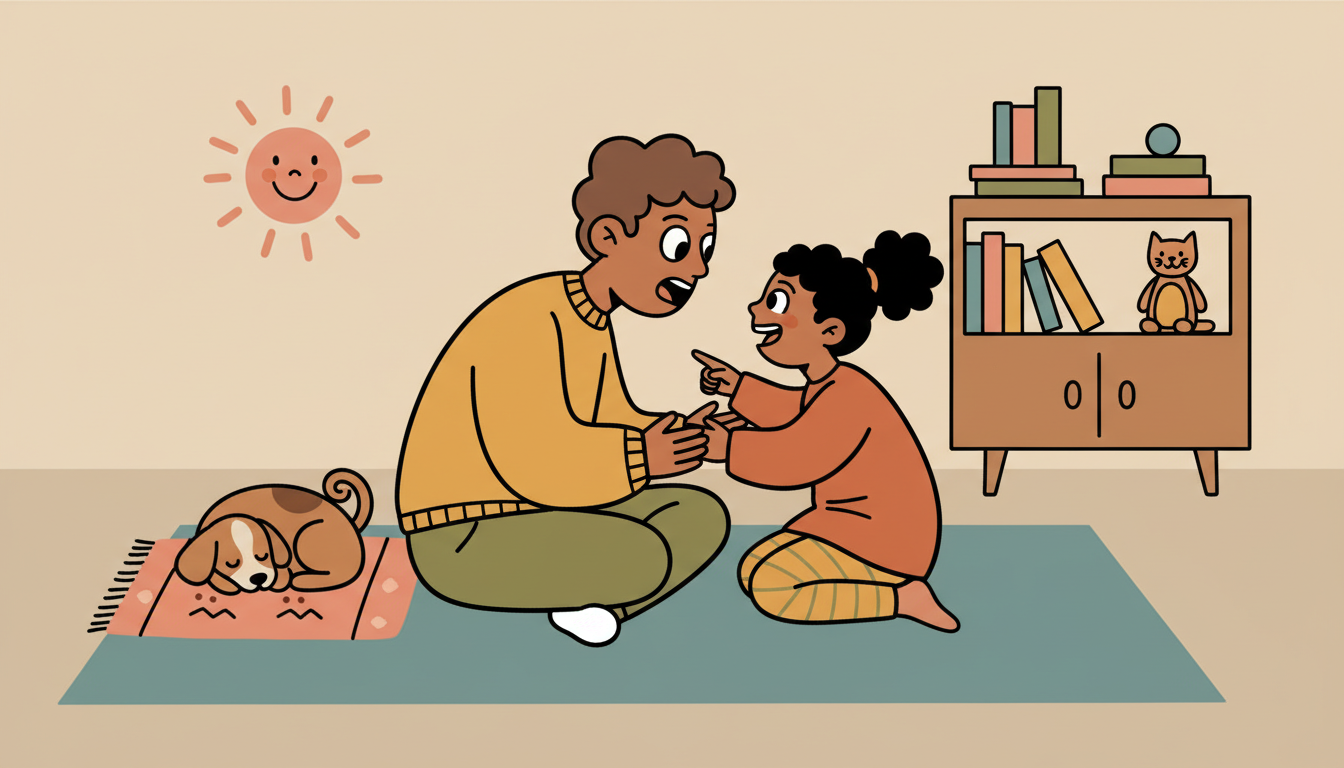
Sit together and take turns making facial expressions that show different emotions. Have your child guess what emotion you are showing, then switch roles. Start with basic feelings like happy, sad, angry, and scared, then add more complex ones like frustrated, proud, or worried. This simple game helps your child learn to read emotions from faces, a key skill for understanding how others feel.
우리 아이에게 맞춤 설계된 Steadily 발달 여정의 일부예요.
활동 방법
Sit together and take turns making facial expressions that show different emotions. Have your child guess what emotion you are showing, then switch roles. Start with basic feelings like happy, sad, angry, and scared, then add more complex ones like frustrated, proud, or worried. This simple game helps your child learn to read emotions from faces, a key skill for understanding how others feel.
효과가 있는 이유
This activity builds cognitive empathy, which helps children understand others' perspectives and emotional states. Research shows that cognitive empathy mediates the association between positive family interactions and children's social competence, particularly helping children develop better social behaviors (Sánchez-Pérez et al., 2018). Practicing identification of emotions from facial expressions is a developmentally appropriate activity for this age when theory of mind is fully developed.
부모를 위한 팁
Start with exaggerated expressions to make it easier, then gradually make them more subtle.
When your child guesses correctly, talk about what clues they noticed, like whether your eyebrows were up or down.
Share times when you felt that emotion to make it more meaningful.
필요한 준비물
None
학습 방식
Cooperative LearningMetacognitive StrategiesStructured Academic Learning

이번 활동이 마음에 들었어? 계획은 우리가 대신 세워줄게.
Steadily는 아이의 관심사, 발달 단계, 그리고 기르고 있는 특성에 맞춰 모든 활동을 개인화해줘. 덕분에 놀이 시간이 더 즐거워지고 모든 순간이 더욱 가치 있어지지.
Steadily 작동 방식 알아보기 →