Feelings face drawing
4~5세Emotional Wellbeing준비물: Paper
Crayons or markers
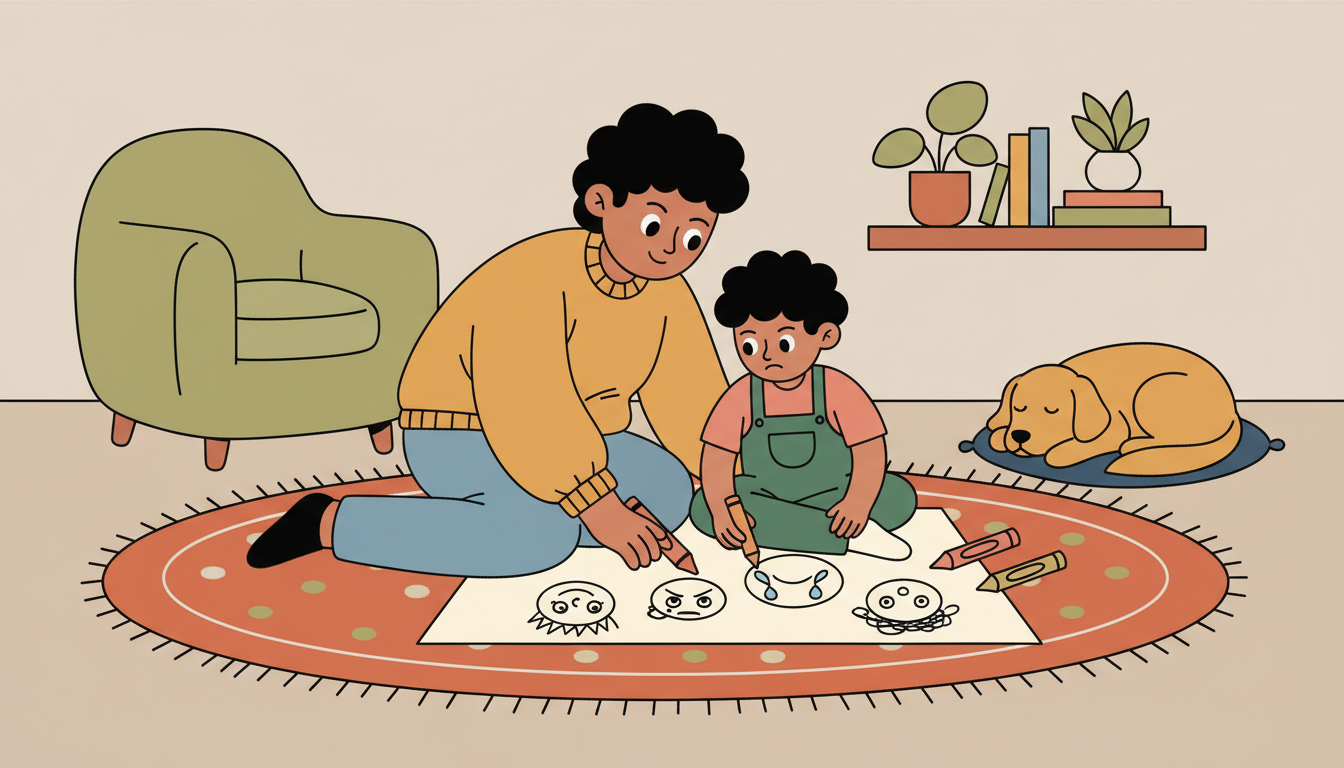
During your time together, draw different emotion faces with your child. Start with basic emotions like happy, sad, angry, and scared. Then introduce complex emotions like frustrated, disappointed, proud, or embarrassed. Take turns drawing and naming emotions. Talk about times when you each felt these emotions. This builds emotional vocabulary in a fun, creative way.
우리 아이에게 맞춤 설계된 Steadily 발달 여정의 일부예요.
활동 방법
During your time together, draw different emotion faces with your child. Start with basic emotions like happy, sad, angry, and scared. Then introduce complex emotions like frustrated, disappointed, proud, or embarrassed. Take turns drawing and naming emotions. Talk about times when you each felt these emotions. This builds emotional vocabulary in a fun, creative way.
효과가 있는 이유
Building rich emotional vocabulary is essential for emotional intelligence development. When children can identify and label their emotions accurately, they develop better emotional regulation and self-awareness. Research shows that emotional knowledge at age five predicts social competence and academic achievement, as children who can identify and understand emotions show better peer relationships and classroom behavior (Brackett, M. A., Rivers, S. E., & Salovey, P., 2011). At this age, children's theory of mind is fully developed, enabling them to understand sophisticated emotions beyond basic feelings.
부모를 위한 팁
Let your child lead sometimes by choosing which emotion to draw next. This builds their confidence.
Ask what each emotion feels like in their body. This helps them recognize emotions when they happen.
Keep drawings simple. Stick figures work perfectly for this activity.
필요한 준비물
Paper
Crayons or markers
학습 방식
Metacognitive StrategiesCooperative LearningStructured Academic Learning

이번 활동이 마음에 들었어? 계획은 우리가 대신 세워줄게.
Steadily는 아이의 관심사, 발달 단계, 그리고 기르고 있는 특성에 맞춰 모든 활동을 개인화해줘. 덕분에 놀이 시간이 더 즐거워지고 모든 순간이 더욱 가치 있어지지.
Steadily 작동 방식 알아보기 →