Fair or not fair discussions
4~5세Family Connection필요한 준비물 없음
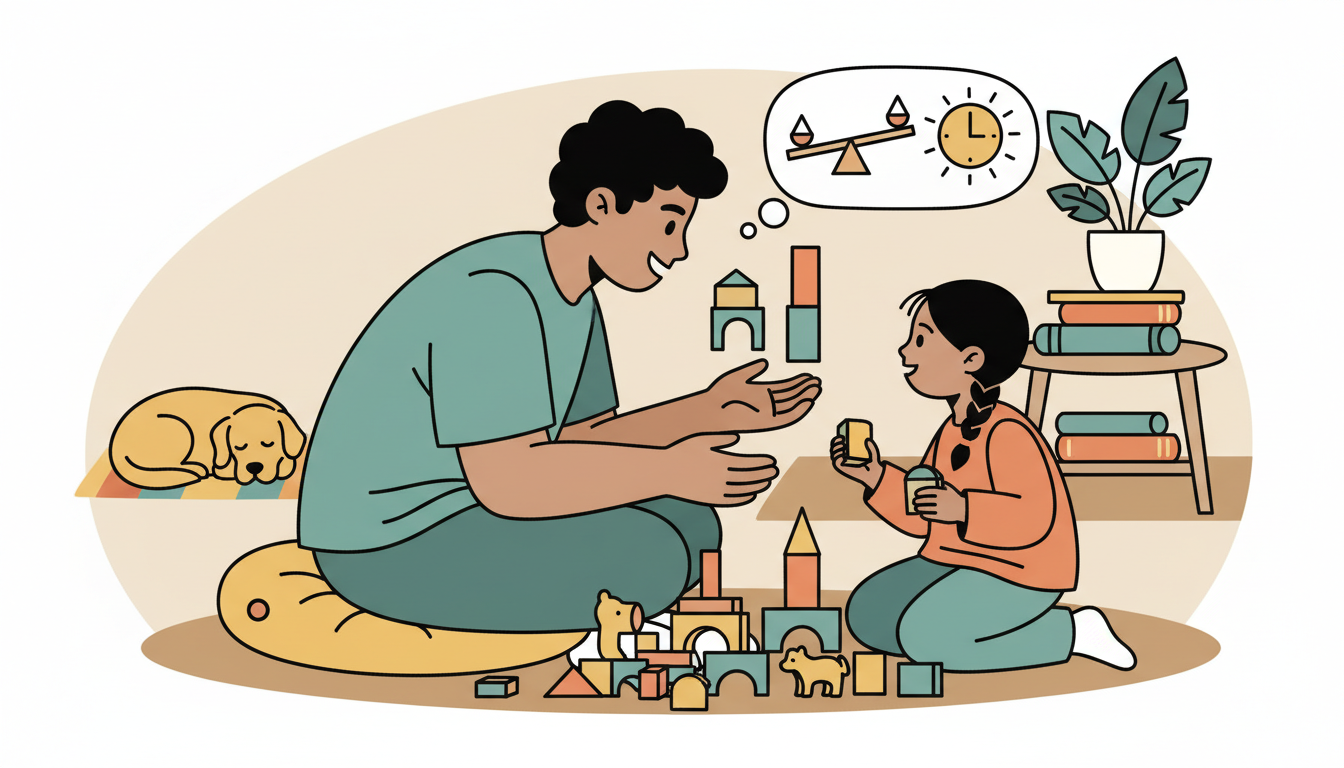
When conflicts arise, introduce the concept of fairness by asking whether proposed solutions feel fair to everyone involved. Help your child think about what fair means in different situations. Sometimes fair means equal turns, sometimes it means the person who had it first gets more time, and sometimes it means something else. Guide them to think through what makes sense for each specific situation.
우리 아이에게 맞춤 설계된 Steadily 발달 여정의 일부예요.
활동 방법
When conflicts arise, introduce the concept of fairness by asking whether proposed solutions feel fair to everyone involved. Help your child think about what fair means in different situations. Sometimes fair means equal turns, sometimes it means the person who had it first gets more time, and sometimes it means something else. Guide them to think through what makes sense for each specific situation.
효과가 있는 이유
Collaborative problem-solving approaches in families predict better parent-child relationships during adolescence and young adulthood, with children maintaining stronger family bonds across developmental transitions (Robin & Foster, 1989). Learning to evaluate solutions for fairness develops critical thinking about relationships and builds the foundation for healthy conflict patterns. Children at this age can classify by multiple attributes and understand cause-effect, enabling them to grasp that fairness depends on context.
부모를 위한 팁
Avoid imposing your idea of fair. Instead, ask questions that help your child think it through.
Acknowledge that fair can look different in different situations.
Celebrate when your child considers fairness for all people involved, not just themselves.
필요한 준비물
None
학습 방식
Cooperative LearningMetacognitive StrategiesStructured Academic Learning

이번 활동이 마음에 들었어? 계획은 우리가 대신 세워줄게.
Steadily는 아이의 관심사, 발달 단계, 그리고 기르고 있는 특성에 맞춰 모든 활동을 개인화해줘. 덕분에 놀이 시간이 더 즐거워지고 모든 순간이 더욱 가치 있어지지.
Steadily 작동 방식 알아보기 →