Face feelings match
2~3세Family Connection준비물: None, or a mirror if available
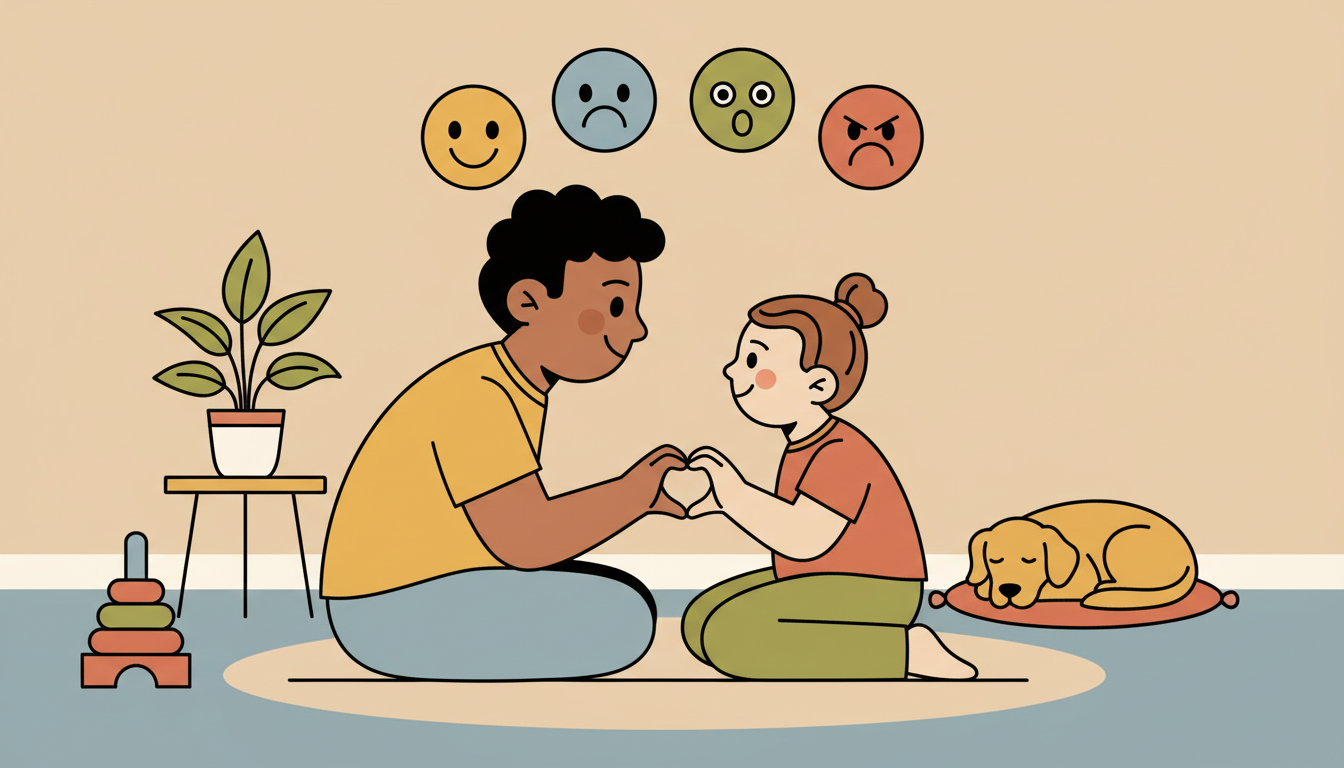
Make simple faces showing different emotions. Say 'I am making a happy face. Can you make one too?' Try sad, surprised, and mad faces. When your child copies you, name what you see: 'You made a sad face. Your mouth goes down when you are sad.' Take turns making faces.
우리 아이에게 맞춤 설계된 Steadily 발달 여정의 일부예요.
활동 방법
Make simple faces showing different emotions. Say 'I am making a happy face. Can you make one too?' Try sad, surprised, and mad faces. When your child copies you, name what you see: 'You made a sad face. Your mouth goes down when you are sad.' Take turns making faces.
효과가 있는 이유
Recognizing emotions in self and others is a key developmental indicator of emerging empathy. This activity helps children practice the foundational skill of distinguishing different emotional states. Parental empathy and modeling create the positive family climate that fosters children's empathy abilities and social behavior (Sánchez-Pérez, N., Fuentes, L. J., Jolliffe, D., & González-Salinas, C., 2018). Imitation and social learning are powerful at this age.
부모를 위한 팁
Start with happy and sad. These are easiest for young children to recognize and copy.
Use a mirror if you have one handy. Seeing their own expressions helps children understand emotions better.
필요한 준비물
None, or a mirror if available
학습 방식
Symbolic and Pretend PlaySongs, Stories, and RhymesSocial Learning Through Peers

이번 활동이 마음에 들었어? 계획은 우리가 대신 세워줄게.
Steadily는 아이의 관심사, 발달 단계, 그리고 기르고 있는 특성에 맞춰 모든 활동을 개인화해줘. 덕분에 놀이 시간이 더 즐거워지고 모든 순간이 더욱 가치 있어지지.
Steadily 작동 방식 알아보기 →