Emotion naming moments
2~3세Family Connection필요한 준비물 없음
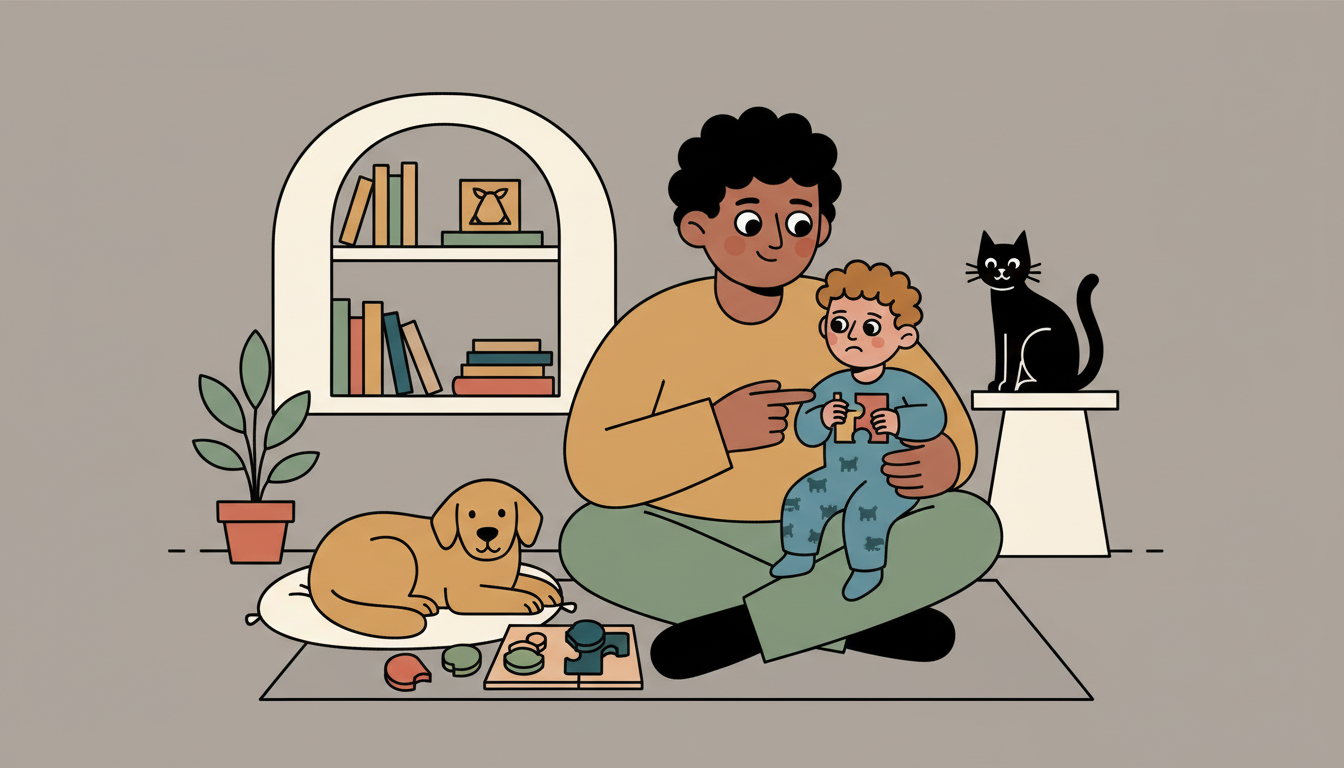
Throughout your time together, gently name emotions as they happen. When your child looks frustrated with a puzzle, say "That feels hard." When they laugh, say "You feel happy." When they run to you after a loud noise, say "That scared you. I'm here." This helps them learn to identify and trust you with their feelings.
우리 아이에게 맞춤 설계된 Steadily 발달 여정의 일부예요.
활동 방법
Throughout your time together, gently name emotions as they happen. When your child looks frustrated with a puzzle, say "That feels hard." When they laugh, say "You feel happy." When they run to you after a loud noise, say "That scared you. I'm here." This helps them learn to identify and trust you with their feelings.
효과가 있는 이유
Validating and responding to emotions builds secure attachment and emotional competence. Securely attached children demonstrate better emotion understanding and modulation (Thompson, 2008). When you name and accept your child's emotions without judgment, they learn to trust you with their inner experiences, which is a core component of secure attachment and sets the foundation for healthy emotional development.
부모를 위한 팁
Use simple feeling words that match what you see. Stick to basic emotions like happy, sad, mad, and scared.
Validate all emotions as okay to feel. Say "It's okay to feel frustrated" rather than trying to fix the feeling right away.
Stay calm and warm when naming difficult emotions. Your steady presence helps them feel safe with all their feelings.
필요한 준비물
None
학습 방식
Symbolic and Pretend PlaySongs, Stories, and RhymesInteractive Play-Based Learning

이번 활동이 마음에 들었어? 계획은 우리가 대신 세워줄게.
Steadily는 아이의 관심사, 발달 단계, 그리고 기르고 있는 특성에 맞춰 모든 활동을 개인화해줘. 덕분에 놀이 시간이 더 즐거워지고 모든 순간이 더욱 가치 있어지지.
Steadily 작동 방식 알아보기 →