Validation practice
2~3세Emotional Wellbeing필요한 준비물 없음
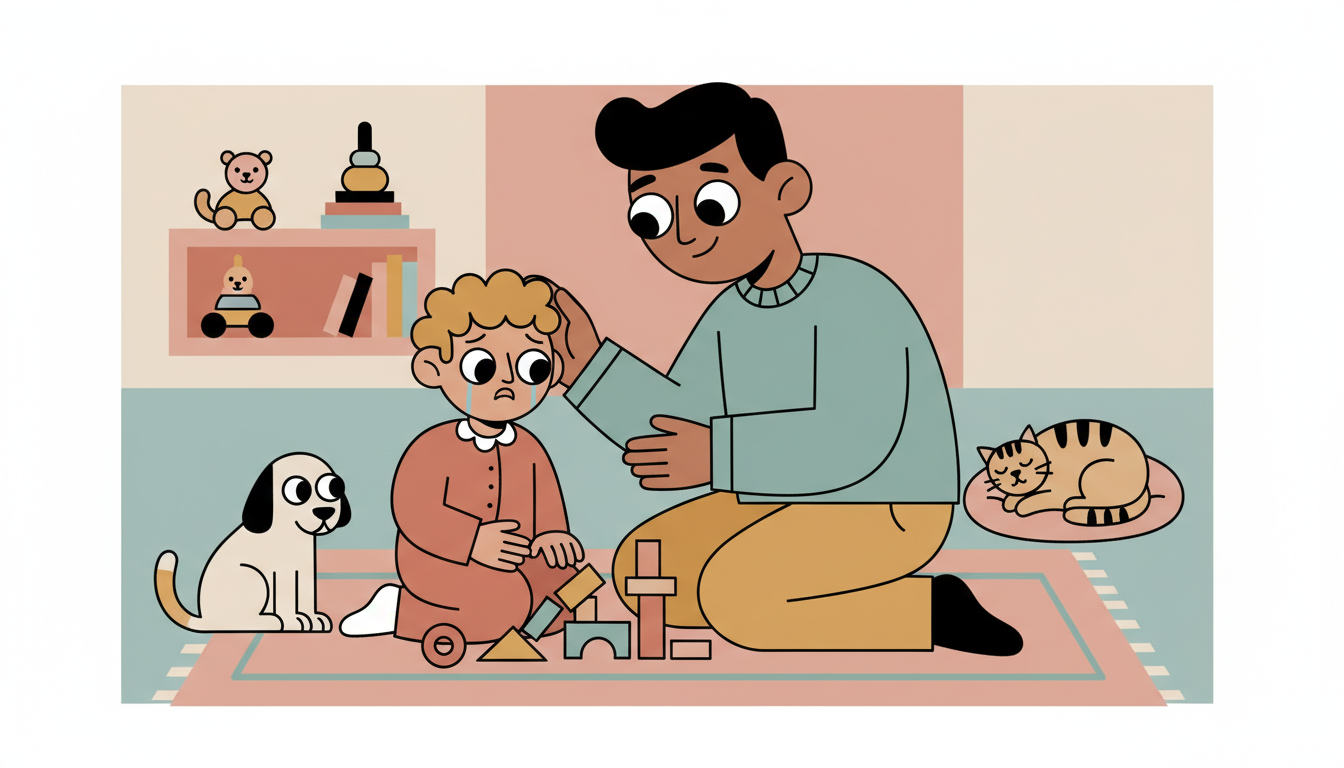
When your child shows any emotion, name it and acknowledge it before trying to solve the problem. You might say, 'You seem really frustrated that the tower fell down. That is frustrating.'
우리 아이에게 맞춤 설계된 Steadily 발달 여정의 일부예요.
활동 방법
When your child shows any emotion, name it and acknowledge it before trying to solve the problem. You might say, 'You seem really frustrated that the tower fell down. That is frustrating.'
This simple practice validates your child's emotional experience. It teaches them that all feelings are okay, even uncomfortable ones. Over time, this builds emotional awareness and trust.
효과가 있는 이유
Emotion coaching is the most evidence-based approach for developing emotional intelligence. Research shows that children whose emotions were acknowledged and labeled by parents at age 2-3 showed significantly better emotional regulation at age 4-5, and this early emotion coaching predicted fewer behavior problems in elementary school (Goleman, 1995). A strong positive link exists between emotional intelligence and better mental health outcomes (Mayer et al., 1999).
부모를 위한 팁
Validate the feeling while still setting limits on behavior. You can say, 'You're angry, and hitting is not okay.'
You don't have to fix the feeling or make it go away. Just naming it is enough.
필요한 준비물
None
학습 방식
Symbolic and Pretend PlaySongs, Stories, and RhymesSocial Learning Through Peers

이번 활동이 마음에 들었어? 계획은 우리가 대신 세워줄게.
Steadily는 아이의 관심사, 발달 단계, 그리고 기르고 있는 특성에 맞춰 모든 활동을 개인화해줘. 덕분에 놀이 시간이 더 즐거워지고 모든 순간이 더욱 가치 있어지지.
Steadily 작동 방식 알아보기 →