Naming big feelings together
1~2세Family Connection필요한 준비물 없음
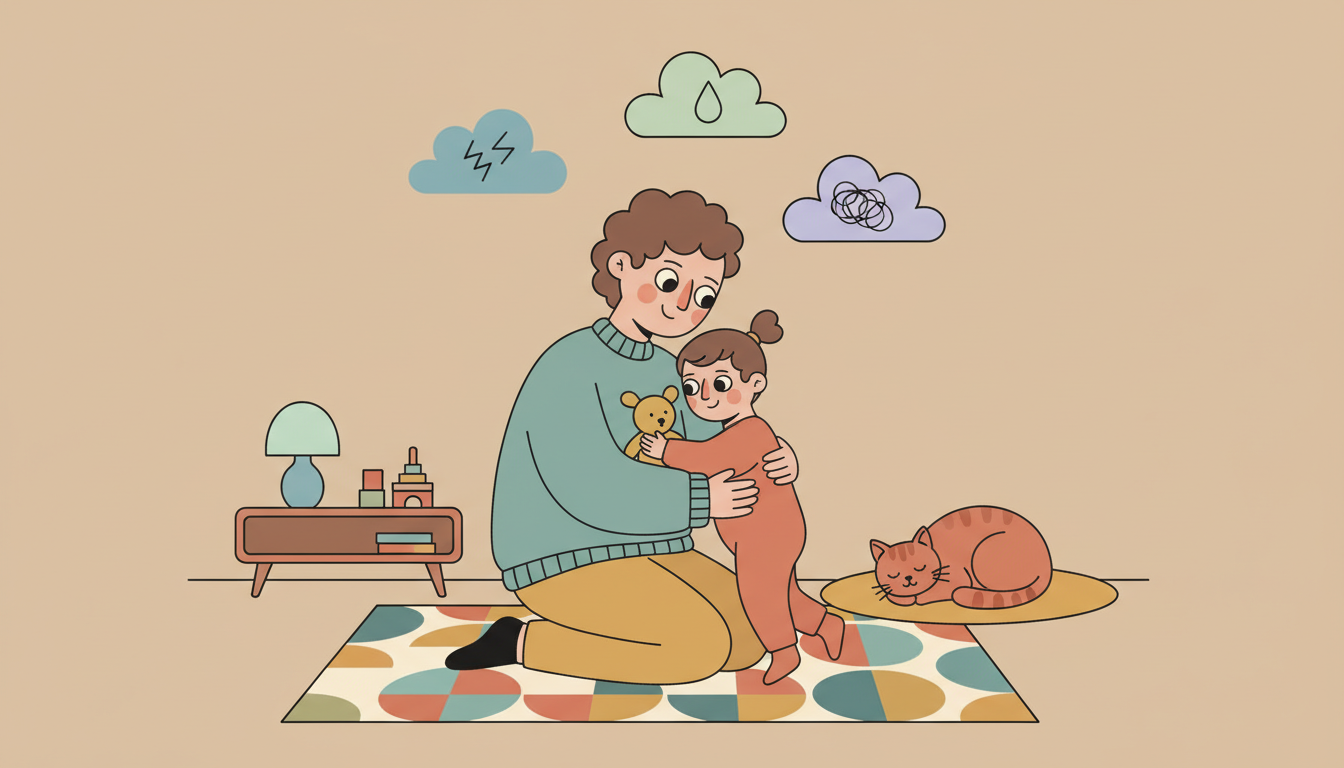
When your child gets upset during play or daily activities, kneel down to their level and calmly name what they might be feeling. Use simple words like mad, sad, or frustrated. Your calm presence helps them learn that feelings are okay and can be talked about. This creates a foundation for handling disagreements peacefully later on.
우리 아이에게 맞춤 설계된 Steadily 발달 여정의 일부예요.
활동 방법
When your child gets upset during play or daily activities, kneel down to their level and calmly name what they might be feeling. Use simple words like mad, sad, or frustrated. Your calm presence helps them learn that feelings are okay and can be talked about. This creates a foundation for handling disagreements peacefully later on.
효과가 있는 이유
Your child is just beginning to connect words with their internal experiences. When you label emotions during conflicts, you're teaching the first step of conflict resolution: recognizing and naming feelings. Research shows that children who learn to calmly discuss disagreements and express frustration with words show 30% better emotional regulation throughout development (Shantz, 1987). At this age, your modeling is the primary teaching tool. Early training in these foundational skills leads to significantly better peer relationships and 25% fewer behavioral problems (Webster-Stratton & Reid, 2004).
부모를 위한 팁
Stay calm and use a gentle voice, even when your child is very upset. Your regulation helps them learn to regulate.
Wait until the biggest wave of emotion passes before trying to talk. Sometimes just being present is enough.
필요한 준비물
None
학습 방식
Language-Rich EnvironmentImitation and Modeling

이번 활동이 마음에 들었어? 계획은 우리가 대신 세워줄게.
Steadily는 아이의 관심사, 발달 단계, 그리고 기르고 있는 특성에 맞춰 모든 활동을 개인화해줘. 덕분에 놀이 시간이 더 즐거워지고 모든 순간이 더욱 가치 있어지지.
Steadily 작동 방식 알아보기 →