Mirror your emotions
1~2세Family Connection준비물: Mirror (optional)
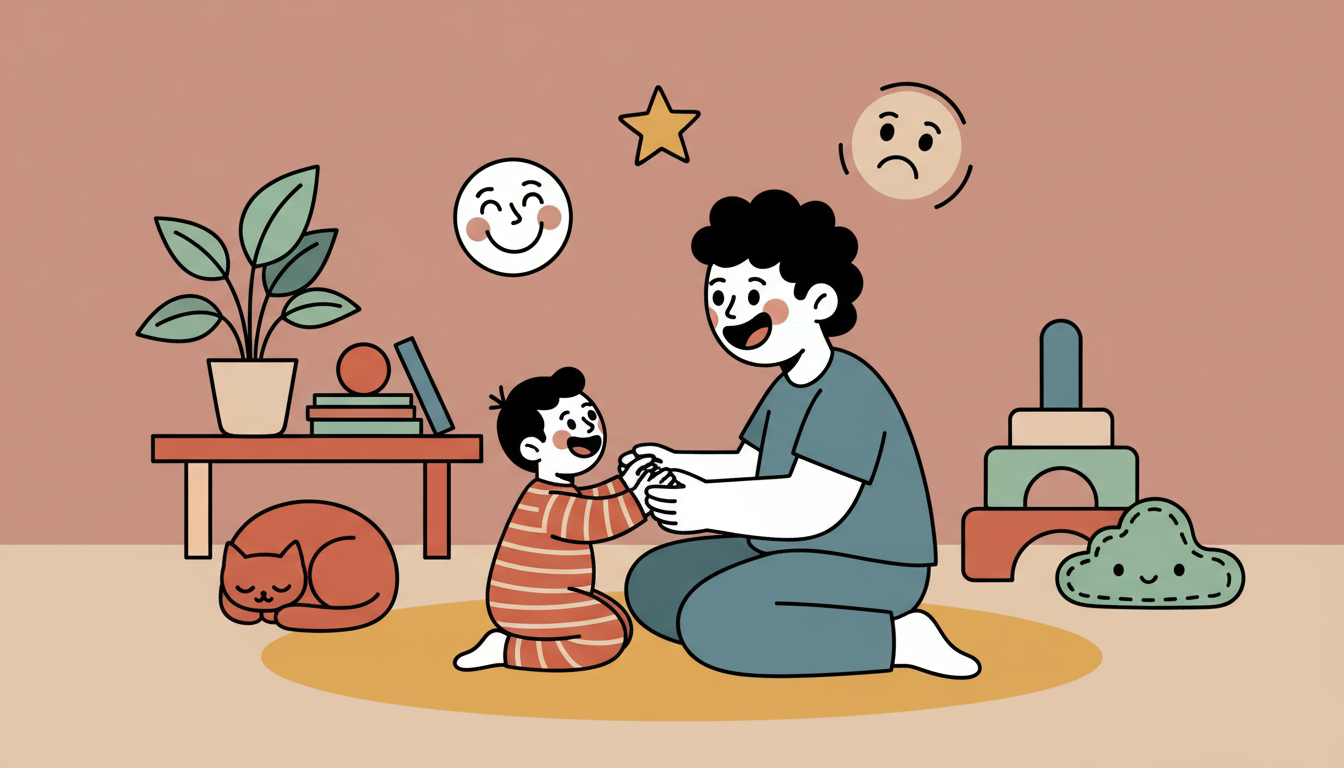
Sit facing your child and make different facial expressions together. Start with a big smile and say 'Happy.' Then try a frown and say 'Sad.' Encourage your child to copy your face. You can also mirror back your child's expressions, naming the feeling you see. This playful activity helps your child connect facial expressions with emotion words and builds emotional awareness.
우리 아이에게 맞춤 설계된 Steadily 발달 여정의 일부예요.
활동 방법
Sit facing your child and make different facial expressions together. Start with a big smile and say 'Happy.' Then try a frown and say 'Sad.' Encourage your child to copy your face. You can also mirror back your child's expressions, naming the feeling you see. This playful activity helps your child connect facial expressions with emotion words and builds emotional awareness.
효과가 있는 이유
Recognizing emotions in facial expressions is a fundamental empathy skill. When parents create a safe space for children to explore and express emotions, children develop better emotional awareness and reduced anxiety (Bhansali, 2023). Imitation and modeling are powerful learning tools at this age, and practicing facial expressions helps children build the recognition skills needed for responding sensitively to others' emotions, a key predictor of positive relationships later in life.
부모를 위한 팁
Use a mirror if you have one nearby. Seeing their own face helps children learn.
Stick to basic emotions your child sees often. Happy and sad are good starting points.
Make it playful and fun. Exaggerate your expressions a bit to make them clearer.
필요한 준비물
Mirror (optional)
학습 방식
Language-Rich EnvironmentImitation and ModelingBeginning Symbolic Play

이번 활동이 마음에 들었어? 계획은 우리가 대신 세워줄게.
Steadily는 아이의 관심사, 발달 단계, 그리고 기르고 있는 특성에 맞춰 모든 활동을 개인화해줘. 덕분에 놀이 시간이 더 즐거워지고 모든 순간이 더욱 가치 있어지지.
Steadily 작동 방식 알아보기 →