Feeling faces pretend play
2~3세Family Connection준비물: Stuffed animals or dolls
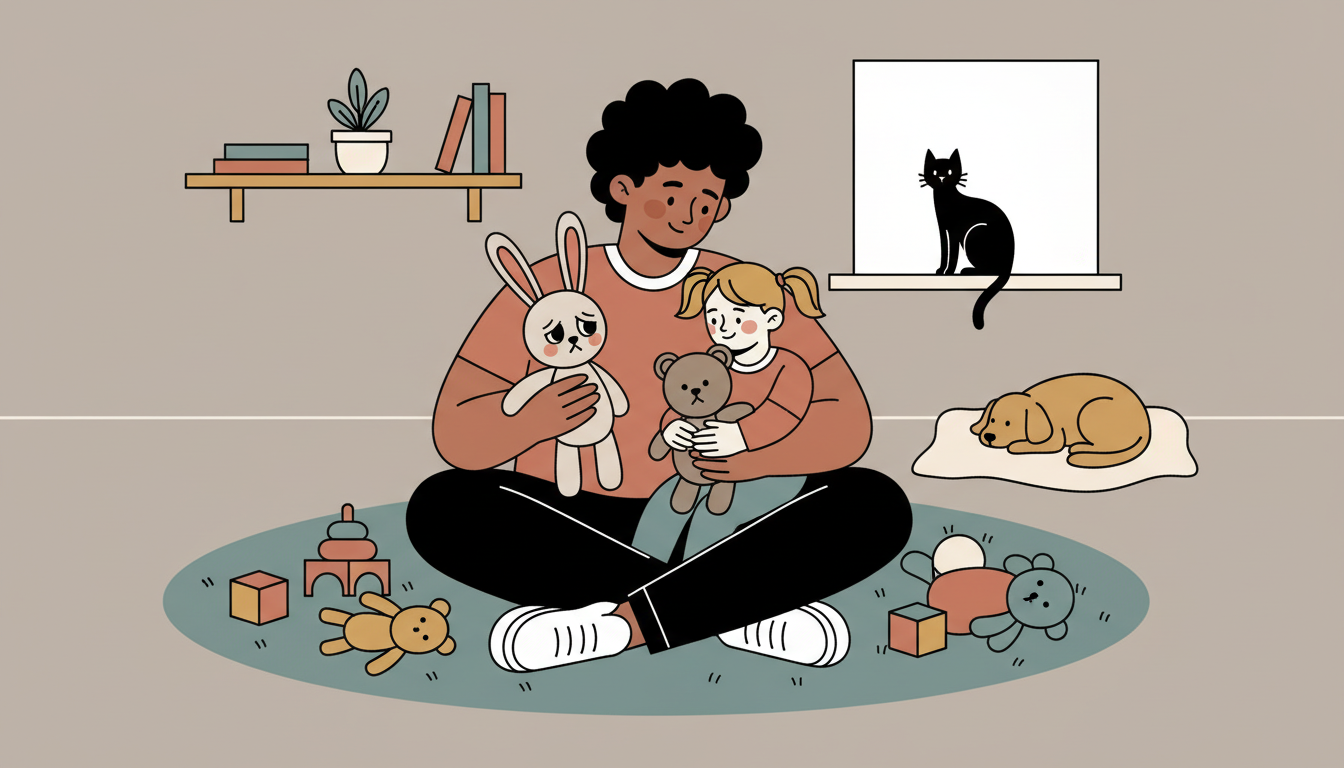
Use stuffed animals or dolls to act out different feelings during play. Make one toy sad and have it go to another toy for a hug. Say "Bunny feels sad. Bunny goes to mama for a cuddle." Then invite your child to help the sad toy feel better. This teaches that coming to someone you trust when you feel bad is a healthy way to cope.
우리 아이에게 맞춤 설계된 Steadily 발달 여정의 일부예요.
활동 방법
Use stuffed animals or dolls to act out different feelings during play. Make one toy sad and have it go to another toy for a hug. Say "Bunny feels sad. Bunny goes to mama for a cuddle." Then invite your child to help the sad toy feel better. This teaches that coming to someone you trust when you feel bad is a healthy way to cope.
효과가 있는 이유
Pretend play helps children understand emotions and relationships in a safe context. Secure attachments help children learn to empathize, develop relationships, and cope with stress (Canadian Psychological Association, 2024). Through symbolic play, your child practices emotional expression and learns that seeking comfort from trusted adults is a positive coping strategy, which supports their developing attachment security.
부모를 위한 팁
Name the emotions simply as you play. Use words like happy, sad, scared, or frustrated.
Show how the parent toy responds with warmth and comfort. This models the secure base your child needs.
Follow your child's lead. If they want to make all the toys happy, that's fine. The key is showing comfort works.
필요한 준비물
Stuffed animals or dolls
학습 방식
Symbolic and Pretend PlaySongs, Stories, and RhymesInteractive Play-Based Learning

이번 활동이 마음에 들었어? 계획은 우리가 대신 세워줄게.
Steadily는 아이의 관심사, 발달 단계, 그리고 기르고 있는 특성에 맞춰 모든 활동을 개인화해줘. 덕분에 놀이 시간이 더 즐거워지고 모든 순간이 더욱 가치 있어지지.
Steadily 작동 방식 알아보기 →