Feeling faces check-in
3~4세Family Connection필요한 준비물 없음
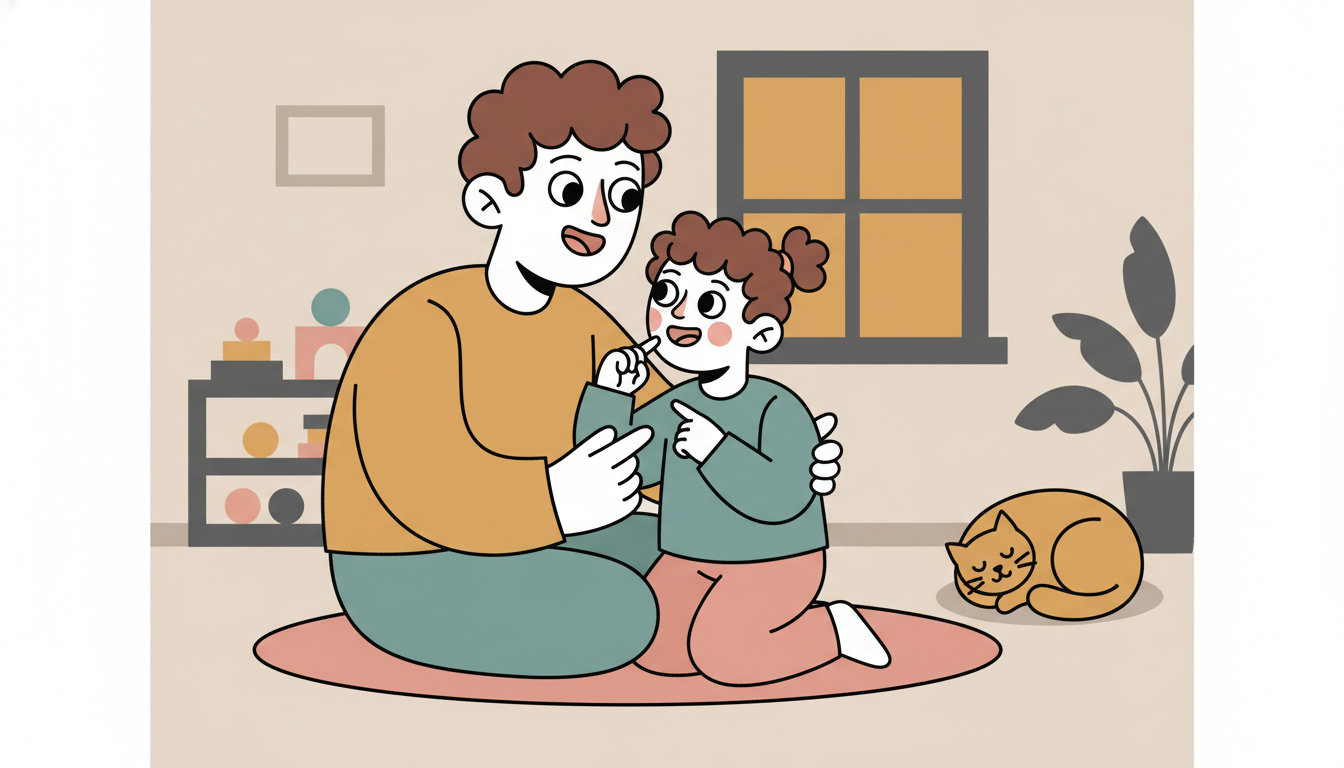
Several times during your time together, pause and ask your child 'How are you feeling right now?' Encourage them to tell you in words rather than just pointing or nodding. Share your own feelings too, using simple statements like 'I feel happy when we play together' or 'I feel tired after work.'
우리 아이에게 맞춤 설계된 Steadily 발달 여정의 일부예요.
활동 방법
Several times during your time together, pause and ask your child 'How are you feeling right now?' Encourage them to tell you in words rather than just pointing or nodding. Share your own feelings too, using simple statements like 'I feel happy when we play together' or 'I feel tired after work.'
효과가 있는 이유
Frequent emotional check-ins build the communication quality factors of mirroring and appropriate response that enhance children's psychological development (Zhang & Li, 2024). When parents validate and reflect feelings before problem-solving, children learn that their emotional experiences are understood and valued. This practice establishes the open communication patterns that correlate with enduring parent-child relationships (Hartos & Power, 2000).
부모를 위한 팁
Make this feel natural rather than like a test by weaving it into activities you're already doing.
When your child shares a feeling, reflect it back like 'It sounds like you're feeling frustrated that the blocks keep falling.'
Use your own feeling statements to model how to express emotions clearly.
필요한 준비물
None
학습 방식
Narrative and Literacy-Rich ExperiencesCollaborative and Cooperative PlayInquiry-Based Learning

이번 활동이 마음에 들었어? 계획은 우리가 대신 세워줄게.
Steadily는 아이의 관심사, 발달 단계, 그리고 기르고 있는 특성에 맞춰 모든 활동을 개인화해줘. 덕분에 놀이 시간이 더 즐거워지고 모든 순간이 더욱 가치 있어지지.
Steadily 작동 방식 알아보기 →