Emotion show and tell
3~4세Family Connection필요한 준비물 없음
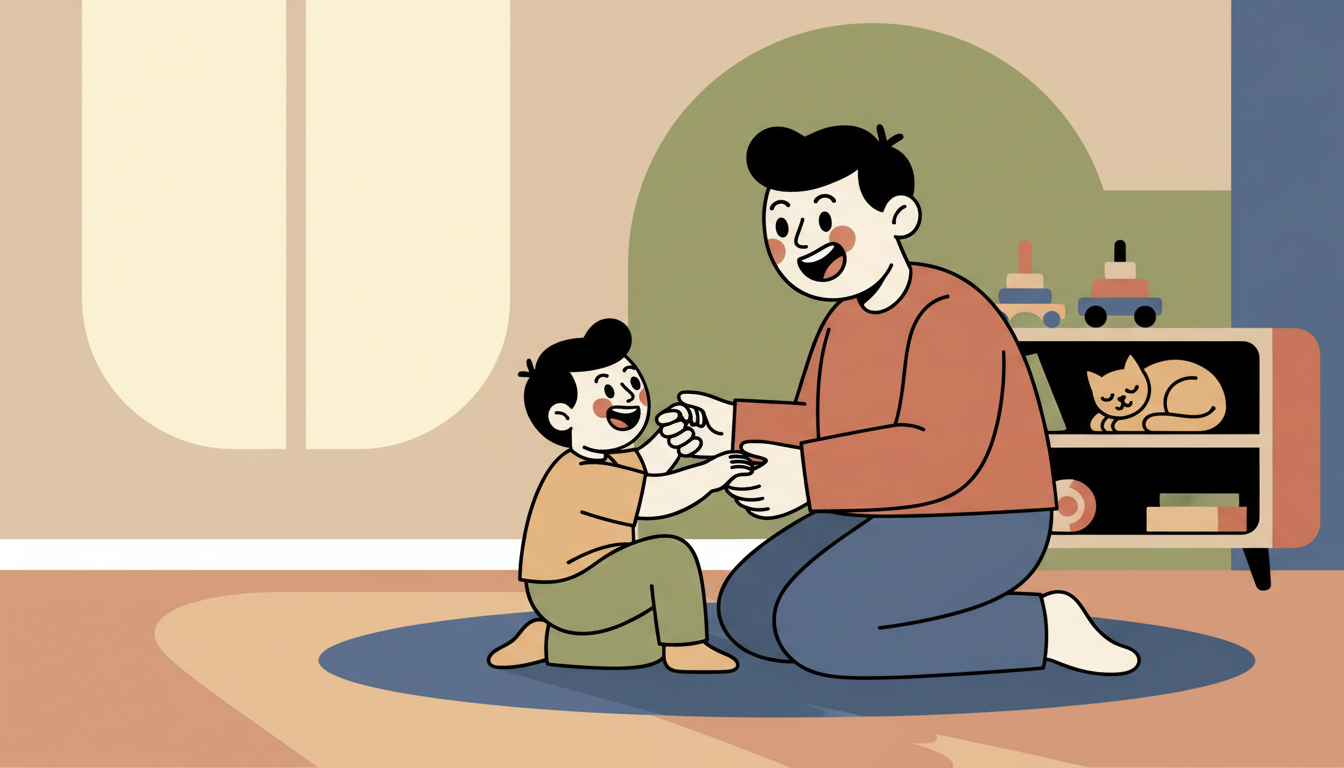
Set aside time during your activity to practice making different feeling faces together. Take turns showing emotions like happy, sad, angry, scared, or surprised with your face and body. After each one, talk about when you might feel that way. You can say, 'Show me your sad face. When do you feel sad? I feel sad when I miss someone I love.' Then ask your child to guess which emotion you're showing and share when they feel that way too.
우리 아이에게 맞춤 설계된 Steadily 발달 여정의 일부예요.
활동 방법
Set aside time during your activity to practice making different feeling faces together. Take turns showing emotions like happy, sad, angry, scared, or surprised with your face and body. After each one, talk about when you might feel that way. You can say, 'Show me your sad face. When do you feel sad? I feel sad when I miss someone I love.' Then ask your child to guess which emotion you're showing and share when they feel that way too.
효과가 있는 이유
When parents show empathy and model emotional awareness, they create a safe space for children to express themselves and develop their own empathy (Bhansali, 2023). At this age, children can recognize emotions in faces and body language, a key skill for empathy. Practicing emotion recognition through play makes learning fun while building the foundation for understanding how others feel. This shared emotional experience strengthens your connection and teaches emotional literacy.
부모를 위한 팁
Make it playful by exaggerating your expressions and movements.
Start with basic emotions before introducing more complex ones like frustrated or disappointed.
Share real examples from your own life to show that everyone has feelings.
필요한 준비물
None
학습 방식
Narrative and Literacy-Rich ExperiencesCollaborative and Cooperative PlayInquiry-Based Learning

이번 활동이 마음에 들었어? 계획은 우리가 대신 세워줄게.
Steadily는 아이의 관심사, 발달 단계, 그리고 기르고 있는 특성에 맞춰 모든 활동을 개인화해줘. 덕분에 놀이 시간이 더 즐거워지고 모든 순간이 더욱 가치 있어지지.
Steadily 작동 방식 알아보기 →