What can we do game
2~3세Emotional Wellbeing필요한 준비물 없음
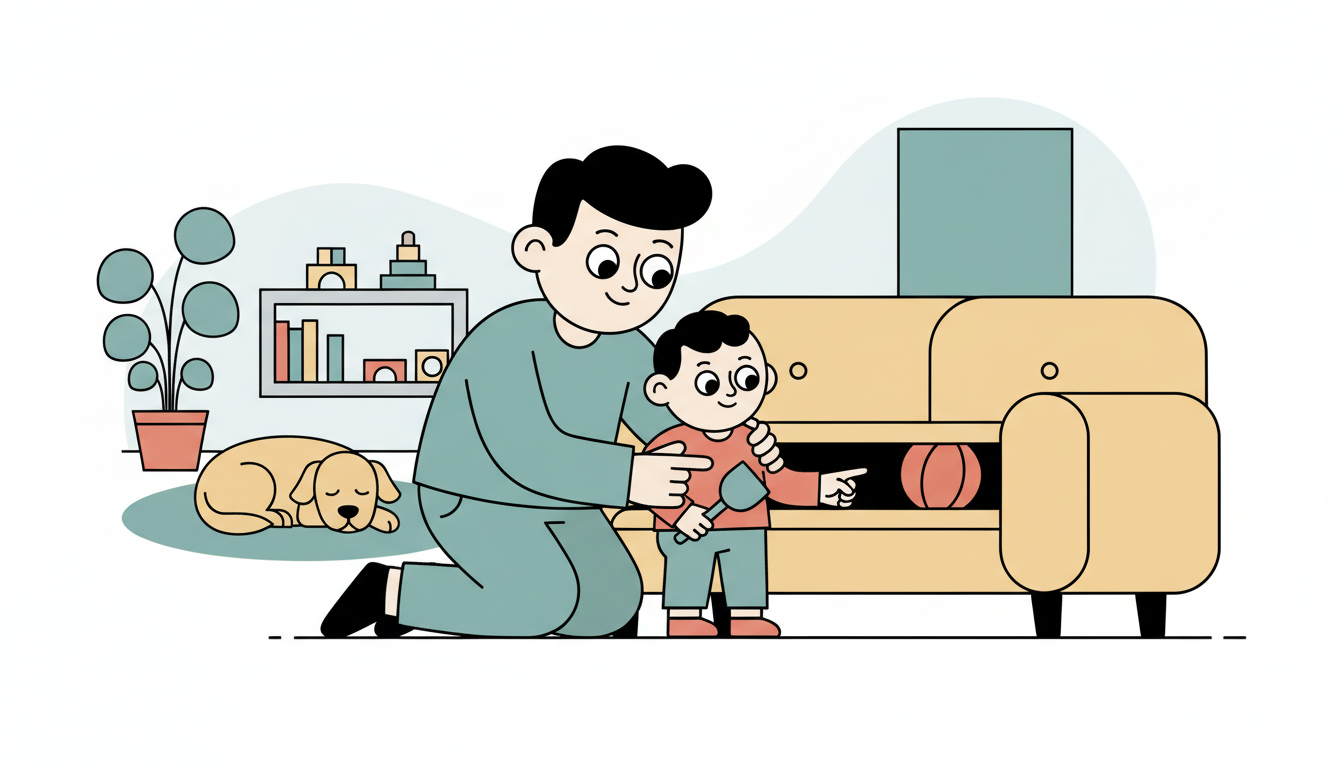
When a small problem comes up, ask your child, "What can we do?" For example, if a toy rolls under the couch, you might say, "The ball went under there. What can we do?" Offer simple options or demonstrate a solution. This shifts focus from the problem to possibilities, teaching solution-focused thinking in a way that's right for their age.
우리 아이에게 맞춤 설계된 Steadily 발달 여정의 일부예요.
활동 방법
When a small problem comes up, ask your child, "What can we do?" For example, if a toy rolls under the couch, you might say, "The ball went under there. What can we do?" Offer simple options or demonstrate a solution. This shifts focus from the problem to possibilities, teaching solution-focused thinking in a way that's right for their age.
효과가 있는 이유
Solution-focused thinking is a key component of optimism, helping children see challenges as solvable rather than insurmountable. Research indicates that optimistic individuals develop better coping strategies when viewing difficulties as manageable (Carver, C. S., Scheier, M. F., & Segerstrom, S. C. (2010). Optimism. Clinical Psychology Review, 30(7), 879-889.). At this developmental stage, children are beginning to problem-solve through trial and error, making this the ideal time to introduce the concept that problems have solutions and we can find them together.
부모를 위한 팁
Start with very simple, concrete problems that have obvious solutions.
Offer two simple choices if your child doesn't respond. They're still learning how to think this way.
Celebrate the solution together once you find it. Say something like, "We figured it out."
필요한 준비물
None
학습 방식
Songs, Stories, and RhymesSymbolic and Pretend PlaySocial Learning Through Peers

이번 활동이 마음에 들었어? 계획은 우리가 대신 세워줄게.
Steadily는 아이의 관심사, 발달 단계, 그리고 기르고 있는 특성에 맞춰 모든 활동을 개인화해줘. 덕분에 놀이 시간이 더 즐거워지고 모든 순간이 더욱 가치 있어지지.
Steadily 작동 방식 알아보기 →