Simple solution steps
1~2세Family Connection필요한 준비물 없음
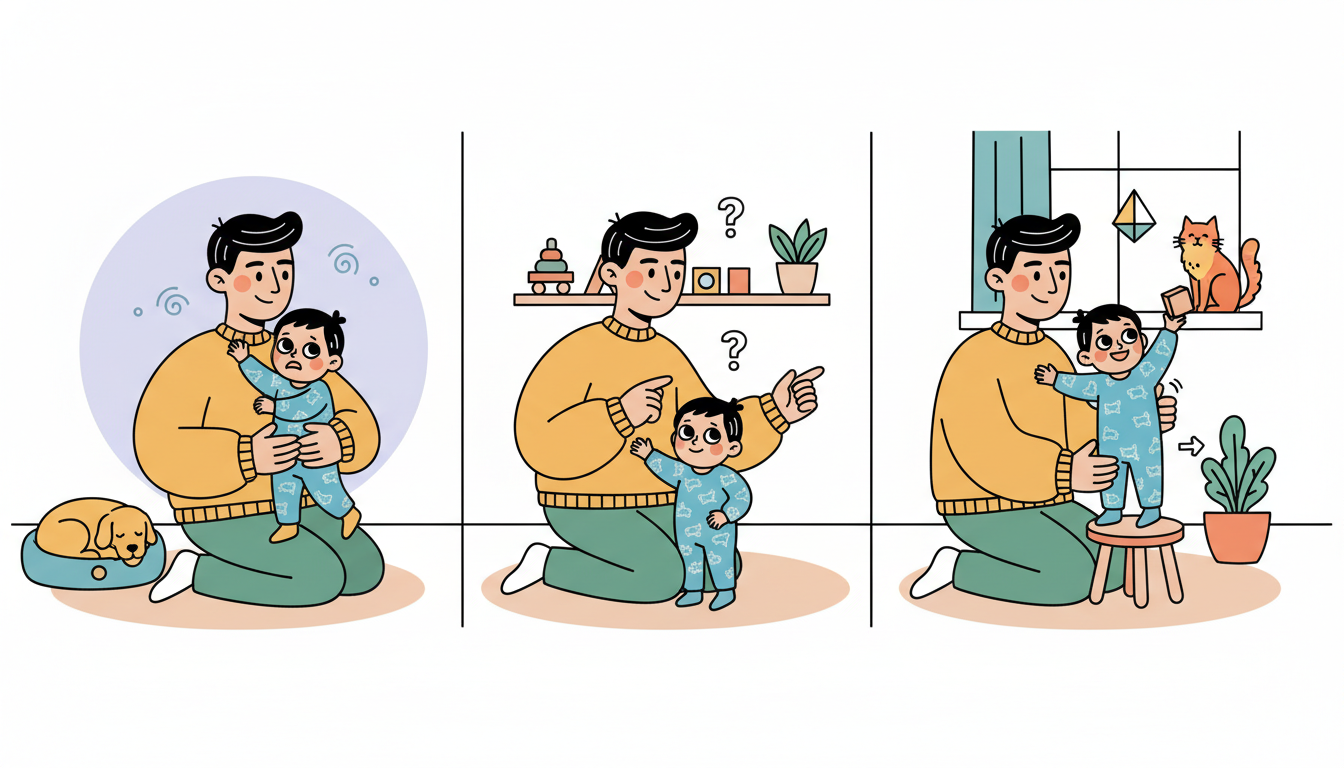
When a conflict happens, walk your child through very simple problem-solving steps using actions and few words. First, help them calm down. Then, show the problem (pointing or demonstrating). Finally, show a simple solution. For example, if they can't reach something, show the problem, then bring a stool. This teaches a basic conflict resolution process.
우리 아이에게 맞춤 설계된 Steadily 발달 여정의 일부예요.
활동 방법
When a conflict happens, walk your child through very simple problem-solving steps using actions and few words. First, help them calm down. Then, show the problem (pointing or demonstrating). Finally, show a simple solution. For example, if they can't reach something, show the problem, then bring a stool. This teaches a basic conflict resolution process.
효과가 있는 이유
At this age, children are beginning to understand cause and effect and can follow simple one-step instructions. Breaking problem-solving into tiny, visible steps helps them begin to internalize a conflict resolution process. Collaborative problem-solving approaches in families predict better parent-child relationships during adolescence and young adulthood (Robin & Foster, 1989). Children who learn to seek mutually beneficial solutions show 30% better emotional regulation throughout development (Shantz, 1987). You're planting seeds for more complex problem-solving skills later.
부모를 위한 팁
Use more actions than words. Show what you mean with gestures and demonstrations.
Keep it to two or three simple steps maximum. Their attention span is only 3-6 minutes at this age.
필요한 준비물
None
학습 방식
Language-Rich EnvironmentImitation and Modeling

이번 활동이 마음에 들었어? 계획은 우리가 대신 세워줄게.
Steadily는 아이의 관심사, 발달 단계, 그리고 기르고 있는 특성에 맞춰 모든 활동을 개인화해줘. 덕분에 놀이 시간이 더 즐거워지고 모든 순간이 더욱 가치 있어지지.
Steadily 작동 방식 알아보기 →