Name their feelings
6~12개월Family Connection필요한 준비물 없음
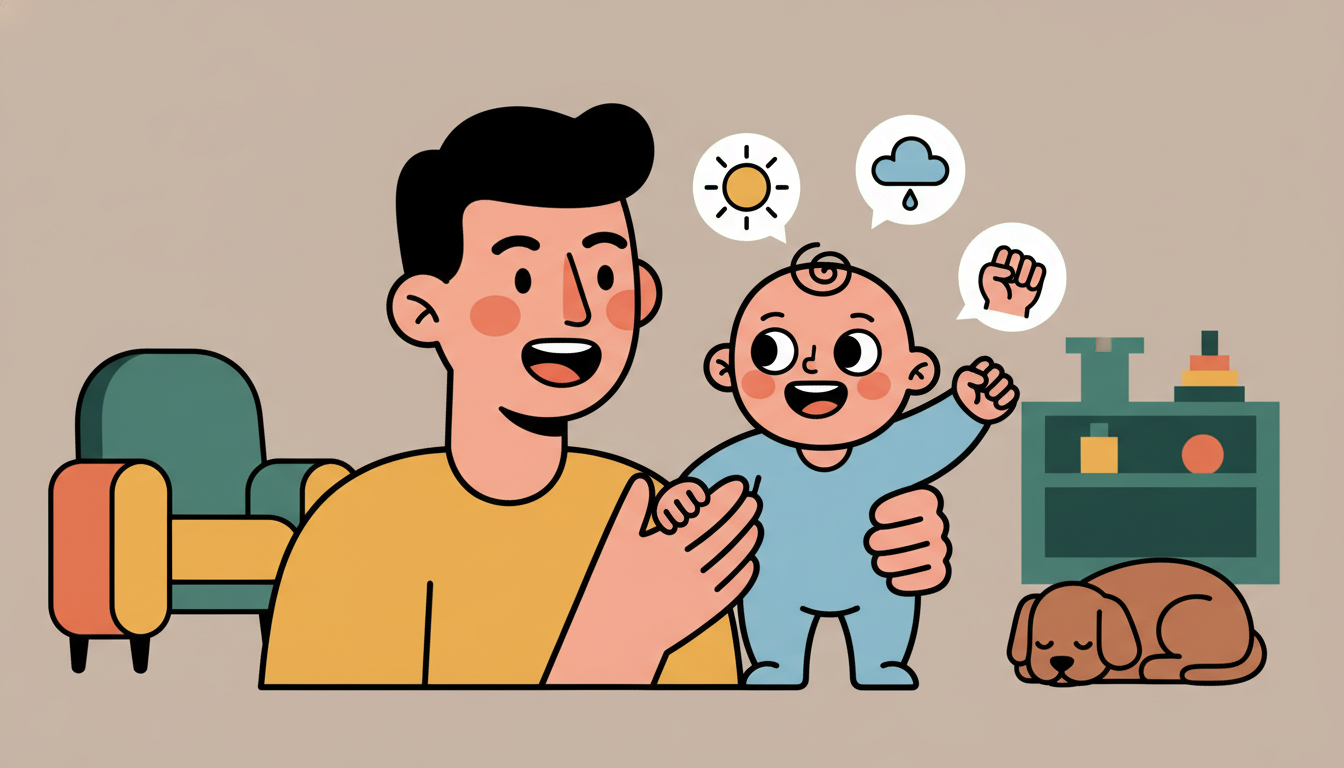
When your child shows emotion, put words to what you see. If they're laughing during play, you might say, "You're happy." If they seem frustrated reaching for something, you might say, "That's hard to reach. You feel frustrated." This practice shows respect for their emotional experience and builds trust that you understand them.
우리 아이에게 맞춤 설계된 Steadily 발달 여정의 일부예요.
활동 방법
When your child shows emotion, put words to what you see. If they're laughing during play, you might say, "You're happy." If they seem frustrated reaching for something, you might say, "That's hard to reach. You feel frustrated." This practice shows respect for their emotional experience and builds trust that you understand them.
효과가 있는 이유
Acknowledging your child's emotions demonstrates that you respect their internal experience. This consistent emotional responsiveness builds trust in the relationship. Children demonstrating reliability and respect toward parents' boundaries show 40% better emotional regulation and trust-building capabilities throughout development (Kochanska & Aksan, 2006).
부모를 위한 팁
Keep your tone calm and matter-of-fact. You're not trying to fix their feelings, just showing you notice and respect them.
It's okay if you're not always right about which emotion they're feeling. The important part is that you're paying attention and trying to understand.
필요한 준비물
None
학습 방식
Responsive InteractionRepetition and Routine

이번 활동이 마음에 들었어? 계획은 우리가 대신 세워줄게.
Steadily는 아이의 관심사, 발달 단계, 그리고 기르고 있는 특성에 맞춰 모든 활동을 개인화해줘. 덕분에 놀이 시간이 더 즐거워지고 모든 순간이 더욱 가치 있어지지.
Steadily 작동 방식 알아보기 →