Mirror feeling faces
2~3세Emotional Wellbeing준비물: Mirror
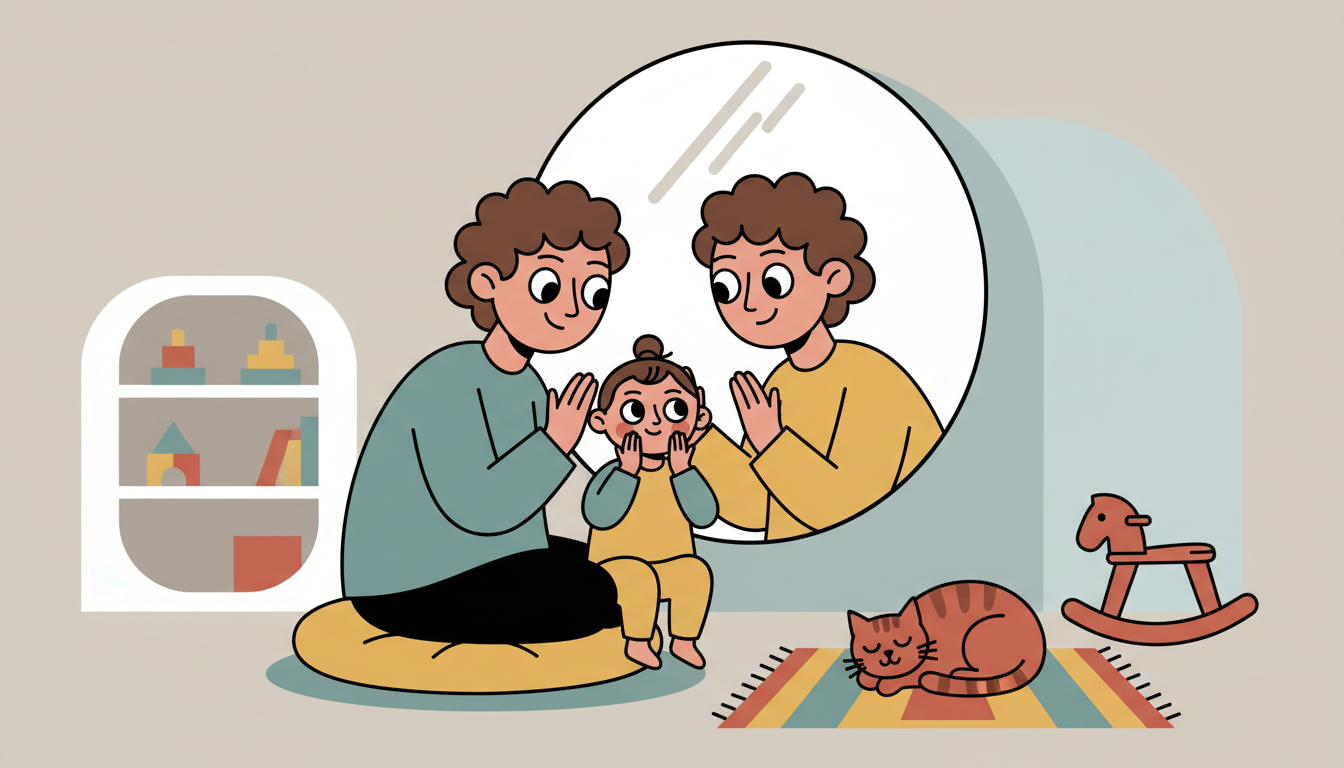
Sit with your child in front of a mirror and make different facial expressions together. Name each emotion as you make the face. Try happy, sad, surprised, angry, and silly faces.
우리 아이에게 맞춤 설계된 Steadily 발달 여정의 일부예요.
활동 방법
Sit with your child in front of a mirror and make different facial expressions together. Name each emotion as you make the face. Try happy, sad, surprised, angry, and silly faces.
This activity builds emotional vocabulary during natural play time. Your child learns to connect facial expressions with feeling words, which is the foundation of emotional recognition.
효과가 있는 이유
At this age, children are developing the language skills needed to label emotions for the first time. Research shows that children whose emotions were acknowledged and labeled by parents at age 2-3 showed significantly better emotional regulation and understanding at age 4-5 (Goleman, 1995). Making faces in the mirror helps children connect internal feelings with external expressions, building the foundation for emotional intelligence including self-awareness and empathy.
부모를 위한 팁
Start with your child's current mood and name it. Let them lead sometimes and guess what feeling they're showing.
If they resist making certain faces, that's okay. You can model the expression and simply say the word.
필요한 준비물
Mirror
학습 방식
Symbolic and Pretend PlaySongs, Stories, and RhymesSocial Learning Through Peers

이번 활동이 마음에 들었어? 계획은 우리가 대신 세워줄게.
Steadily는 아이의 관심사, 발달 단계, 그리고 기르고 있는 특성에 맞춰 모든 활동을 개인화해줘. 덕분에 놀이 시간이 더 즐거워지고 모든 순간이 더욱 가치 있어지지.
Steadily 작동 방식 알아보기 →