Happy ending stories
2~3세Emotional Wellbeing준비물: Picture books or none for made-up stories
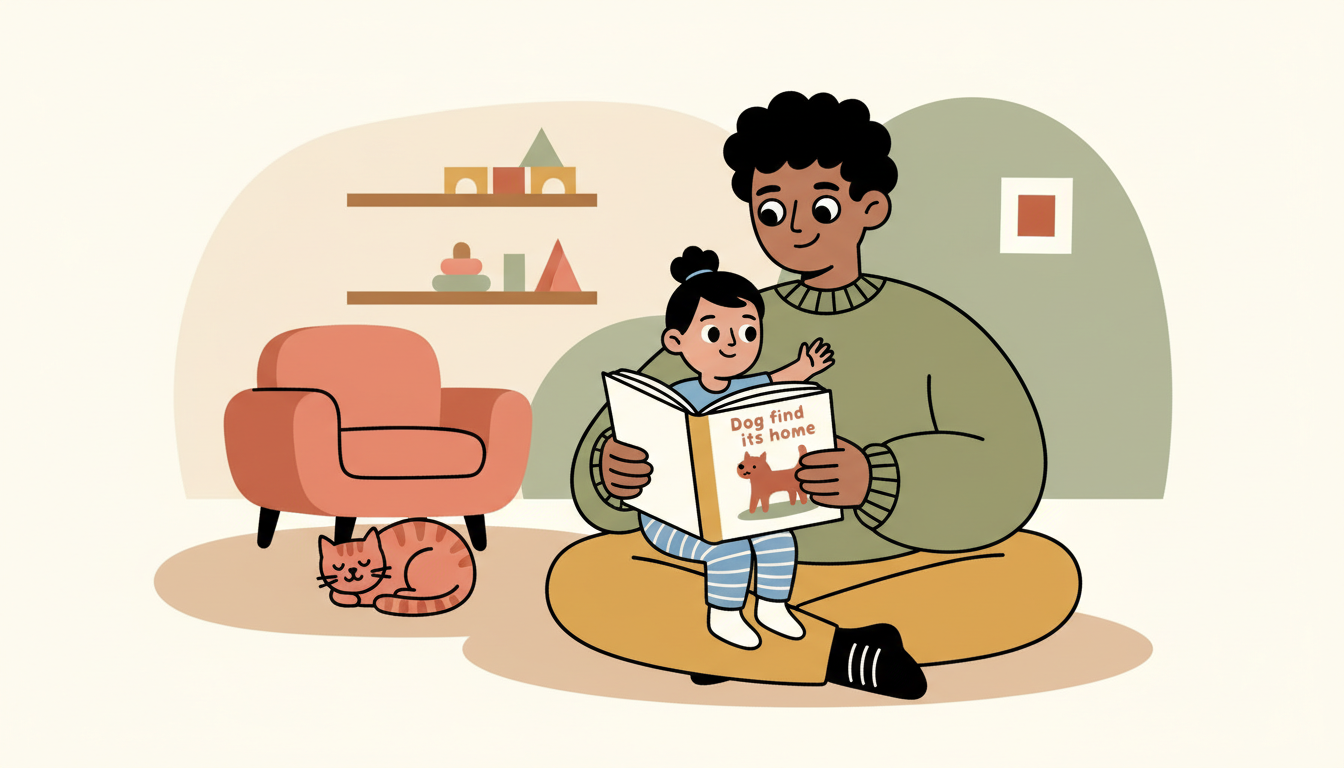
Read or tell simple stories where characters face small challenges but things work out well. For example, "The puppy was lost, but then he found his way home." Keep stories short and clear. Point out how things got better at the end. This teaches your child that problems can have positive solutions.
우리 아이에게 맞춤 설계된 Steadily 발달 여정의 일부예요.
활동 방법
Read or tell simple stories where characters face small challenges but things work out well. For example, "The puppy was lost, but then he found his way home." Keep stories short and clear. Point out how things got better at the end. This teaches your child that problems can have positive solutions.
효과가 있는 이유
Stories with positive resolutions help children develop optimistic expectations about outcomes. Research demonstrates that learned optimism can be taught and significantly improves confidence and perseverance (Seligman, M. E. P., Ernst, R. M., Gillham, J., Reivich, K., & Linkins, M. (2009). Positive education: Positive psychology and classroom interventions. Oxford Review of Education, 35(3), 293-311.). At this age, narrative learning is powerful because children are beginning to understand simple cause and effect, and positive story patterns shape their expectations about how situations resolve.
부모를 위한 팁
Use picture books you already have, or make up simple stories about everyday situations.
Emphasize the positive resolution. You might say, "See, it was okay in the end."
Connect stories to your child's experiences when possible. This helps them see how positive outcomes happen in real life too.
필요한 준비물
Picture books or none for made-up stories
학습 방식
Songs, Stories, and RhymesSymbolic and Pretend PlaySocial Learning Through Peers

이번 활동이 마음에 들었어? 계획은 우리가 대신 세워줄게.
Steadily는 아이의 관심사, 발달 단계, 그리고 기르고 있는 특성에 맞춰 모든 활동을 개인화해줘. 덕분에 놀이 시간이 더 즐거워지고 모든 순간이 더욱 가치 있어지지.
Steadily 작동 방식 알아보기 →