Appreciation high fives
1~2세Family Connection필요한 준비물 없음
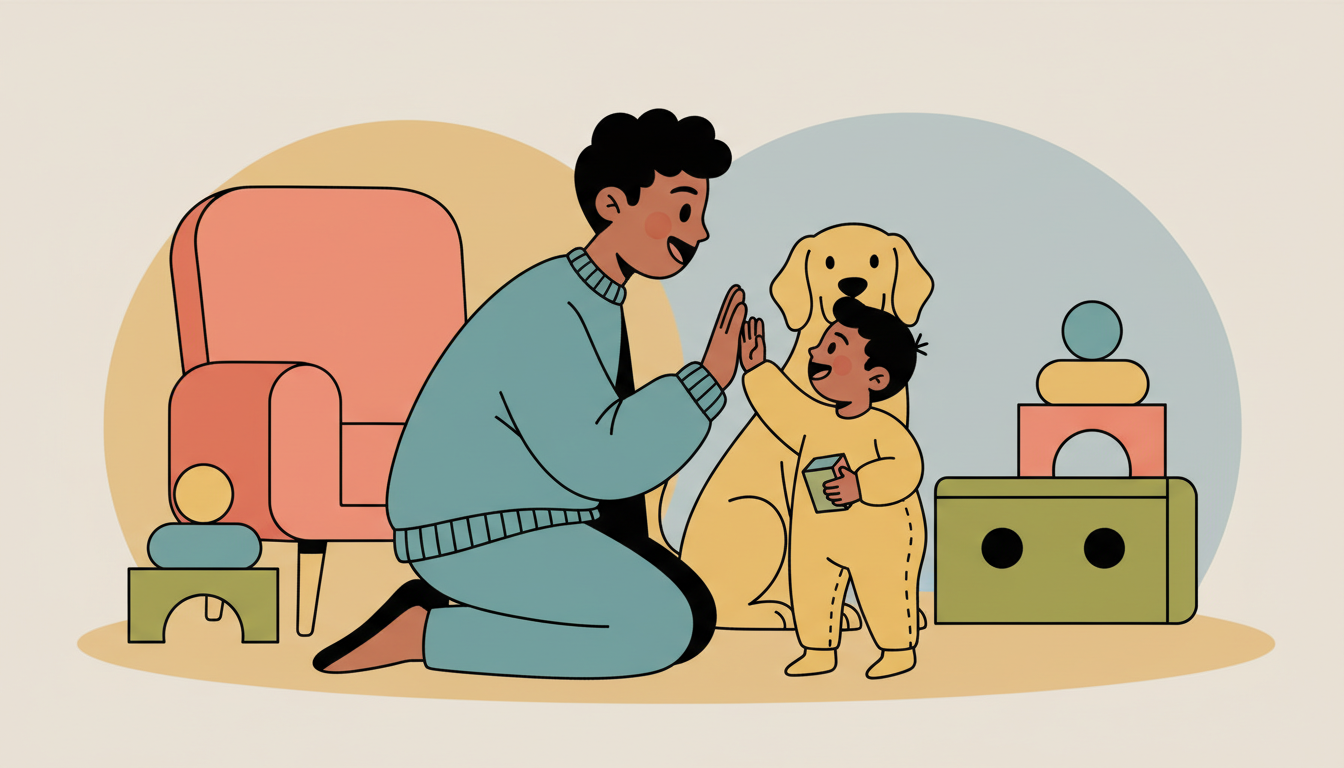
Teach your child to give high fives when someone does something helpful or kind. When you help them climb up, offer your hand for a high five and say thank you. When they hand you a toy, give them a high five. This makes gratitude active and celebratory. The physical connection and gentle smack sound make appreciation feel exciting and rewarding for both of you.
우리 아이에게 맞춤 설계된 Steadily 발달 여정의 일부예요.
활동 방법
Teach your child to give high fives when someone does something helpful or kind. When you help them climb up, offer your hand for a high five and say thank you. When they hand you a toy, give them a high five. This makes gratitude active and celebratory. The physical connection and gentle smack sound make appreciation feel exciting and rewarding for both of you.
효과가 있는 이유
Physical gestures help toddlers grasp abstract emotional concepts through concrete actions within their motor capabilities. Modeling appreciation for your child's contributions builds their sense of worth and teaches reciprocal gratitude. Research shows that childhood behaviors including demonstrating appreciation through actions predict stronger parent-child bonds and better emotional communication (Froh & Bono, 2014). Creating a culture of mutual appreciation from toddlerhood establishes patterns that enhance relationship quality into adulthood, with adults who regularly express appreciation reporting 20% higher relationship satisfaction (Emmons & McCullough, 2003).
부모를 위한 팁
Start by guiding their hand gently. Show them the motion until they can do it independently.
Pair it with eye contact and a smile. The warmth makes the gesture meaningful.
High five your child for their own helpful actions. This models mutual appreciation in the relationship.
필요한 준비물
None
학습 방식
Language-Rich EnvironmentImitation and Modeling

이번 활동이 마음에 들었어? 계획은 우리가 대신 세워줄게.
Steadily는 아이의 관심사, 발달 단계, 그리고 기르고 있는 특성에 맞춰 모든 활동을 개인화해줘. 덕분에 놀이 시간이 더 즐거워지고 모든 순간이 더욱 가치 있어지지.
Steadily 작동 방식 알아보기 →