Mirror feeling faces
2–3 ವರ್ಷಗಳುEmotional Wellbeingಸಾಮಗ್ರಿಗಳು: Mirror
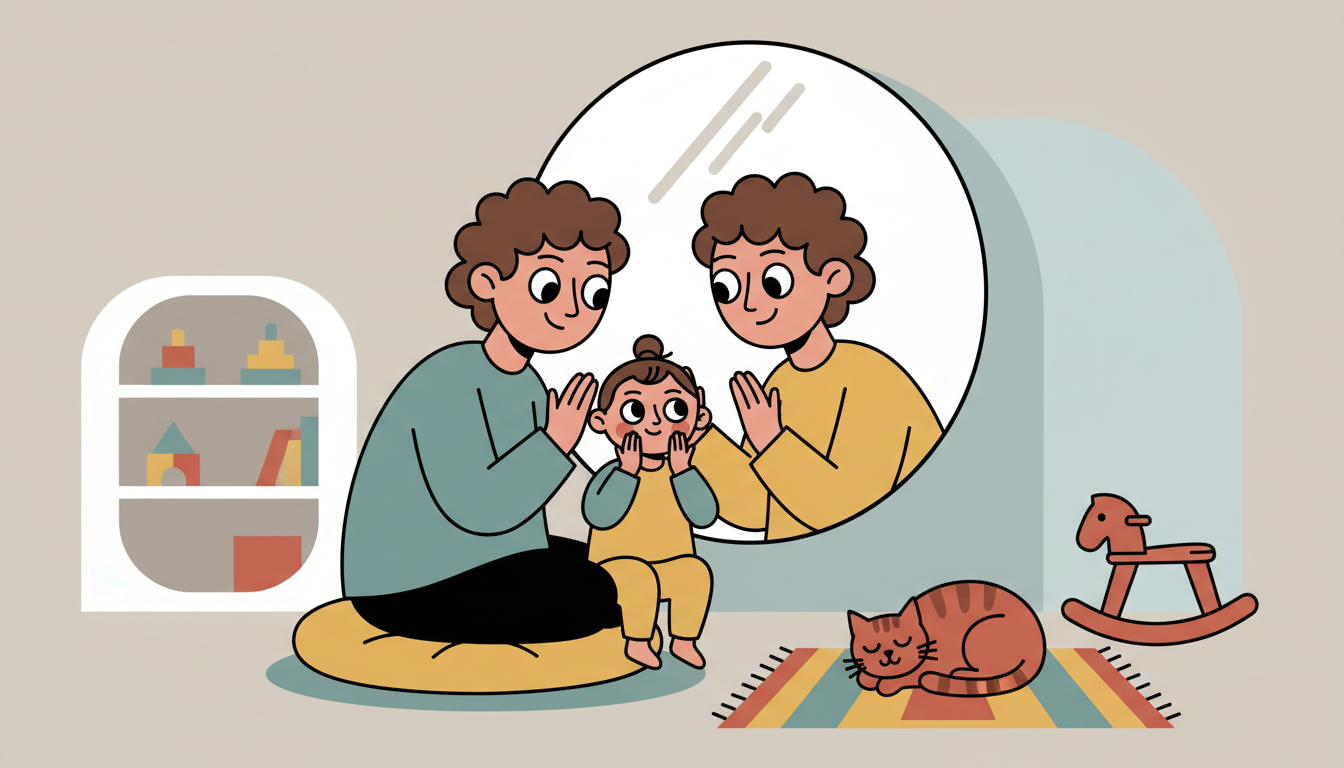
Sit with your child in front of a mirror and make different facial expressions together. Name each emotion as you make the face. Try happy, sad, surprised, angry, and silly faces.
ನಿನ್ನ ಮಗುವಿಗೆ ತಕ್ಕಂತೆ ವೈಯಕ್ತೀಕರಿಸಿದ Steadily ಬೆಳವಣಿಗೆಯ ಪ್ರಯಾಣದ ಭಾಗ.
ಈ ಚಟುವಟಿಕೆಯನ್ನು ಹೇಗೆ ಮಾಡುವುದು
Sit with your child in front of a mirror and make different facial expressions together. Name each emotion as you make the face. Try happy, sad, surprised, angry, and silly faces.
This activity builds emotional vocabulary during natural play time. Your child learns to connect facial expressions with feeling words, which is the foundation of emotional recognition.
ಇದು ಏಕೆ ಕೆಲಸ ಮಾಡುತ್ತದೆ
At this age, children are developing the language skills needed to label emotions for the first time. Research shows that children whose emotions were acknowledged and labeled by parents at age 2-3 showed significantly better emotional regulation and understanding at age 4-5 (Goleman, 1995). Making faces in the mirror helps children connect internal feelings with external expressions, building the foundation for emotional intelligence including self-awareness and empathy.
ಪೋಷಕರಿಗೆ ಸಲಹೆಗಳು
Start with your child's current mood and name it. Let them lead sometimes and guess what feeling they're showing.
If they resist making certain faces, that's okay. You can model the expression and simply say the word.
ಅಗತ್ಯವಿರುವ ಸಾಮಗ್ರಿಗಳು
Mirror
ಕಲಿಕೆಯ ವಿಧಾನಗಳು
Symbolic and Pretend PlaySongs, Stories, and RhymesSocial Learning Through Peers

ಈ ಚಟುವಟಿಕೆ ನಿನಗೆ ಇಷ್ಟವಾಯಿತೇ? ನಿನಗಾಗುವ ಯೋಜನೆಯನ್ನು ನಾವೇ ಮಾಡುತ್ತೇವೆ.
Steadily ಪ್ರತಿಯೊಂದು ಚಟುವಟಿಕೆಯನ್ನು ನಿನ್ನ ಮಗುವಿಗೆ ತಕ್ಕಂತೆ ವೈಯಕ್ತೀಕರಿಸುತ್ತದೆ — ಅವರ ಆಸಕ್ತಿಗಳು, ಅವರ ಹಂತ, ಅವರು ಬೆಳೆಸಿಕೊಳ್ಳುತ್ತಿರುವ ಗುಣಲಕ್ಷಣಗಳು — ಇದರಿಂದ ಆಟದ ಸಮಯವು ಹೆಚ್ಚು ಮೋಜಿನದಾಗಿರುತ್ತದೆ ಮತ್ತು ಪ್ರತಿ ಕ್ಷಣವೂ ಅತ್ಯಂತ ಅಮೂಲ್ಯವಾಗಿರುತ್ತದೆ.
Steadily ಹೇಗೆ ಕೆಲಸ ಮಾಡುತ್ತದೆ ಎಂದು ತಿಳಿ →