Feelings in our story
2–3 ವರ್ಷಗಳುFamily Connectionಸಾಮಗ್ರಿಗಳು: Picture books with clear facial expressions
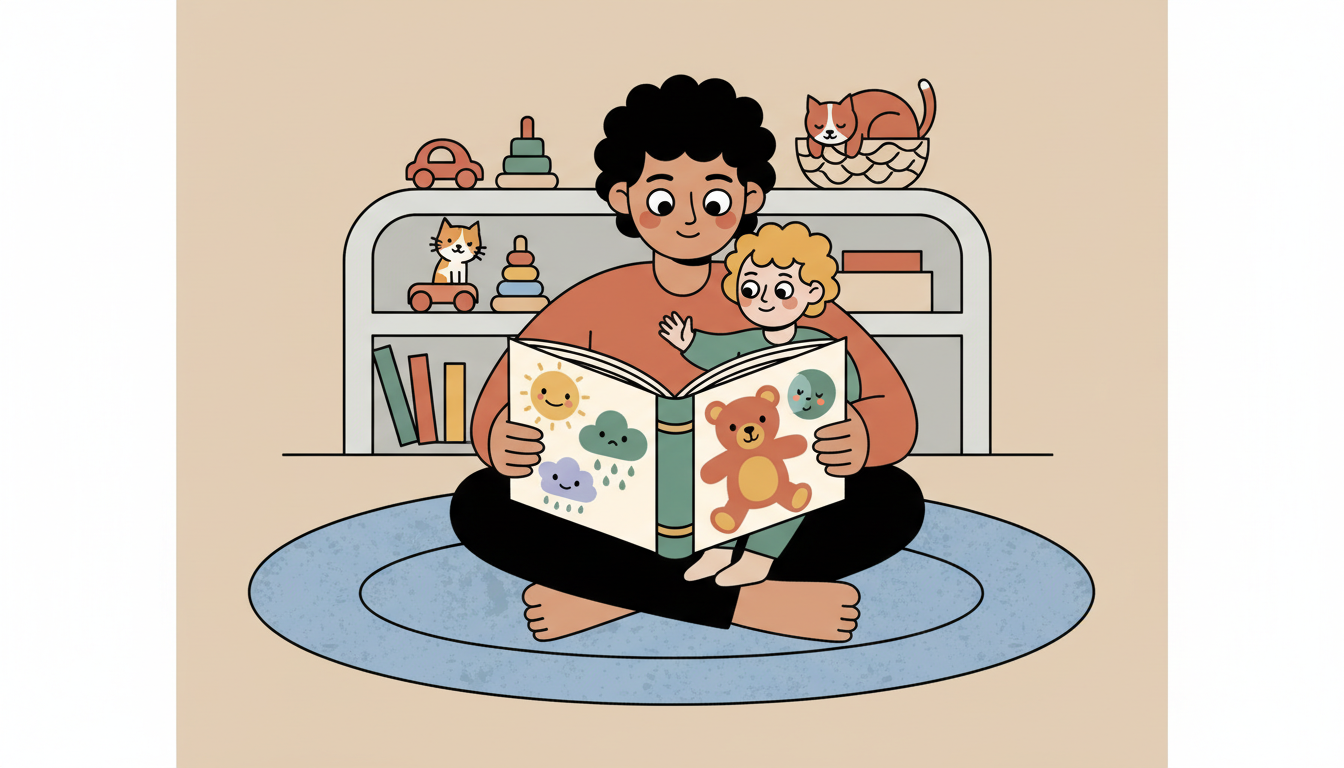
During story time, pause to point out characters' emotions. Ask simple questions like 'Is teddy happy or sad?' Help your child notice facial expressions in the pictures. Name the emotions you see together. This turns reading time into an empathy learning moment.
ನಿನ್ನ ಮಗುವಿಗೆ ತಕ್ಕಂತೆ ವೈಯಕ್ತೀಕರಿಸಿದ Steadily ಬೆಳವಣಿಗೆಯ ಪ್ರಯಾಣದ ಭಾಗ.
ಈ ಚಟುವಟಿಕೆಯನ್ನು ಹೇಗೆ ಮಾಡುವುದು
During story time, pause to point out characters' emotions. Ask simple questions like 'Is teddy happy or sad?' Help your child notice facial expressions in the pictures. Name the emotions you see together. This turns reading time into an empathy learning moment.
ಇದು ಏಕೆ ಕೆಲಸ ಮಾಡುತ್ತದೆ
Reading books about feelings and discussing characters' emotions helps children begin distinguishing self from others and recognizing that others have feelings. This activity leverages the critical developmental window when basic empathetic awareness becomes possible for the first time (Hoffman, M. L., 2000). Songs, stories, and rhymes enhance learning during this age, making books an ideal tool for empathy development.
ಪೋಷಕರಿಗೆ ಸಲಹೆಗಳು
Start with basic emotions like happy, sad, and mad. Use the same emotion words consistently.
Point to your own face to show the emotion, then point to the character. Your child learns by watching you model empathy.
ಅಗತ್ಯವಿರುವ ಸಾಮಗ್ರಿಗಳು
Picture books with clear facial expressions
ಕಲಿಕೆಯ ವಿಧಾನಗಳು
Symbolic and Pretend PlaySongs, Stories, and RhymesSocial Learning Through Peers

ಈ ಚಟುವಟಿಕೆ ನಿನಗೆ ಇಷ್ಟವಾಯಿತೇ? ನಿನಗಾಗುವ ಯೋಜನೆಯನ್ನು ನಾವೇ ಮಾಡುತ್ತೇವೆ.
Steadily ಪ್ರತಿಯೊಂದು ಚಟುವಟಿಕೆಯನ್ನು ನಿನ್ನ ಮಗುವಿಗೆ ತಕ್ಕಂತೆ ವೈಯಕ್ತೀಕರಿಸುತ್ತದೆ — ಅವರ ಆಸಕ್ತಿಗಳು, ಅವರ ಹಂತ, ಅವರು ಬೆಳೆಸಿಕೊಳ್ಳುತ್ತಿರುವ ಗುಣಲಕ್ಷಣಗಳು — ಇದರಿಂದ ಆಟದ ಸಮಯವು ಹೆಚ್ಚು ಮೋಜಿನದಾಗಿರುತ್ತದೆ ಮತ್ತು ಪ್ರತಿ ಕ್ಷಣವೂ ಅತ್ಯಂತ ಅಮೂಲ್ಯವಾಗಿರುತ್ತದೆ.
Steadily ಹೇಗೆ ಕೆಲಸ ಮಾಡುತ್ತದೆ ಎಂದು ತಿಳಿ →