Feelings in picture books
1–2 ವರ್ಷಗಳುEmotional Wellbeingಸಾಮಗ್ರಿಗಳು: Picture books with expressive characters
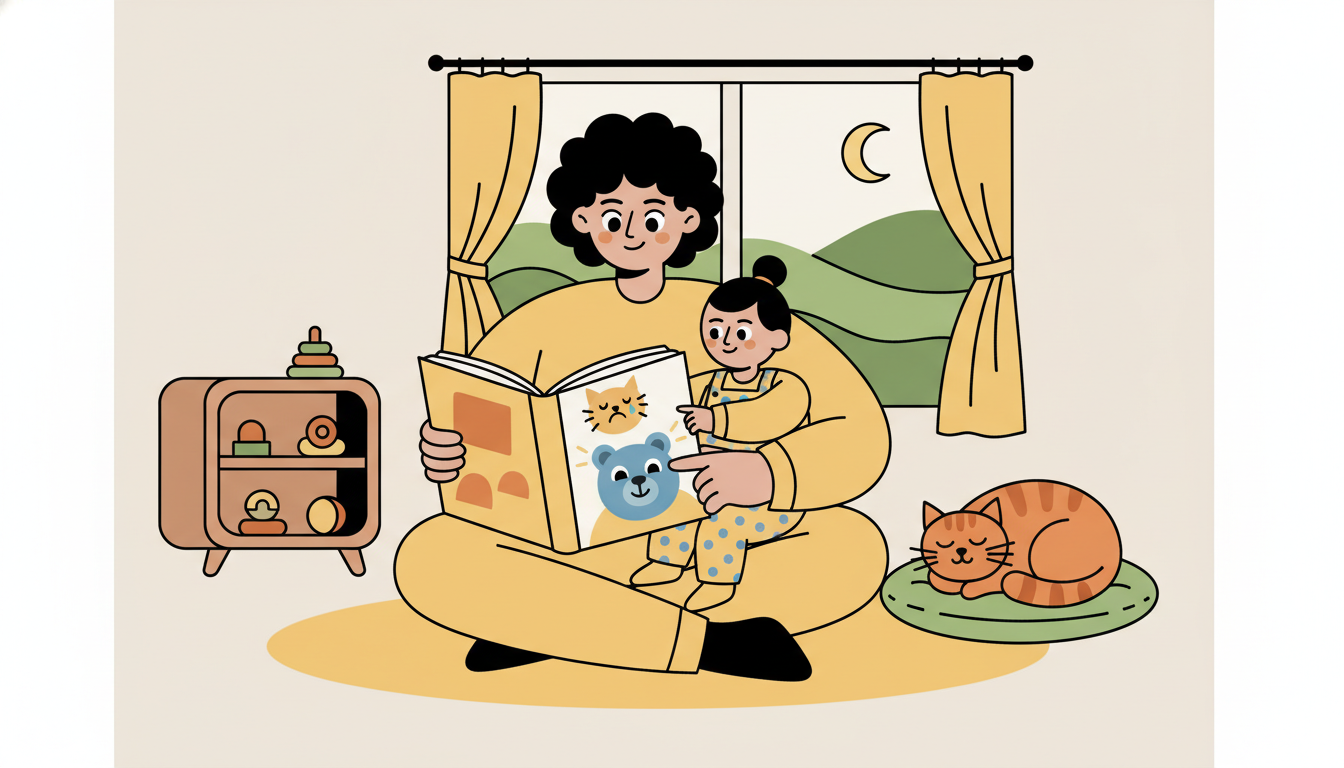
During reading time, point to characters' faces and name their emotions. Ask simple questions like 'Is the bear happy or sad?' Let your child point to the faces. You can use the same book many times, focusing on different emotions each time. This builds emotional vocabulary naturally during a routine you already do.
ನಿನ್ನ ಮಗುವಿಗೆ ತಕ್ಕಂತೆ ವೈಯಕ್ತೀಕರಿಸಿದ Steadily ಬೆಳವಣಿಗೆಯ ಪ್ರಯಾಣದ ಭಾಗ.
ಈ ಚಟುವಟಿಕೆಯನ್ನು ಹೇಗೆ ಮಾಡುವುದು
During reading time, point to characters' faces and name their emotions. Ask simple questions like 'Is the bear happy or sad?' Let your child point to the faces. You can use the same book many times, focusing on different emotions each time. This builds emotional vocabulary naturally during a routine you already do.
ಇದು ಏಕೆ ಕೆಲಸ ಮಾಡುತ್ತದೆ
Reading about feelings in a language-rich environment supports the vocabulary explosion happening at this age. Research shows that emotional intelligence development in early childhood leads to better emotional recognition and expression skills in adulthood, with improved concentration and study habits (Goleman, 1995). Books provide safe scenarios to explore emotions.
ಪೋಷಕರಿಗೆ ಸಲಹೆಗಳು
Choose books with clear, expressive illustrations of faces.
Pause to let your child look at and process the pictures.
Connect the character's emotions to your child's experiences, like 'The rabbit is sad, just like when you dropped your toy.'
ಅಗತ್ಯವಿರುವ ಸಾಮಗ್ರಿಗಳು
Picture books with expressive characters
ಕಲಿಕೆಯ ವಿಧಾನಗಳು
Language-Rich EnvironmentImitation and ModelingBeginning Symbolic Play

ಈ ಚಟುವಟಿಕೆ ನಿನಗೆ ಇಷ್ಟವಾಯಿತೇ? ನಿನಗಾಗುವ ಯೋಜನೆಯನ್ನು ನಾವೇ ಮಾಡುತ್ತೇವೆ.
Steadily ಪ್ರತಿಯೊಂದು ಚಟುವಟಿಕೆಯನ್ನು ನಿನ್ನ ಮಗುವಿಗೆ ತಕ್ಕಂತೆ ವೈಯಕ್ತೀಕರಿಸುತ್ತದೆ — ಅವರ ಆಸಕ್ತಿಗಳು, ಅವರ ಹಂತ, ಅವರು ಬೆಳೆಸಿಕೊಳ್ಳುತ್ತಿರುವ ಗುಣಲಕ್ಷಣಗಳು — ಇದರಿಂದ ಆಟದ ಸಮಯವು ಹೆಚ್ಚು ಮೋಜಿನದಾಗಿರುತ್ತದೆ ಮತ್ತು ಪ್ರತಿ ಕ್ಷಣವೂ ಅತ್ಯಂತ ಅಮೂಲ್ಯವಾಗಿರುತ್ತದೆ.
Steadily ಹೇಗೆ ಕೆಲಸ ಮಾಡುತ್ತದೆ ಎಂದು ತಿಳಿ →