Feelings and faces
1–2 ವರ್ಷಗಳುFamily Connectionಯಾವುದೇ ಸಾಮಗ್ರಿಗಳ ಅಗತ್ಯವಿಲ್ಲ
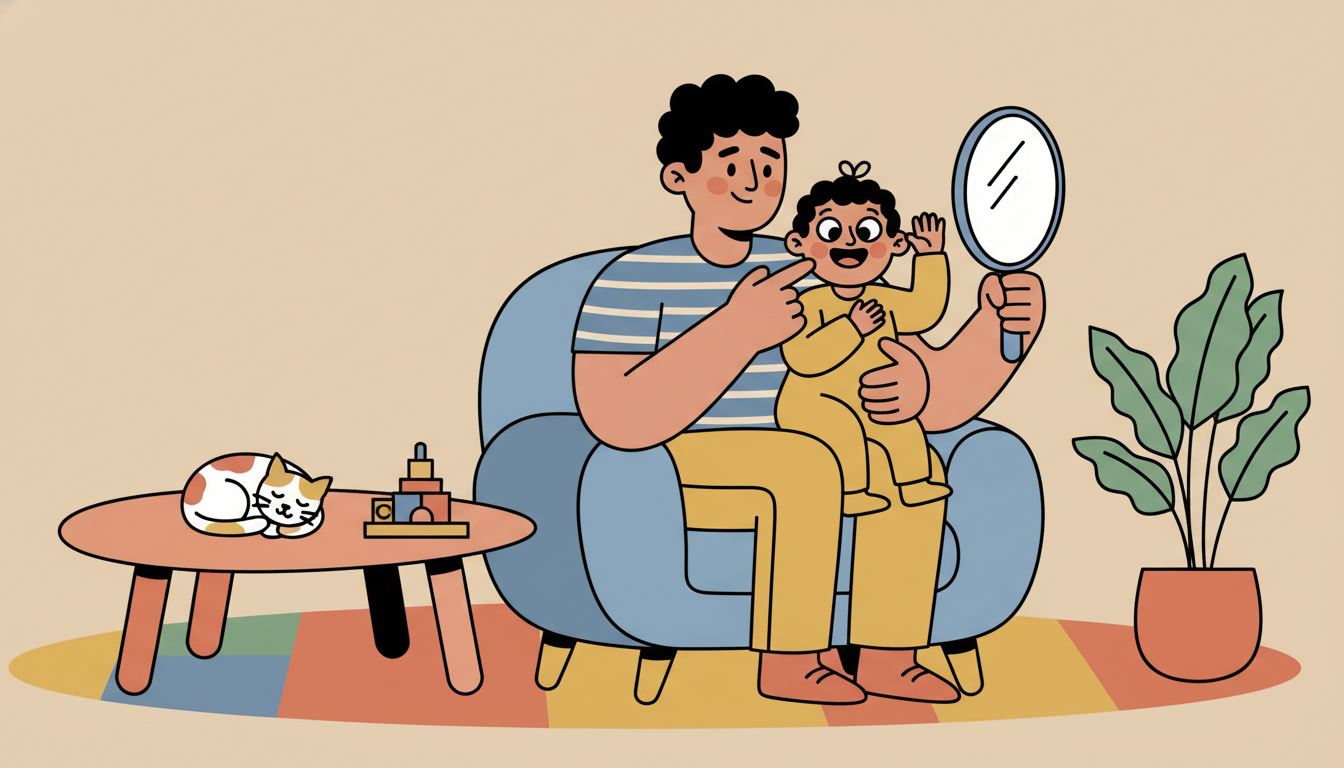
Throughout your day, name your child's feelings when you notice them. Say things like you look happy or I see you feel frustrated. Use a calm, warm tone. You can also make faces together in a mirror and name the emotions you both show.
ನಿನ್ನ ಮಗುವಿಗೆ ತಕ್ಕಂತೆ ವೈಯಕ್ತೀಕರಿಸಿದ Steadily ಬೆಳವಣಿಗೆಯ ಪ್ರಯಾಣದ ಭಾಗ.
ಈ ಚಟುವಟಿಕೆಯನ್ನು ಹೇಗೆ ಮಾಡುವುದು
Throughout your day, name your child's feelings when you notice them. Say things like you look happy or I see you feel frustrated. Use a calm, warm tone. You can also make faces together in a mirror and name the emotions you both show.
ಇದು ಏಕೆ ಕೆಲಸ ಮಾಡುತ್ತದೆ
Naming and validating feelings establishes a safe space for open communication, which research shows is essential for building strong parent-child relationships (Hartos & Power, 2000). Quality communication that includes empathy and appropriate responses enhances relationship quality and supports your child's psychological development (Zhang & Li, 2024). Starting this practice during the language explosion period helps your child develop both emotional vocabulary and the habit of expressing feelings openly.
ಪೋಷಕರಿಗೆ ಸಲಹೆಗಳು
Keep emotion words simple. Happy, sad, mad, and scared work well for this age.
Name your own feelings too. This helps your child learn that everyone has emotions.
Stay calm and matter of fact. Your child is learning that feelings can be talked about safely.
ಅಗತ್ಯವಿರುವ ಸಾಮಗ್ರಿಗಳು
None
ಕಲಿಕೆಯ ವಿಧಾನಗಳು
Language-Rich EnvironmentImitation and Modeling

ಈ ಚಟುವಟಿಕೆ ನಿನಗೆ ಇಷ್ಟವಾಯಿತೇ? ನಿನಗಾಗುವ ಯೋಜನೆಯನ್ನು ನಾವೇ ಮಾಡುತ್ತೇವೆ.
Steadily ಪ್ರತಿಯೊಂದು ಚಟುವಟಿಕೆಯನ್ನು ನಿನ್ನ ಮಗುವಿಗೆ ತಕ್ಕಂತೆ ವೈಯಕ್ತೀಕರಿಸುತ್ತದೆ — ಅವರ ಆಸಕ್ತಿಗಳು, ಅವರ ಹಂತ, ಅವರು ಬೆಳೆಸಿಕೊಳ್ಳುತ್ತಿರುವ ಗುಣಲಕ್ಷಣಗಳು — ಇದರಿಂದ ಆಟದ ಸಮಯವು ಹೆಚ್ಚು ಮೋಜಿನದಾಗಿರುತ್ತದೆ ಮತ್ತು ಪ್ರತಿ ಕ್ಷಣವೂ ಅತ್ಯಂತ ಅಮೂಲ್ಯವಾಗಿರುತ್ತದೆ.
Steadily ಹೇಗೆ ಕೆಲಸ ಮಾಡುತ್ತದೆ ಎಂದು ತಿಳಿ →