Face feelings match
2–3 ವರ್ಷಗಳುFamily Connectionಸಾಮಗ್ರಿಗಳು: None, or a mirror if available
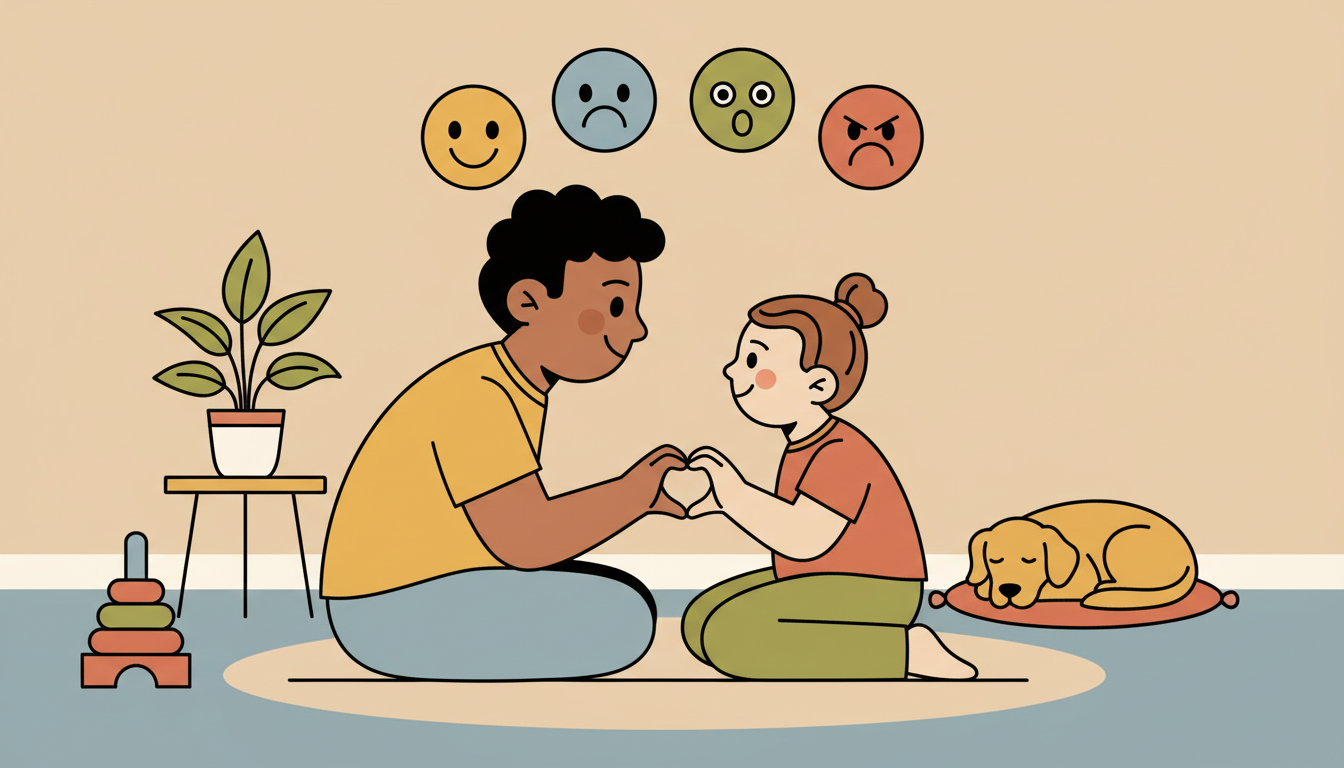
Make simple faces showing different emotions. Say 'I am making a happy face. Can you make one too?' Try sad, surprised, and mad faces. When your child copies you, name what you see: 'You made a sad face. Your mouth goes down when you are sad.' Take turns making faces.
ನಿನ್ನ ಮಗುವಿಗೆ ತಕ್ಕಂತೆ ವೈಯಕ್ತೀಕರಿಸಿದ Steadily ಬೆಳವಣಿಗೆಯ ಪ್ರಯಾಣದ ಭಾಗ.
ಈ ಚಟುವಟಿಕೆಯನ್ನು ಹೇಗೆ ಮಾಡುವುದು
Make simple faces showing different emotions. Say 'I am making a happy face. Can you make one too?' Try sad, surprised, and mad faces. When your child copies you, name what you see: 'You made a sad face. Your mouth goes down when you are sad.' Take turns making faces.
ಇದು ಏಕೆ ಕೆಲಸ ಮಾಡುತ್ತದೆ
Recognizing emotions in self and others is a key developmental indicator of emerging empathy. This activity helps children practice the foundational skill of distinguishing different emotional states. Parental empathy and modeling create the positive family climate that fosters children's empathy abilities and social behavior (Sánchez-Pérez, N., Fuentes, L. J., Jolliffe, D., & González-Salinas, C., 2018). Imitation and social learning are powerful at this age.
ಪೋಷಕರಿಗೆ ಸಲಹೆಗಳು
Start with happy and sad. These are easiest for young children to recognize and copy.
Use a mirror if you have one handy. Seeing their own expressions helps children understand emotions better.
ಅಗತ್ಯವಿರುವ ಸಾಮಗ್ರಿಗಳು
None, or a mirror if available
ಕಲಿಕೆಯ ವಿಧಾನಗಳು
Symbolic and Pretend PlaySongs, Stories, and RhymesSocial Learning Through Peers

ಈ ಚಟುವಟಿಕೆ ನಿನಗೆ ಇಷ್ಟವಾಯಿತೇ? ನಿನಗಾಗುವ ಯೋಜನೆಯನ್ನು ನಾವೇ ಮಾಡುತ್ತೇವೆ.
Steadily ಪ್ರತಿಯೊಂದು ಚಟುವಟಿಕೆಯನ್ನು ನಿನ್ನ ಮಗುವಿಗೆ ತಕ್ಕಂತೆ ವೈಯಕ್ತೀಕರಿಸುತ್ತದೆ — ಅವರ ಆಸಕ್ತಿಗಳು, ಅವರ ಹಂತ, ಅವರು ಬೆಳೆಸಿಕೊಳ್ಳುತ್ತಿರುವ ಗುಣಲಕ್ಷಣಗಳು — ಇದರಿಂದ ಆಟದ ಸಮಯವು ಹೆಚ್ಚು ಮೋಜಿನದಾಗಿರುತ್ತದೆ ಮತ್ತು ಪ್ರತಿ ಕ್ಷಣವೂ ಅತ್ಯಂತ ಅಮೂಲ್ಯವಾಗಿರುತ್ತದೆ.
Steadily ಹೇಗೆ ಕೆಲಸ ಮಾಡುತ್ತದೆ ಎಂದು ತಿಳಿ →