Name their feelings
6–12ヶ月Family Connection特別な道具は必要ありません
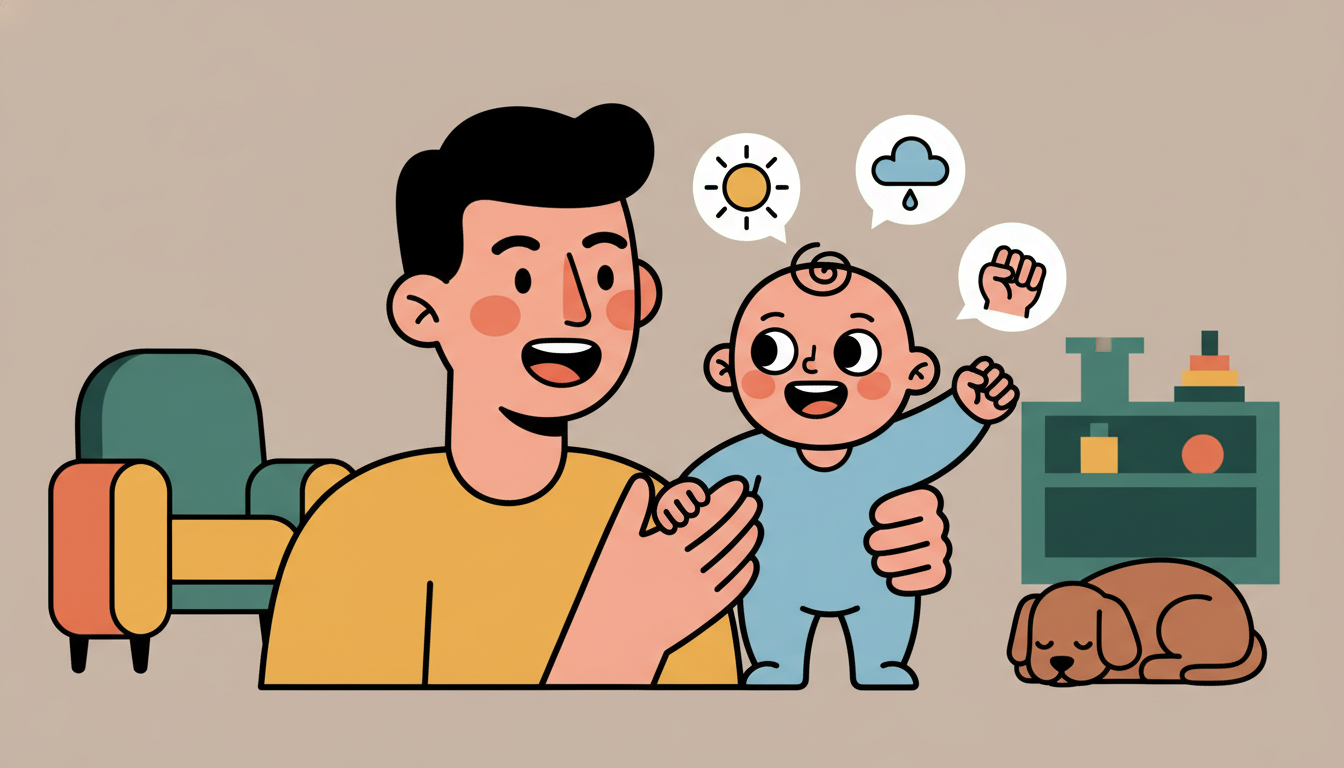
When your child shows emotion, put words to what you see. If they're laughing during play, you might say, "You're happy." If they seem frustrated reaching for something, you might say, "That's hard to reach. You feel frustrated." This practice shows respect for their emotional experience and builds trust that you understand them.
Steadilyの発達の旅の一部 — わが子に合わせてパーソナライズされているよ。
このアクティビティのやり方
When your child shows emotion, put words to what you see. If they're laughing during play, you might say, "You're happy." If they seem frustrated reaching for something, you might say, "That's hard to reach. You feel frustrated." This practice shows respect for their emotional experience and builds trust that you understand them.
効果がある理由
Acknowledging your child's emotions demonstrates that you respect their internal experience. This consistent emotional responsiveness builds trust in the relationship. Children demonstrating reliability and respect toward parents' boundaries show 40% better emotional regulation and trust-building capabilities throughout development (Kochanska & Aksan, 2006).
パパ・ママへのヒント
Keep your tone calm and matter-of-fact. You're not trying to fix their feelings, just showing you notice and respect them.
It's okay if you're not always right about which emotion they're feeling. The important part is that you're paying attention and trying to understand.
用意するもの
None
学びの手法
Responsive InteractionRepetition and Routine

このアクティビティ、楽しめた?これからの計画は私たちに任せて。
Steadilyはお子さんに合わせてすべてのアクティビティをパーソナライズするよ — 興味や発達段階、今伸ばしている特性に合わせて。だから、遊びの時間がもっと楽しくなって、一瞬一瞬が大切なものになるんだ。
Steadilyの仕組みを見る →