Mirror your emotions
1–2歳Family Connection用意するもの: Mirror (optional)
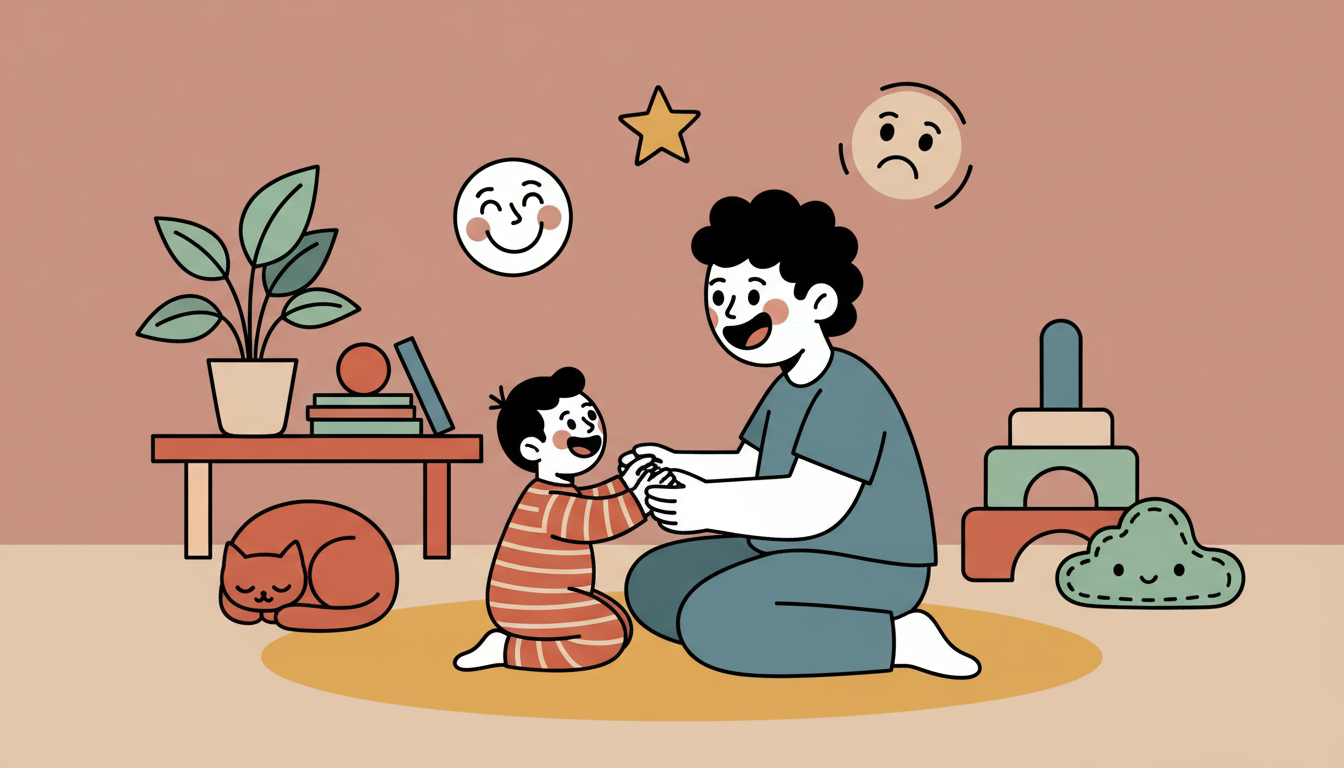
Sit facing your child and make different facial expressions together. Start with a big smile and say 'Happy.' Then try a frown and say 'Sad.' Encourage your child to copy your face. You can also mirror back your child's expressions, naming the feeling you see. This playful activity helps your child connect facial expressions with emotion words and builds emotional awareness.
Steadilyの発達の旅の一部 — わが子に合わせてパーソナライズされているよ。
このアクティビティのやり方
Sit facing your child and make different facial expressions together. Start with a big smile and say 'Happy.' Then try a frown and say 'Sad.' Encourage your child to copy your face. You can also mirror back your child's expressions, naming the feeling you see. This playful activity helps your child connect facial expressions with emotion words and builds emotional awareness.
効果がある理由
Recognizing emotions in facial expressions is a fundamental empathy skill. When parents create a safe space for children to explore and express emotions, children develop better emotional awareness and reduced anxiety (Bhansali, 2023). Imitation and modeling are powerful learning tools at this age, and practicing facial expressions helps children build the recognition skills needed for responding sensitively to others' emotions, a key predictor of positive relationships later in life.
パパ・ママへのヒント
Use a mirror if you have one nearby. Seeing their own face helps children learn.
Stick to basic emotions your child sees often. Happy and sad are good starting points.
Make it playful and fun. Exaggerate your expressions a bit to make them clearer.
用意するもの
Mirror (optional)
学びの手法
Language-Rich EnvironmentImitation and ModelingBeginning Symbolic Play

このアクティビティ、楽しめた?これからの計画は私たちに任せて。
Steadilyはお子さんに合わせてすべてのアクティビティをパーソナライズするよ — 興味や発達段階、今伸ばしている特性に合わせて。だから、遊びの時間がもっと楽しくなって、一瞬一瞬が大切なものになるんだ。
Steadilyの仕組みを見る →