Grasp and release practice
0–6ヶ月Success Mindset用意するもの: Soft toys or rattles with easy-grip handles
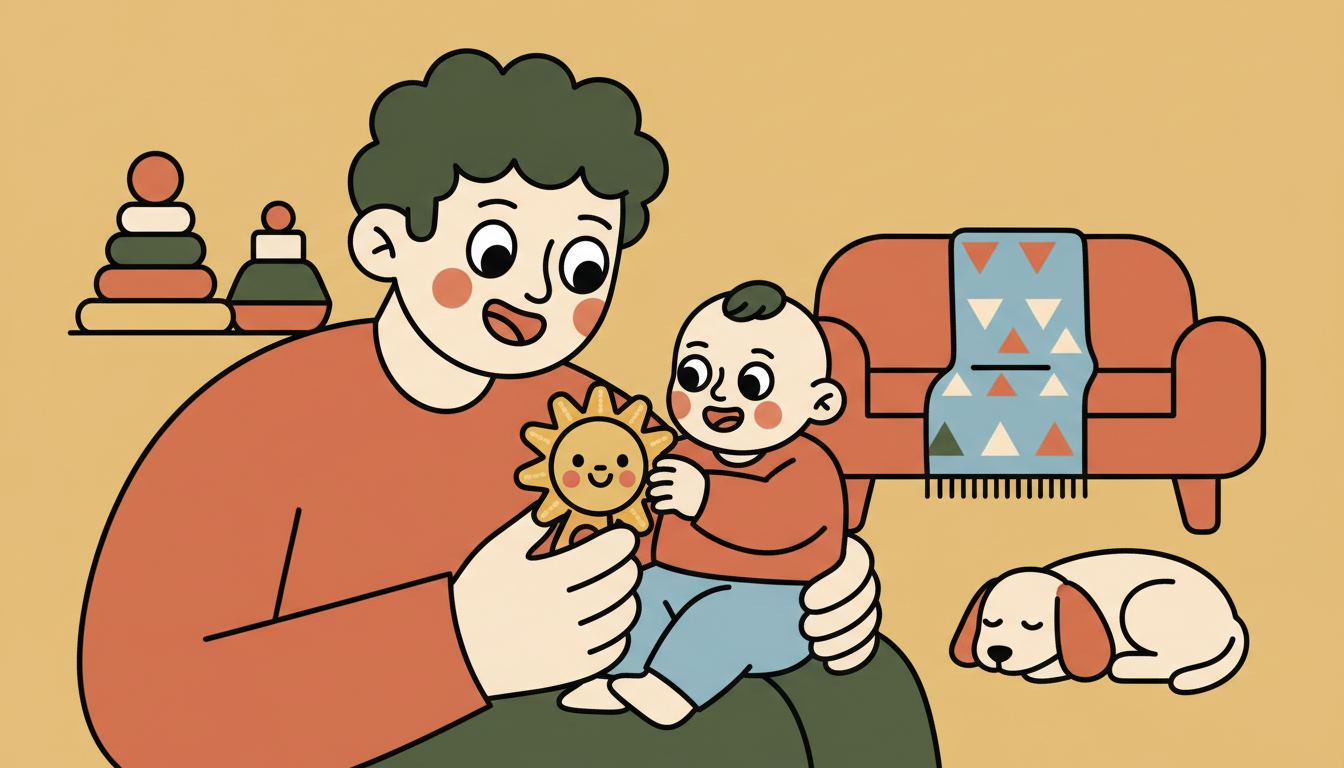
Offer your child a soft toy or rattle to grasp. Let them hold it, explore it, and work on releasing it. Repeat this several times, allowing them to practice the challenging coordination required. The repeated attempts at grasping and releasing build fine motor skills and teach persistence through natural repetition.
Steadilyの発達の旅の一部 — わが子に合わせてパーソナライズされているよ。
このアクティビティのやり方
Offer your child a soft toy or rattle to grasp. Let them hold it, explore it, and work on releasing it. Repeat this several times, allowing them to practice the challenging coordination required. The repeated attempts at grasping and releasing build fine motor skills and teach persistence through natural repetition.
効果がある理由
Encouraging repeated attempts at grasping develops perseverance of effort, which has been linked to higher academic engagement and achievement across developmental stages (Datu et al., 2023). The grasping reflex transitions to voluntary grasp between three and four months, making this an ideal time to support sustained effort. Through movement-based learning and responsive interaction, infants build neural connections that support future persistence.
パパ・ママへのヒント
Let them struggle briefly with the grasp before adjusting the toy position. A few seconds of effort builds problem-solving skills.
Use toys with different textures and shapes to keep their interest. Variety makes repeated practice feel fresh.
Praise their effort when they keep trying. Simple words like "you're working hard" reinforce persistence.
用意するもの
Soft toys or rattles with easy-grip handles
学びの手法
Movement-Based LearningResponsive Interaction

このアクティビティ、楽しめた?これからの計画は私たちに任せて。
Steadilyはお子さんに合わせてすべてのアクティビティをパーソナライズするよ — 興味や発達段階、今伸ばしている特性に合わせて。だから、遊びの時間がもっと楽しくなって、一瞬一瞬が大切なものになるんだ。
Steadilyの仕組みを見る →