When we are done
2–3歳Family Connection特別な道具は必要ありません
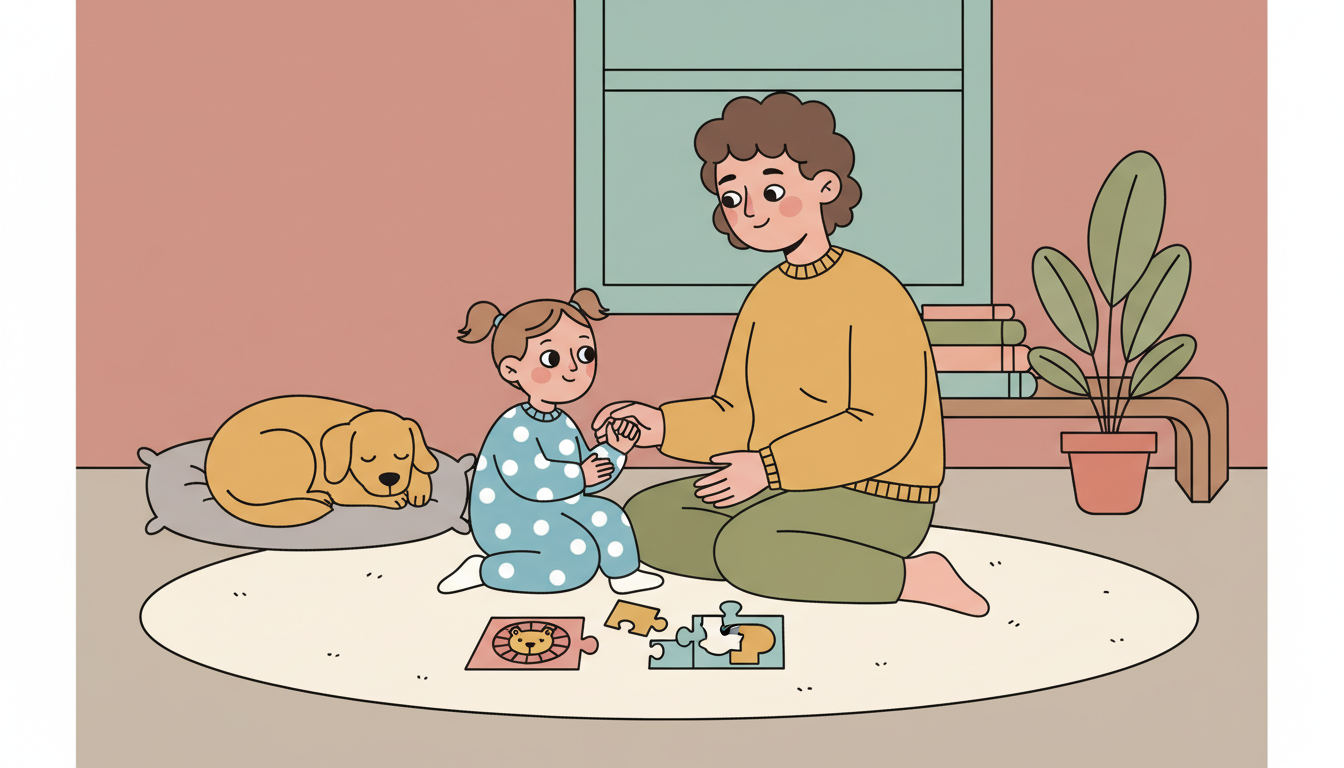
Give your child some control over when the activity ends. You can set a general timeframe, but let them decide when they're done within it. "We have 15 minutes to play. Let me know when you're ready to stop." Or offer a choice about ending. "Do you want to do one more puzzle or one more drawing before we finish?" This respects their engagement level and helps them practice recognizing their own readiness to move on.
Steadilyの発達の旅の一部 — わが子に合わせてパーソナライズされているよ。
このアクティビティのやり方
Give your child some control over when the activity ends. You can set a general timeframe, but let them decide when they're done within it. "We have 15 minutes to play. Let me know when you're ready to stop." Or offer a choice about ending. "Do you want to do one more puzzle or one more drawing before we finish?" This respects their engagement level and helps them practice recognizing their own readiness to move on.
効果がある理由
Allowing children to participate in decisions about transitions supports their developing autonomy while teaching time management. Children who experience appropriate autonomy support show better academic achievement and social competence (Grolnick & Ryan, 1989). Involving them in when activities end helps them feel respected and makes transitions smoother because they have some control over the process.
パパ・ママへのヒント
You can give a warning that time is running short without demanding an immediate stop. "We have a few more minutes" prepares them for the transition.
Some children will want to keep playing forever. You can still offer a choice about the ending. "It's time to finish. Do you want to end now or in two minutes?"
用意するもの
None
学びの手法
Interactive Play-Based LearningHands-On Sensory ActivitiesSymbolic and Pretend Play

このアクティビティ、楽しめた?これからの計画は私たちに任せて。
Steadilyはお子さんに合わせてすべてのアクティビティをパーソナライズするよ — 興味や発達段階、今伸ばしている特性に合わせて。だから、遊びの時間がもっと楽しくなって、一瞬一瞬が大切なものになるんだ。
Steadilyの仕組みを見る →