Science exploration station
4–5歳Success Mindset用意するもの: Common household items: food coloring, water, cups, small objects for testing, ice cubes
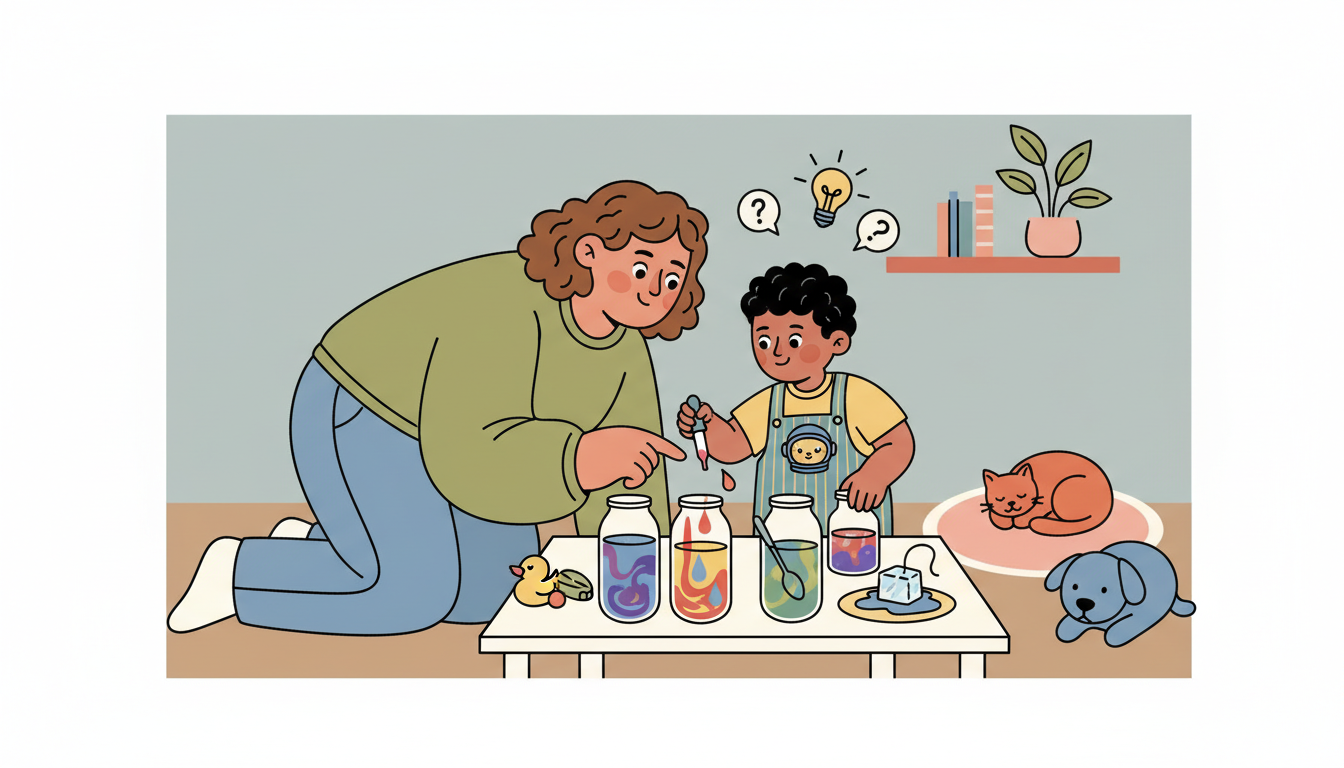
Set up a simple science experiment like mixing colors with water and food coloring, testing which objects sink or float, or observing ice melting. Before starting, ask your child to predict what will happen. During the activity, encourage observation and asking questions. Afterward, discuss what happened and why.
Steadilyの発達の旅の一部 — わが子に合わせてパーソナライズされているよ。
このアクティビティのやり方
Set up a simple science experiment like mixing colors with water and food coloring, testing which objects sink or float, or observing ice melting. Before starting, ask your child to predict what will happen. During the activity, encourage observation and asking questions. Afterward, discuss what happened and why.
効果がある理由
Hands-on exploration builds cause-effect reasoning and scientific thinking. Children at this age can understand cause-effect relationships clearly and benefit from guided discovery. The executive function skills and working memory developed through scientific exploration contribute to cognitive development and school readiness (Welsh, Nix, Blair, Bierman, & Nelson, 2010). This active learning approach aligns with how children naturally develop cognitive abilities.
パパ・ママへのヒント
Let your child make predictions before revealing the answer. This builds scientific thinking and hypothesis testing.
Follow your child's curiosity. If they ask questions you do not know the answer to, explore together to find out.
用意するもの
Common household items: food coloring, water, cups, small objects for testing, ice cubes
学びの手法
Structured Academic LearningGuided Discovery and InquiryProject-Based and Thematic Learning

このアクティビティ、楽しめた?これからの計画は私たちに任せて。
Steadilyはお子さんに合わせてすべてのアクティビティをパーソナライズするよ — 興味や発達段階、今伸ばしている特性に合わせて。だから、遊びの時間がもっと楽しくなって、一瞬一瞬が大切なものになるんだ。
Steadilyの仕組みを見る →