Role play tough moments
4–5歳Emotional Wellbeing用意するもの: Stuffed animals, dolls, or toy figures
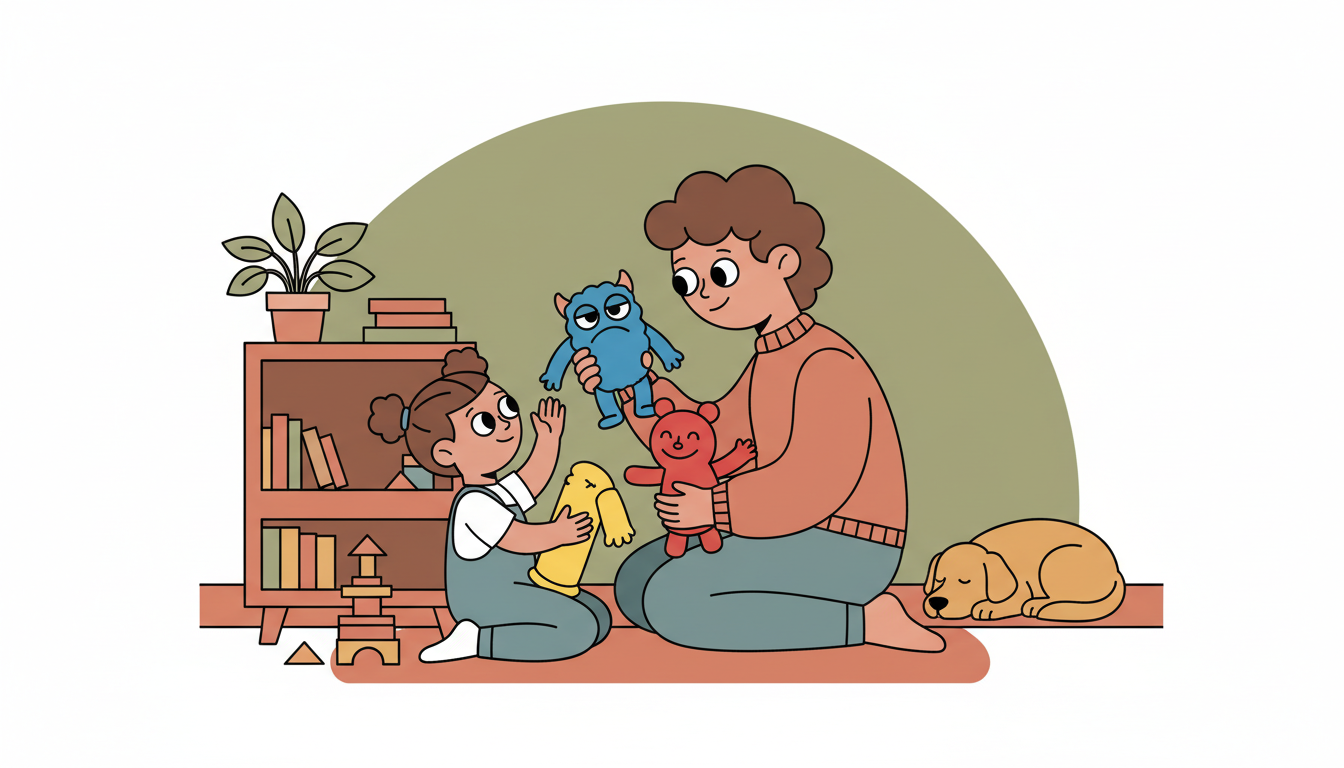
Use stuffed animals or dolls to act out common challenges like a friend not sharing or a tower falling down. Have one toy show frustration, then guide the play to show helpful responses like asking for a turn, taking deep breaths, or trying again. Ask your child what the toy could do to feel better. This safe practice of challenging situations builds coping skills they can use in real moments.
Steadilyの発達の旅の一部 — わが子に合わせてパーソナライズされているよ。
このアクティビティのやり方
Use stuffed animals or dolls to act out common challenges like a friend not sharing or a tower falling down. Have one toy show frustration, then guide the play to show helpful responses like asking for a turn, taking deep breaths, or trying again. Ask your child what the toy could do to feel better. This safe practice of challenging situations builds coping skills they can use in real moments.
効果がある理由
Role-playing helps children develop emotional regulation and problem-solving skills through safe practice. Research shows that resilience interventions that include interpersonal skill development lead to significant increases in students' ability to manage stress and challenges (Castro-Olivo et al., 2022). At 48-60 months, children can understand others' perspectives through developing theory of mind, making role-play an effective tool for practicing resilient responses to social and emotional challenges.
パパ・ママへのヒント
Choose scenarios your child has recently experienced or will likely face soon.
Let your child direct how the toys solve the problem after you set up the scenario.
Connect it to real life. 'Remember when your tower fell. What did you do, just like the toy.'
用意するもの
Stuffed animals, dolls, or toy figures
学びの手法
Guided Discovery and InquiryProject-Based and Thematic LearningMetacognitive Strategies

このアクティビティ、楽しめた?これからの計画は私たちに任せて。
Steadilyはお子さんに合わせてすべてのアクティビティをパーソナライズするよ — 興味や発達段階、今伸ばしている特性に合わせて。だから、遊びの時間がもっと楽しくなって、一瞬一瞬が大切なものになるんだ。
Steadilyの仕組みを見る →