Puzzle persistence practice
3–4歳Success Mindset用意するもの: Simple puzzle with six to 10 pieces
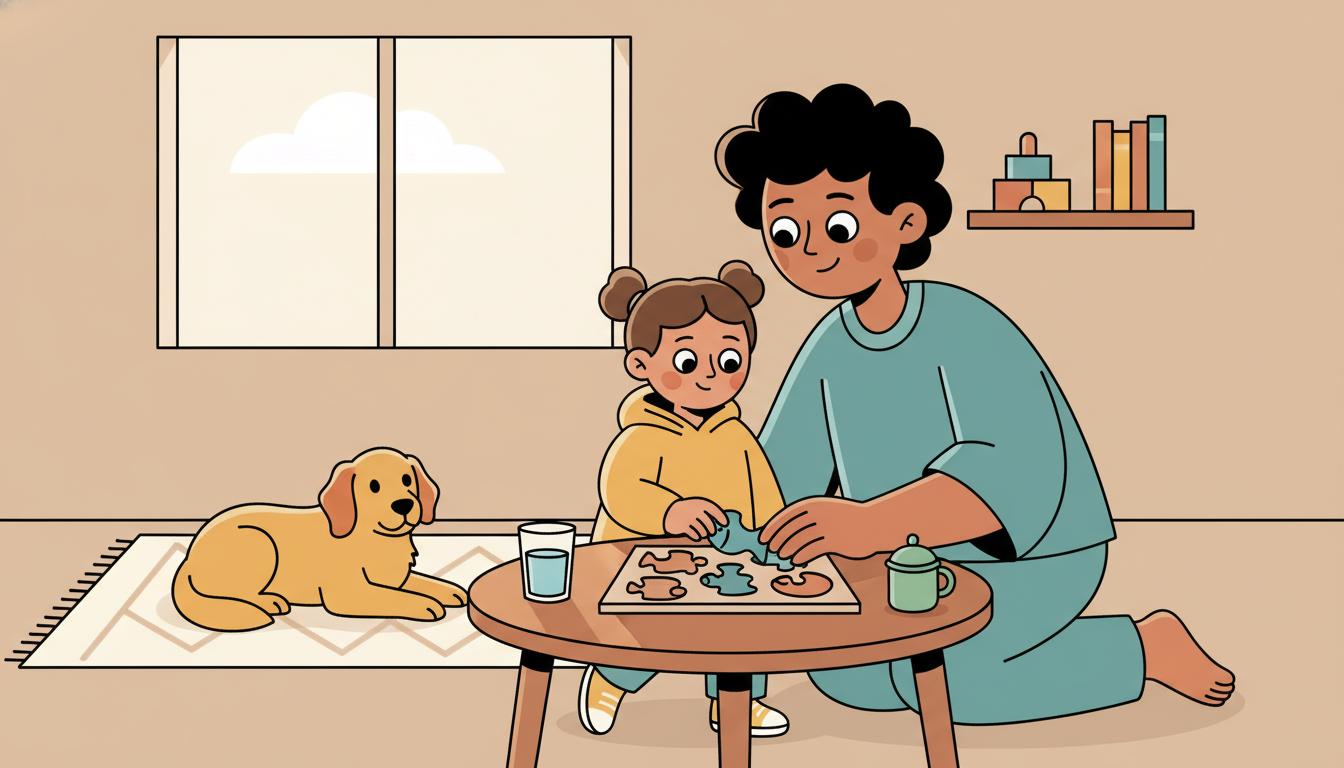
Start a simple puzzle together with six to 10 pieces. Before completing it, suggest taking a break to do something else, like have a drink of water. Tell your child you'll finish the puzzle after the break. This teaches that stopping an enjoyable activity and returning to it later is possible, building task persistence and delayed completion satisfaction.
Steadilyの発達の旅の一部 — わが子に合わせてパーソナライズされているよ。
このアクティビティのやり方
Start a simple puzzle together with six to 10 pieces. Before completing it, suggest taking a break to do something else, like have a drink of water. Tell your child you'll finish the puzzle after the break. This teaches that stopping an enjoyable activity and returning to it later is possible, building task persistence and delayed completion satisfaction.
効果がある理由
Task persistence in early childhood contributes to academic success and later educational attainment (Duckworth & Carlson, 2013). This activity teaches your child that they can pause a task and return to it, building both self-control and sustained attention. At 36-48 months, children are developing the ability to plan and follow through on activities, and this practice strengthens those emerging skills.
パパ・ママへのヒント
Choose a puzzle at your child's skill level so the activity stays positive.
Keep the break short, just one to two minutes, so your child can successfully return to the task.
When you resume, acknowledge that waiting was hard but celebrate finishing together.
用意するもの
Simple puzzle with six to 10 pieces
学びの手法
Structured Learning ActivitiesCollaborative and Cooperative PlayInquiry-Based Learning

このアクティビティ、楽しめた?これからの計画は私たちに任せて。
Steadilyはお子さんに合わせてすべてのアクティビティをパーソナライズするよ — 興味や発達段階、今伸ばしている特性に合わせて。だから、遊びの時間がもっと楽しくなって、一瞬一瞬が大切なものになるんだ。
Steadilyの仕組みを見る →