Puzzle persistence practice
4–5歳Emotional Wellbeing用意するもの: Age-appropriate puzzle
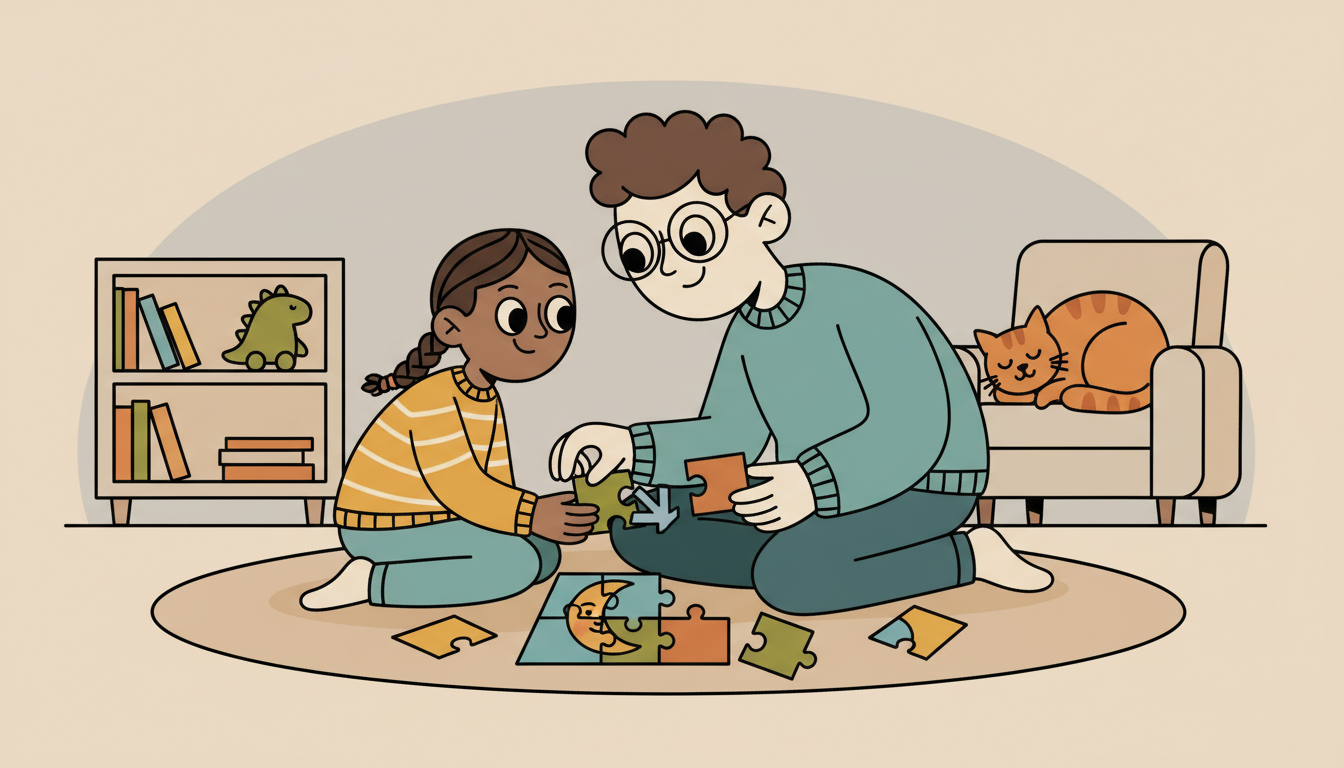
Work on a puzzle that's slightly challenging for your child's current ability. When they get frustrated, acknowledge the feeling and encourage them to take a short break or try a different piece. Guide them to notice their own problem-solving strategies. 'You turned the piece around to see if it fit better.' This teaches that taking breaks and trying different approaches are smart strategies, not giving up.
Steadilyの発達の旅の一部 — わが子に合わせてパーソナライズされているよ。
このアクティビティのやり方
Work on a puzzle that's slightly challenging for your child's current ability. When they get frustrated, acknowledge the feeling and encourage them to take a short break or try a different piece. Guide them to notice their own problem-solving strategies. 'You turned the piece around to see if it fit better.' This teaches that taking breaks and trying different approaches are smart strategies, not giving up.
効果がある理由
Puzzles provide concrete problem-solving challenges that build resilience through manageable difficulty. School-based resilience interventions that include problem-solving activities significantly increase study skills and academic engagement (Castro-Olivo et al., 2022). Children at this age can classify by multiple attributes and plan systematically, skills that are directly applied in puzzle-solving while building frustration tolerance and persistence.
パパ・ママへのヒント
Choose a puzzle with 20 to 30 pieces for an appropriate challenge level.
When frustration builds, offer a choice. 'Do you want to try a different piece or take a quick break.'
Point out their strategies as they work. 'You're looking at the colors to find matching pieces.'
用意するもの
Age-appropriate puzzle
学びの手法
Guided Discovery and InquiryProject-Based and Thematic LearningMetacognitive Strategies

このアクティビティ、楽しめた?これからの計画は私たちに任せて。
Steadilyはお子さんに合わせてすべてのアクティビティをパーソナライズするよ — 興味や発達段階、今伸ばしている特性に合わせて。だから、遊びの時間がもっと楽しくなって、一瞬一瞬が大切なものになるんだ。
Steadilyの仕組みを見る →