Happy feeling finder
2–3歳Emotional Wellbeing特別な道具は必要ありません
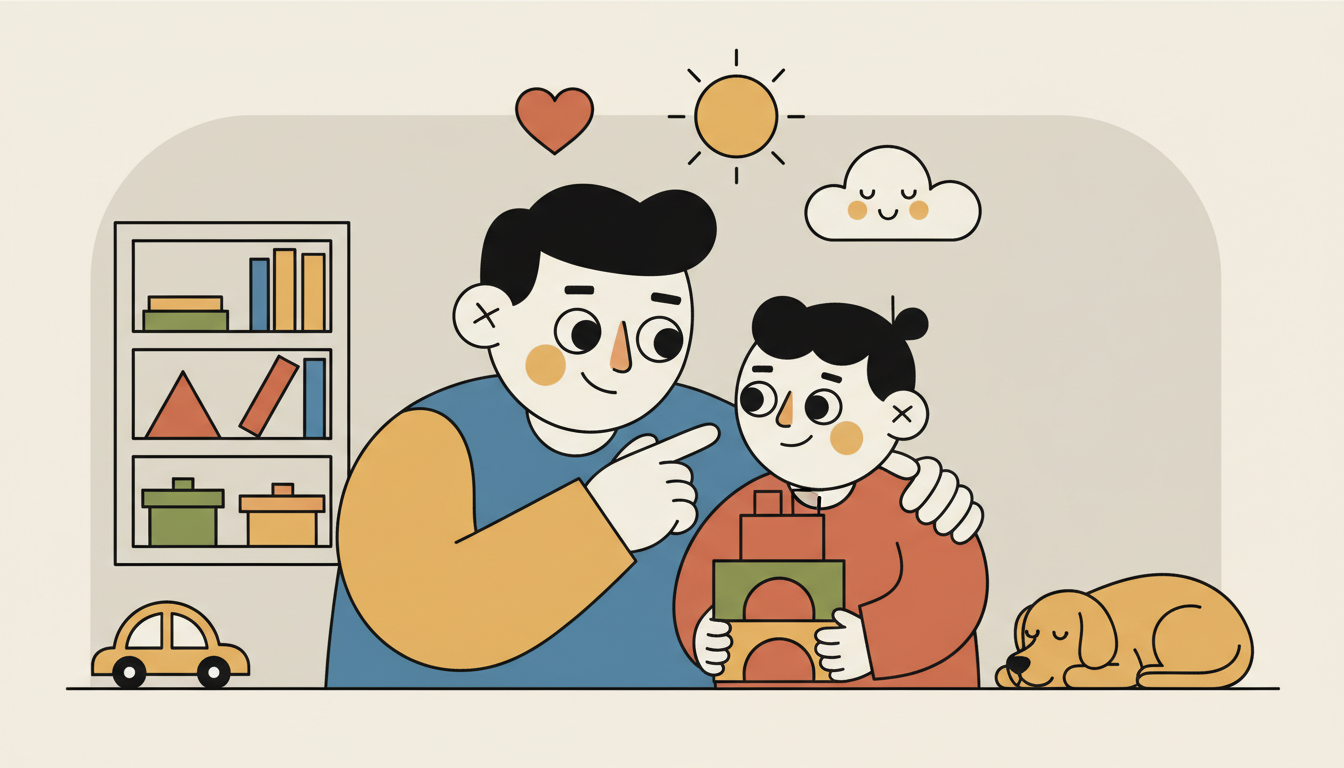
Throughout your day together, name positive feelings when you notice them. Say, "You look happy playing with those blocks" or "That made you smile." Keep it simple and specific to the moment. This helps your child become aware of positive emotions and learn to recognize them, building a foundation for noticing good feelings in their life.
Steadilyの発達の旅の一部 — わが子に合わせてパーソナライズされているよ。
このアクティビティのやり方
Throughout your day together, name positive feelings when you notice them. Say, "You look happy playing with those blocks" or "That made you smile." Keep it simple and specific to the moment. This helps your child become aware of positive emotions and learn to recognize them, building a foundation for noticing good feelings in their life.
効果がある理由
Helping children identify and name positive emotions builds emotional awareness and optimism. Research shows that optimism is consistently linked to higher levels of life satisfaction and better overall well-being (Carver, C. S., Scheier, M. F., & Segerstrom, S. C. (2010). Optimism. Clinical Psychology Review, 30(7), 879-889.). By teaching children to recognize when they feel good, parents help them develop attention to positive experiences, which reinforces an optimistic outlook and contributes to long-term emotional health.
パパ・ママへのヒント
Use simple feeling words like happy, proud, or excited. Avoid complex emotional vocabulary at this age.
Point to your child's facial expressions or actions as clues. This helps them connect feelings to physical sensations.
Notice positive feelings in yourself too. Say, "I feel happy when we play together."
用意するもの
None
学びの手法
Songs, Stories, and RhymesSymbolic and Pretend PlaySocial Learning Through Peers

このアクティビティ、楽しめた?これからの計画は私たちに任せて。
Steadilyはお子さんに合わせてすべてのアクティビティをパーソナライズするよ — 興味や発達段階、今伸ばしている特性に合わせて。だから、遊びの時間がもっと楽しくなって、一瞬一瞬が大切なものになるんだ。
Steadilyの仕組みを見る →