Feelings story time
4–5歳Emotional Wellbeing用意するもの: Children's book
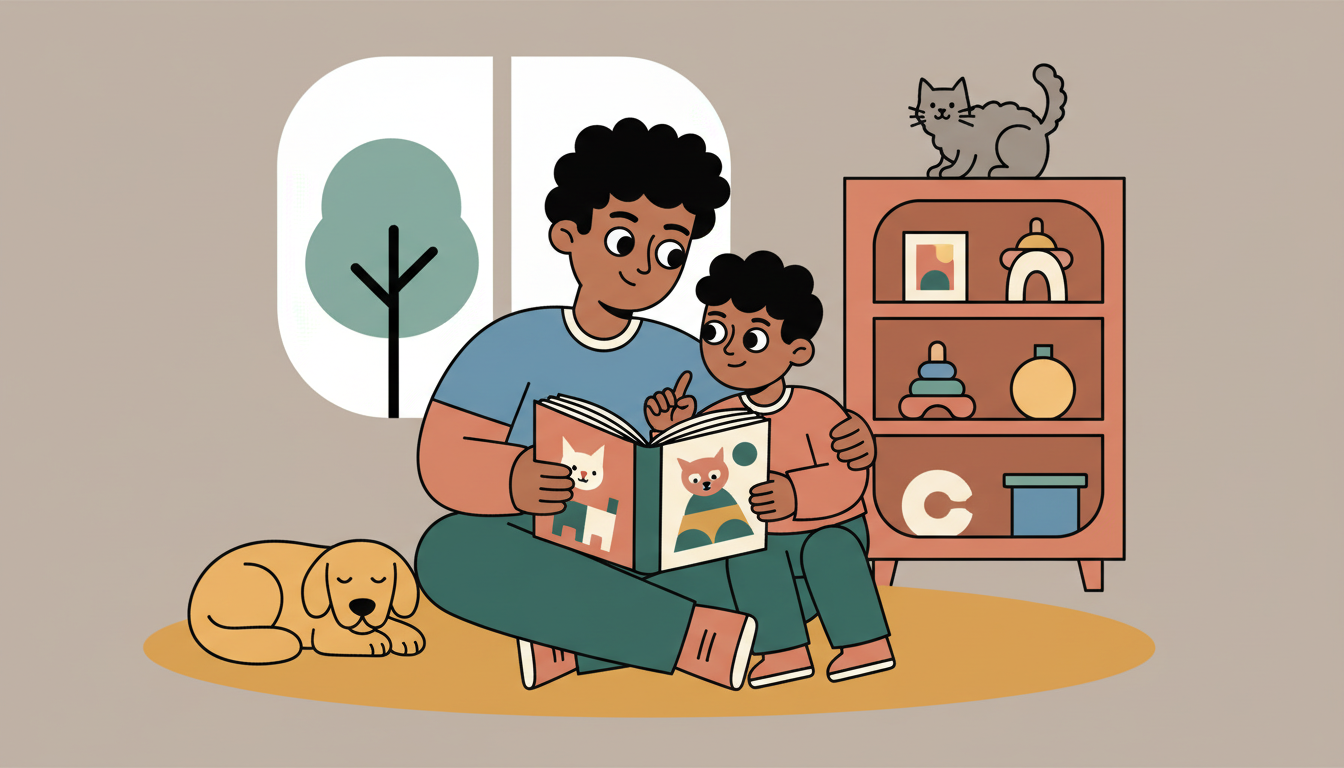
Read a story together and pause to discuss characters' emotions. Ask your child how they think the character feels and why. Discuss what the character might do next based on their feelings. Ask how your child would feel in the same situation. This builds emotional vocabulary and perspective-taking skills naturally through stories your child already enjoys.
Steadilyの発達の旅の一部 — わが子に合わせてパーソナライズされているよ。
このアクティビティのやり方
Read a story together and pause to discuss characters' emotions. Ask your child how they think the character feels and why. Discuss what the character might do next based on their feelings. Ask how your child would feel in the same situation. This builds emotional vocabulary and perspective-taking skills naturally through stories your child already enjoys.
効果がある理由
Using stories with emotional content followed by discussion is an evidence-based activity for developing emotional intelligence at this age. Children's fully developed theory of mind enables sophisticated emotional understanding through narrative. Students with higher emotional intelligence show significantly better academic performance and psychological well-being, with positive effects on study habits and social interactions (Brackett, M. A., Rivers, S. E., & Salovey, P., 2011). Discussing characters' emotions builds the emotional recognition and understanding that forms the foundation of emotional intelligence.
パパ・ママへのヒント
Choose books with clear emotional content. Most children's books work well for this activity.
Ask open-ended questions like, how do you think she feels right now, rather than yes or no questions.
Connect story emotions to your child's own experiences. This makes emotions more concrete and relatable.
用意するもの
Children's book
学びの手法
Metacognitive StrategiesCooperative LearningStructured Academic Learning

このアクティビティ、楽しめた?これからの計画は私たちに任せて。
Steadilyはお子さんに合わせてすべてのアクティビティをパーソナライズするよ — 興味や発達段階、今伸ばしている特性に合わせて。だから、遊びの時間がもっと楽しくなって、一瞬一瞬が大切なものになるんだ。
Steadilyの仕組みを見る →