Feelings face mirror play
3–4歳Emotional Wellbeing用意するもの: Mirror
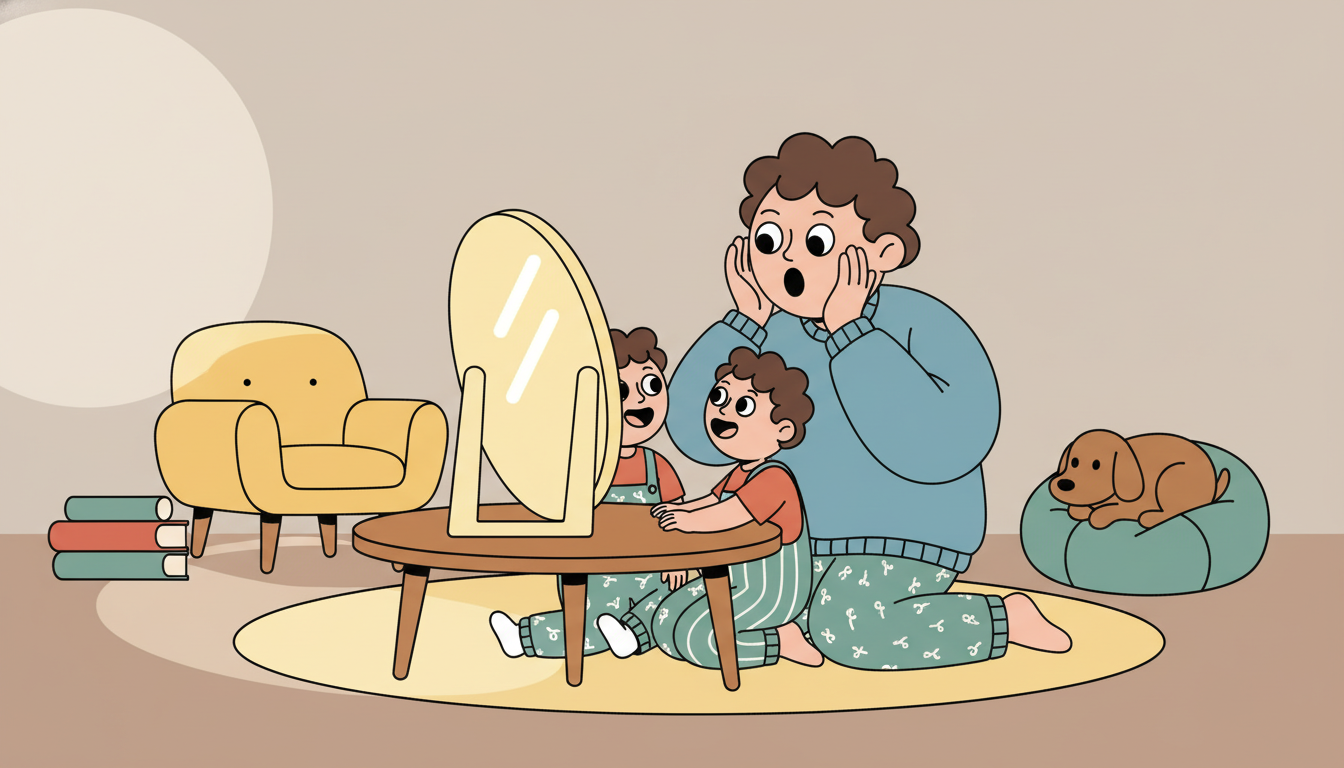
Sit with your child and take turns making different emotion faces in a mirror together. Name each emotion as you make the face. Try happy, sad, angry, surprised, and worried. Ask your child to copy your expressions and then let them lead. This helps build emotional recognition skills while having fun together.
Steadilyの発達の旅の一部 — わが子に合わせてパーソナライズされているよ。
このアクティビティのやり方
Sit with your child and take turns making different emotion faces in a mirror together. Name each emotion as you make the face. Try happy, sad, angry, surprised, and worried. Ask your child to copy your expressions and then let them lead. This helps build emotional recognition skills while having fun together.
効果がある理由
Learning to recognize emotions in faces builds emotional intelligence during a critical developmental window. Children with better emotion understanding and regulation at age four show better peer relationships years later. Emotional intelligence development in early childhood leads to better emotional recognition, expression, and regulation skills in adulthood (Goleman, 1995).
パパ・ママへのヒント
Start with easy emotions like happy and sad.
Exaggerate your expressions to make it easier.
Let your child be the leader sometimes.
用意するもの
Mirror
学びの手法
Narrative and Literacy-Rich ExperiencesCollaborative and Cooperative PlayInquiry-Based Learning

このアクティビティ、楽しめた?これからの計画は私たちに任せて。
Steadilyはお子さんに合わせてすべてのアクティビティをパーソナライズするよ — 興味や発達段階、今伸ばしている特性に合わせて。だから、遊びの時間がもっと楽しくなって、一瞬一瞬が大切なものになるんだ。
Steadilyの仕組みを見る →