Feelings face drawing
4–5歳Emotional Wellbeing用意するもの: Paper
Crayons or markers
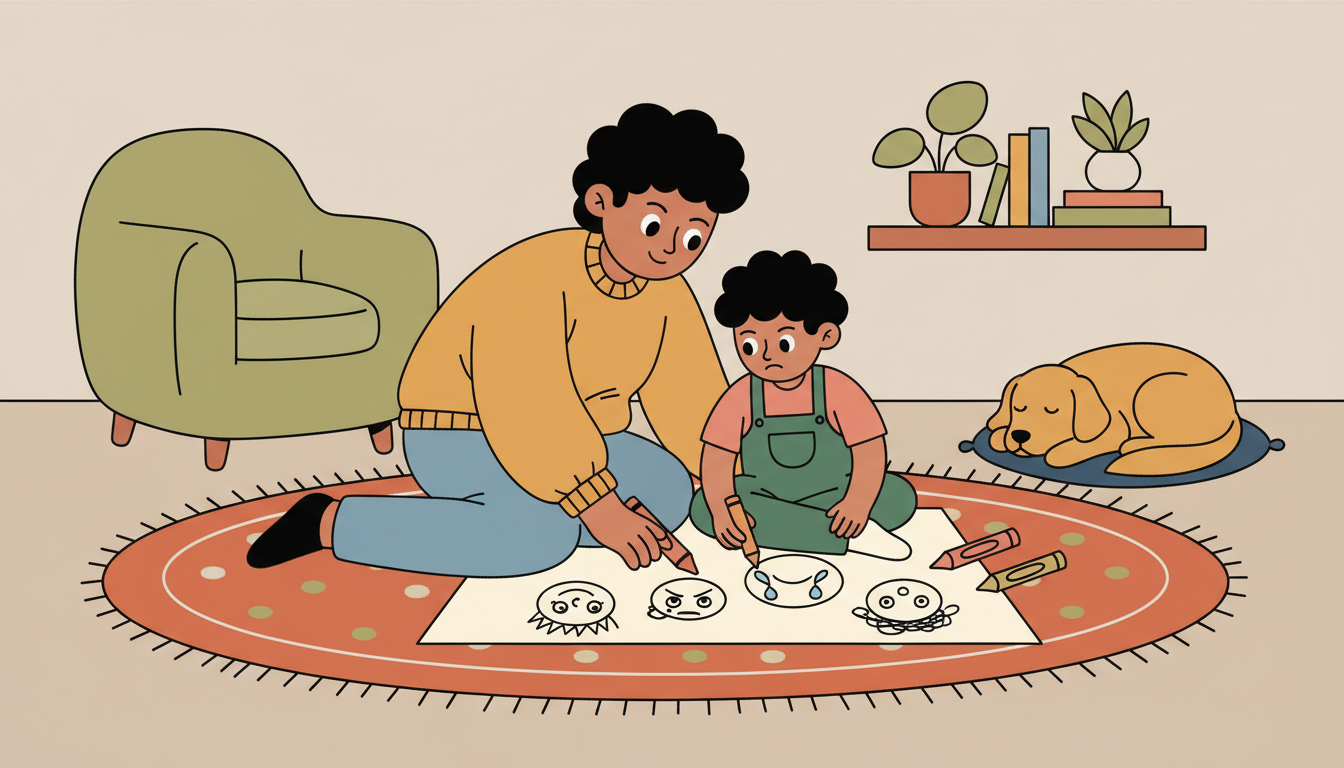
During your time together, draw different emotion faces with your child. Start with basic emotions like happy, sad, angry, and scared. Then introduce complex emotions like frustrated, disappointed, proud, or embarrassed. Take turns drawing and naming emotions. Talk about times when you each felt these emotions. This builds emotional vocabulary in a fun, creative way.
Steadilyの発達の旅の一部 — わが子に合わせてパーソナライズされているよ。
このアクティビティのやり方
During your time together, draw different emotion faces with your child. Start with basic emotions like happy, sad, angry, and scared. Then introduce complex emotions like frustrated, disappointed, proud, or embarrassed. Take turns drawing and naming emotions. Talk about times when you each felt these emotions. This builds emotional vocabulary in a fun, creative way.
効果がある理由
Building rich emotional vocabulary is essential for emotional intelligence development. When children can identify and label their emotions accurately, they develop better emotional regulation and self-awareness. Research shows that emotional knowledge at age five predicts social competence and academic achievement, as children who can identify and understand emotions show better peer relationships and classroom behavior (Brackett, M. A., Rivers, S. E., & Salovey, P., 2011). At this age, children's theory of mind is fully developed, enabling them to understand sophisticated emotions beyond basic feelings.
パパ・ママへのヒント
Let your child lead sometimes by choosing which emotion to draw next. This builds their confidence.
Ask what each emotion feels like in their body. This helps them recognize emotions when they happen.
Keep drawings simple. Stick figures work perfectly for this activity.
用意するもの
Paper
Crayons or markers
学びの手法
Metacognitive StrategiesCooperative LearningStructured Academic Learning

このアクティビティ、楽しめた?これからの計画は私たちに任せて。
Steadilyはお子さんに合わせてすべてのアクティビティをパーソナライズするよ — 興味や発達段階、今伸ばしている特性に合わせて。だから、遊びの時間がもっと楽しくなって、一瞬一瞬が大切なものになるんだ。
Steadilyの仕組みを見る →