Feelings check-in game
4–5歳Success Mindset用意するもの: Paper and markers to draw feeling faces (happy, sad, angry, worried, excited)
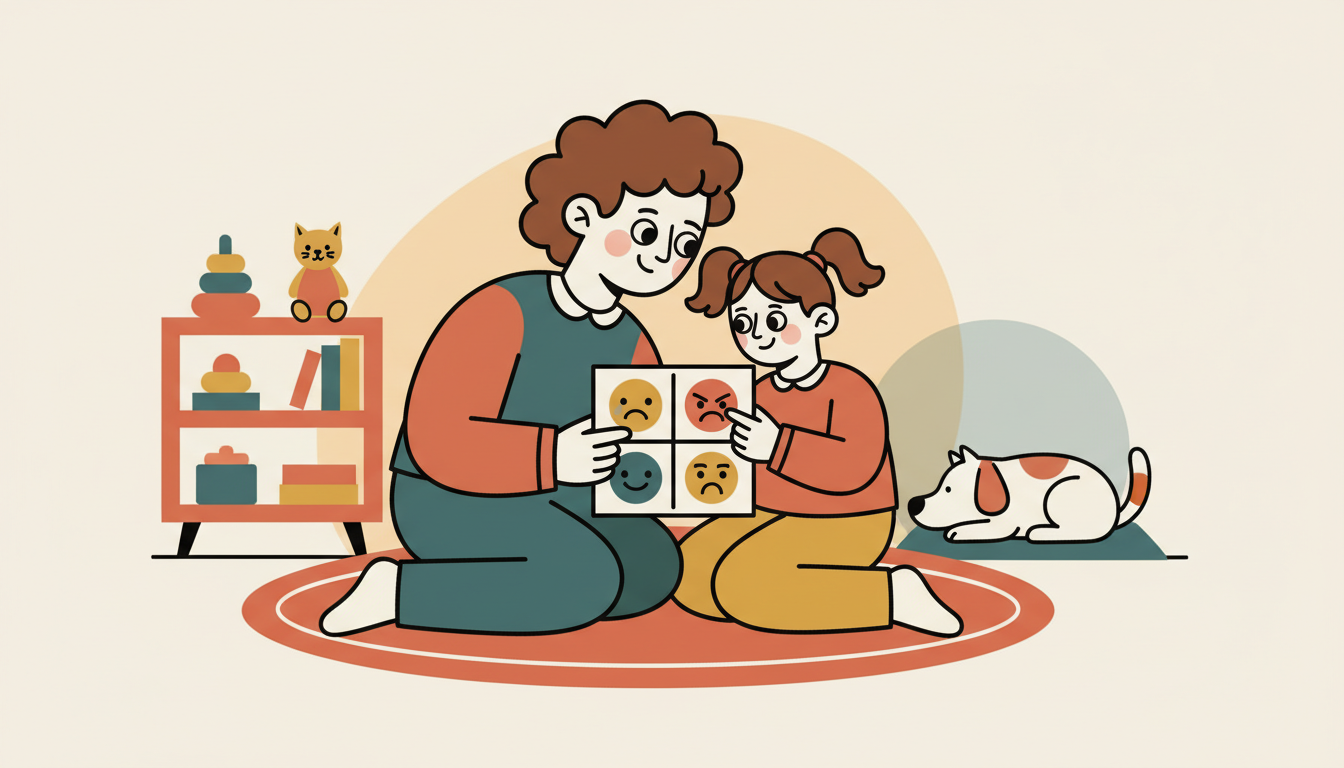
Create a simple feelings chart with faces showing different emotions. Several times during the day, check in together about how you're both feeling. Point to the face that matches your emotion and talk briefly about why. Your child learns to identify and express emotions, which is an important part of mental health.
Steadilyの発達の旅の一部 — わが子に合わせてパーソナライズされているよ。
このアクティビティのやり方
Create a simple feelings chart with faces showing different emotions. Several times during the day, check in together about how you're both feeling. Point to the face that matches your emotion and talk briefly about why. Your child learns to identify and express emotions, which is an important part of mental health.
効果がある理由
Emotional regulation abilities are key developmental indicators for mental health in this age range. Children with better psychological wellbeing show higher academic achievement (Visier-Alfonso et al., 2024). Regular emotional check-ins help children develop awareness of their internal states and learn to communicate about feelings, supporting both mental wellness and social-emotional development.
パパ・ママへのヒント
Model sharing your own feelings honestly but simply. You might say, I feel tired because I worked hard today.
Accept whatever feeling your child shares without judgment. All feelings are okay to have.
Keep it brief. This age needs just a moment to check in, not a long discussion about emotions.
用意するもの
Paper and markers to draw feeling faces (happy, sad, angry, worried, excited)
学びの手法
Structured Academic LearningCooperative LearningProject-Based and Thematic Learning

このアクティビティ、楽しめた?これからの計画は私たちに任せて。
Steadilyはお子さんに合わせてすべてのアクティビティをパーソナライズするよ — 興味や発達段階、今伸ばしている特性に合わせて。だから、遊びの時間がもっと楽しくなって、一瞬一瞬が大切なものになるんだ。
Steadilyの仕組みを見る →