Fair or not fair discussions
4–5歳Family Connection特別な道具は必要ありません
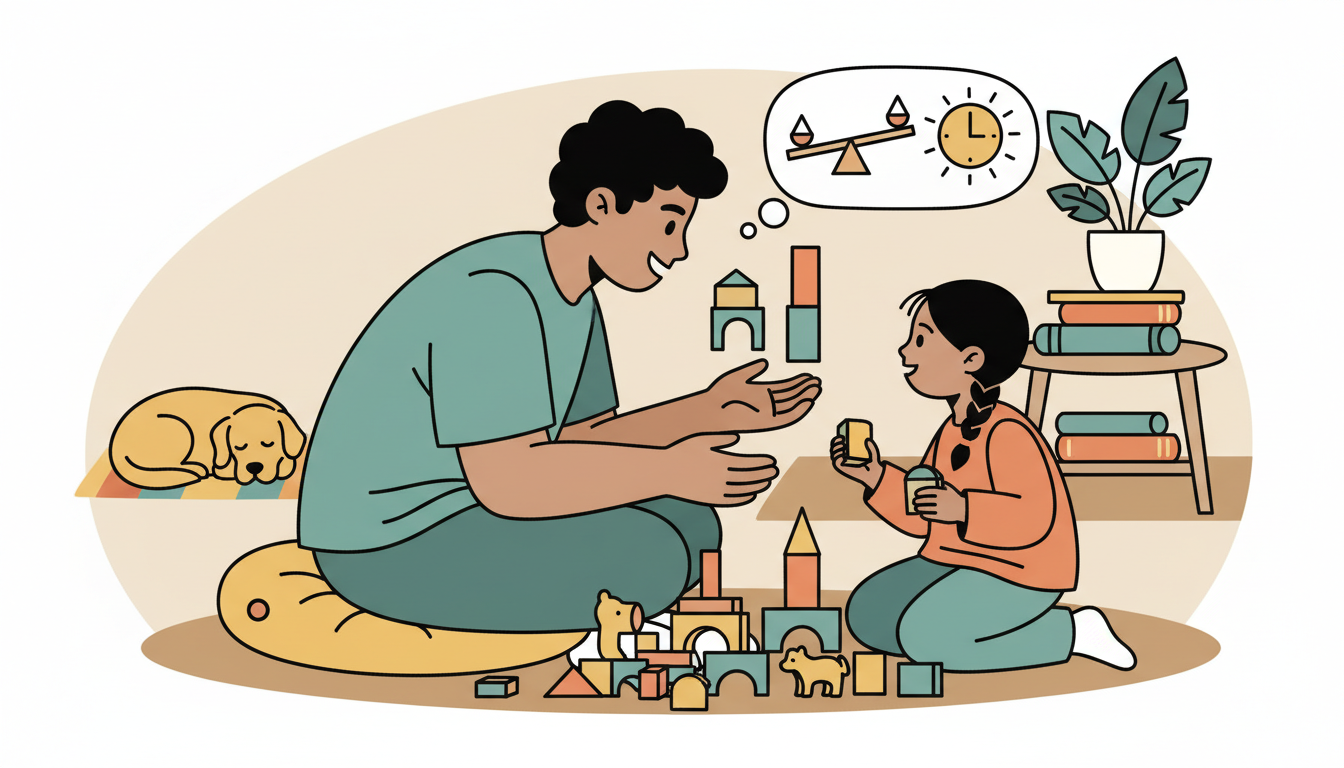
When conflicts arise, introduce the concept of fairness by asking whether proposed solutions feel fair to everyone involved. Help your child think about what fair means in different situations. Sometimes fair means equal turns, sometimes it means the person who had it first gets more time, and sometimes it means something else. Guide them to think through what makes sense for each specific situation.
Steadilyの発達の旅の一部 — わが子に合わせてパーソナライズされているよ。
このアクティビティのやり方
When conflicts arise, introduce the concept of fairness by asking whether proposed solutions feel fair to everyone involved. Help your child think about what fair means in different situations. Sometimes fair means equal turns, sometimes it means the person who had it first gets more time, and sometimes it means something else. Guide them to think through what makes sense for each specific situation.
効果がある理由
Collaborative problem-solving approaches in families predict better parent-child relationships during adolescence and young adulthood, with children maintaining stronger family bonds across developmental transitions (Robin & Foster, 1989). Learning to evaluate solutions for fairness develops critical thinking about relationships and builds the foundation for healthy conflict patterns. Children at this age can classify by multiple attributes and understand cause-effect, enabling them to grasp that fairness depends on context.
パパ・ママへのヒント
Avoid imposing your idea of fair. Instead, ask questions that help your child think it through.
Acknowledge that fair can look different in different situations.
Celebrate when your child considers fairness for all people involved, not just themselves.
用意するもの
None
学びの手法
Cooperative LearningMetacognitive StrategiesStructured Academic Learning

このアクティビティ、楽しめた?これからの計画は私たちに任せて。
Steadilyはお子さんに合わせてすべてのアクティビティをパーソナライズするよ — 興味や発達段階、今伸ばしている特性に合わせて。だから、遊びの時間がもっと楽しくなって、一瞬一瞬が大切なものになるんだ。
Steadilyの仕組みを見る →