Emotion show and tell
3–4歳Family Connection特別な道具は必要ありません
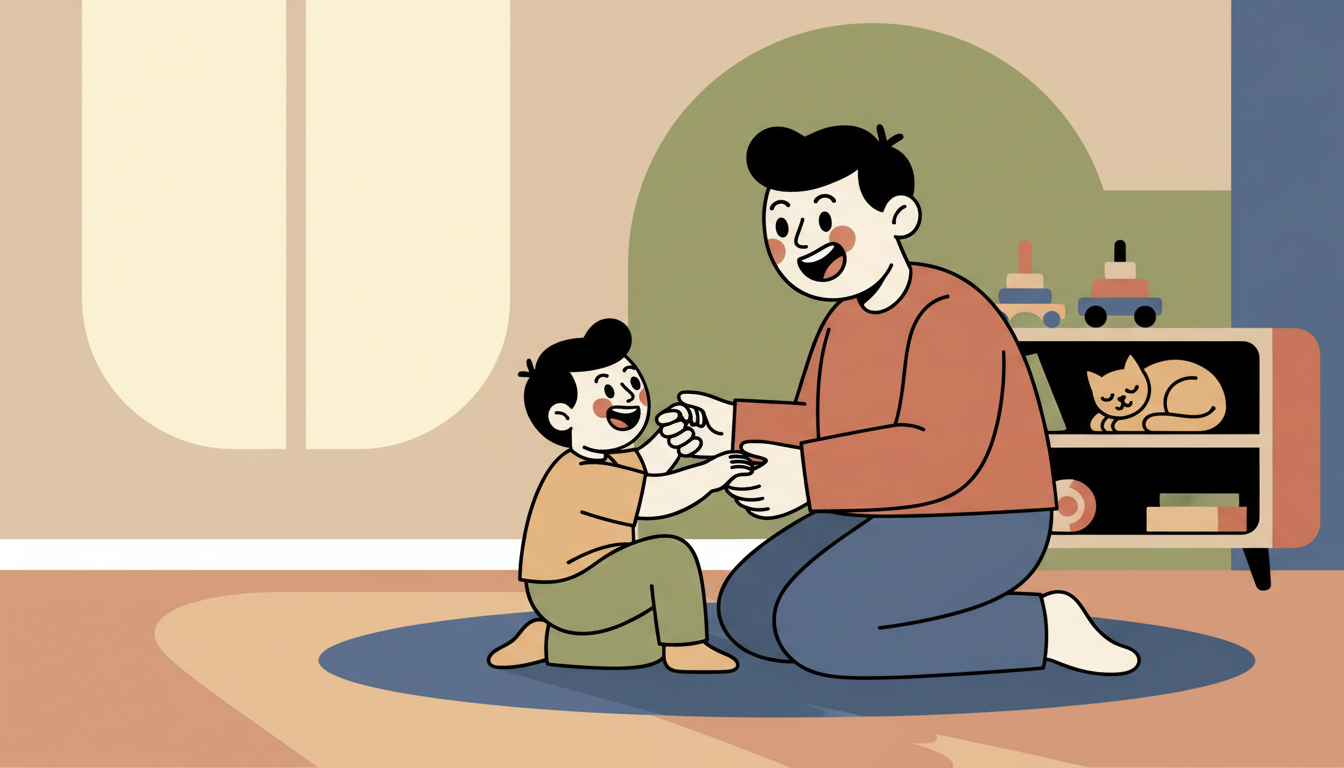
Set aside time during your activity to practice making different feeling faces together. Take turns showing emotions like happy, sad, angry, scared, or surprised with your face and body. After each one, talk about when you might feel that way. You can say, 'Show me your sad face. When do you feel sad? I feel sad when I miss someone I love.' Then ask your child to guess which emotion you're showing and share when they feel that way too.
Steadilyの発達の旅の一部 — わが子に合わせてパーソナライズされているよ。
このアクティビティのやり方
Set aside time during your activity to practice making different feeling faces together. Take turns showing emotions like happy, sad, angry, scared, or surprised with your face and body. After each one, talk about when you might feel that way. You can say, 'Show me your sad face. When do you feel sad? I feel sad when I miss someone I love.' Then ask your child to guess which emotion you're showing and share when they feel that way too.
効果がある理由
When parents show empathy and model emotional awareness, they create a safe space for children to express themselves and develop their own empathy (Bhansali, 2023). At this age, children can recognize emotions in faces and body language, a key skill for empathy. Practicing emotion recognition through play makes learning fun while building the foundation for understanding how others feel. This shared emotional experience strengthens your connection and teaches emotional literacy.
パパ・ママへのヒント
Make it playful by exaggerating your expressions and movements.
Start with basic emotions before introducing more complex ones like frustrated or disappointed.
Share real examples from your own life to show that everyone has feelings.
用意するもの
None
学びの手法
Narrative and Literacy-Rich ExperiencesCollaborative and Cooperative PlayInquiry-Based Learning

このアクティビティ、楽しめた?これからの計画は私たちに任せて。
Steadilyはお子さんに合わせてすべてのアクティビティをパーソナライズするよ — 興味や発達段階、今伸ばしている特性に合わせて。だから、遊びの時間がもっと楽しくなって、一瞬一瞬が大切なものになるんだ。
Steadilyの仕組みを見る →