Emotion matching partners
3–4歳Success Mindset用意するもの: Mirror (optional)
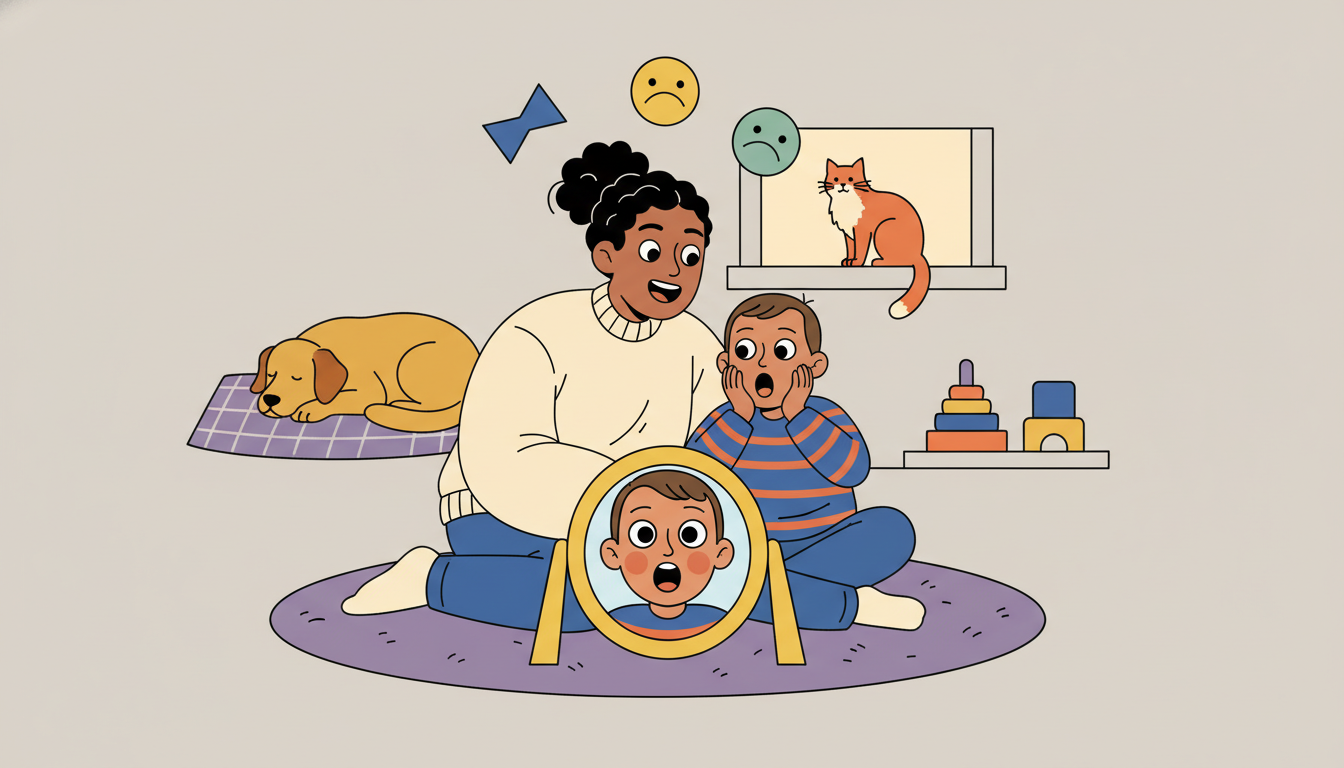
Take turns making facial expressions showing different emotions while the other person guesses the feeling. Then discuss times when you've both felt that way. This helps your child read social cues and understand that others have feelings too. You can use a mirror to practice together.
Steadilyの発達の旅の一部 — わが子に合わせてパーソナライズされているよ。
このアクティビティのやり方
Take turns making facial expressions showing different emotions while the other person guesses the feeling. Then discuss times when you've both felt that way. This helps your child read social cues and understand that others have feelings too. You can use a mirror to practice together.
効果がある理由
Understanding and responding to social cues is a core component of social intelligence that predicts later success. Children with better social skills showed 50-70% higher likelihood of stable adult employment and educational completion (Durlak et al., 2011). At 36-48 months, theory of mind development enables perspective-taking, making this the optimal window for practicing emotion recognition and empathy skills that form the foundation of positive peer relationships.
パパ・ママへのヒント
Start with basic emotions like happy, sad, angry, and surprised before moving to more complex ones.
Share real examples: 'I felt frustrated when the car wouldn't start. When do you feel frustrated?'
Validate your child's interpretations even if they're not exact. The practice of reading cues matters most.
用意するもの
Mirror (optional)
学びの手法
Collaborative and Cooperative PlayStructured Learning ActivitiesProject-Based Learning

このアクティビティ、楽しめた?これからの計画は私たちに任せて。
Steadilyはお子さんに合わせてすべてのアクティビティをパーソナライズするよ — 興味や発達段階、今伸ばしている特性に合わせて。だから、遊びの時間がもっと楽しくなって、一瞬一瞬が大切なものになるんだ。
Steadilyの仕組みを見る →